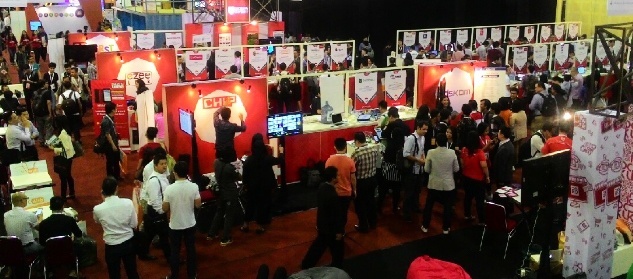
11 and 12 November were two days of highly intensive activity at the Tech in Asia Jakarta 2015 held at Balai Kartini. From my sources at TIA, it was a whopping 4123 attendees, the largest turnout for a TIA event.
The sheer crowd was a testament to Indonesia’s importance as a major South-East Asian consumer market. 142 of 235 startups hail from the host nation Indonesia at the Bootstrap Alley, the startup exhibition area.
I have read many news sources about the Indonesian market, spoken to many people involved in Indonesian businesses, but my access to the local startup community has been limited, until now.
Intrigued to know Indonesia through the eyes of local startups, I told my investment team to spread out and take different alleys and speak to as many Indonesian startups as possible to learn more about the scene.
At the end of the trip, we compared our notes and came up with some interesting observations. Due to the sensitivities of information being shared here, all names have been removed.
New tech, same old way of business
You would have expected a cultural shift of Indonesians adopting mobile technology as a new way of doing business, but the business scene is still dominated by very powerful and connected people who dictate the speed and direction of the technological adoption.
“These powerful people have many companies under the guise of proxies and the company ownership structure is complex. Information is very scarce on who is the ultimate owner. Many of these companies own approved permits for various projects, which are awarded to them from their connections to the government. You have to work with these companies in order to gain access to a larger slice of the market,” says a startup founder working on an ecommerce platform selling a restricted good.
For my business, I need to do four things to get it moving. Funding my operations is one. Next is to get access to a company which owns a permit to import these restricted goods. In this industry, there are only eight such companies holding permits. I have access to two.”
“Supplies and funding,” I thought to myself. What else can there be? “Next, I have to be on very good terms with the police, to ensure they won’t cause trouble for me. There is no bribing, just ensure we are in communication and having good relations. Next is the mafia, to ensure they also won’t cause trouble for me,” he explains. What a balancing act he has to do. He didn’t mention about whether he needs to pay off the mafia though.
He explains that Indonesia is a place where you have to identify first the right people in power and to connect with them to gain access to a certain market. He claims his market is niche, but I feel that he is hiding the real huge potential of the market. By having two of eight suppliers working with him, he is effectively addressing an estimated 25% market share of this vertical, assuming equal market share per supplier.
Complimentary, not disruptive
Another founder, who reads many articles on US entrepreneurs, says the US founders tend to claim their business model is disruptive and changes the way people work and live.
“But here in Indonesia, remember that the economy is run by many powerful people. If you mention the word disruptive technologies, these people will regard you as a threat and go all out to block you. Rather, always say you are here to compliment their existing businesses and help them earn more money. Never go head-on with the incumbents. You might just get yourself ‘disrupted’,” he gives a shiver for dramatization.
Mobile ecommerce is a huge size available for all
Split-founder personalities
Ending thoughts





Stay updated on the go with our mobile app.
Get latest insights with smoother, more personalized experience through TIA mobile app.