- Insights This article was written by a TIA community member. Insights pieces undergo the same rigorous editorial process that newsroom-produced articles have.
 Vincent Fong · · 3 min read
Should Malaysia’s Go-Jek counterpart be banned in Malaysia?
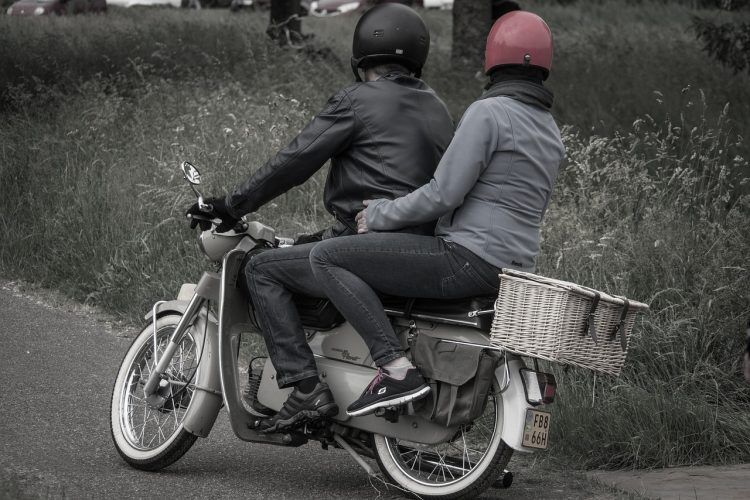
Photo credit: Skitterphoto.
Dego Ride was launched in November 2016 and it is basically the equivalent of Uber and Grab, but for motorcycles. It is Malaysia’s first motorcycle ride-hailing service, but despite being in its very early stages of inception, Malaysia’s Ministry of Transport has recently issued a ban. Let’s explore the topic and determine if the ban is justified.
What Indonesia did
The closest parallel one can draw is from our neighbors in Indonesia, where similar services offered by local startup Go-Jek are extremely popular. Go-Jek has over 200,000 riders. When you’re in Jakarta, it’s difficult for a day to go by without coming across their signature green helmets zipping across the busy traffic during the rush hours. The car-hailing service is regulated and the motorcycle-hailing service isn’t, but not banned outright by the government.
What’s interesting is that after a few hours the government issued the ban, President Jokowi Widodo withdrew it. The initial ban by the Ministry of Transport stated that the rules required public vehicles to have more than three wheels as the reason.
Why Dego Ride is banned in Malaysia
Malaysia’s Minister of Transport Datuk Seri Liow Tiong Lai cited that it was banned because motorcycles are not an approved method of transportation to carry members of the public, a similar reason for the ban in Indonesia. While it’s easy to conclude that Malaysia should do the same and overturn the decision, we must also put into consideration the traction of Go-Jek versus Dego Ride.
At the time of the decision, Go-Jek was already wildly popular compared to Dego ride who’s still relatively new, and there was huge backlash from the public when the announcement was made in Indonesia.
The other reason cited was safety. Let’s examine how valid this reason is.
According to reports from the Malaysia Road Safety Institute (MIROS), 50.6 percent of road fatalities among registered vehicles are from motorcycles.
A study published by the World Health Organization indicates that Malaysia is among the top 20 countries with road fatalities in the world and is the only other Asian country in that unfortunate list along with Thailand.

Photo credit: MIROS – Malaysia Statistics of Motorcycle Deaths.
With over 3,000 deaths per year, it may seem like there’s some leg to the safety argument of a service like Dego. While Indonesia is not immune to motorcycle deaths, its percentage is only 36 percent compared to Malaysia’s.
What’s next for Dego Ride?
Should Malaysia stick to its gun and ban Dego Ride or should it reconsider?
If safety is of the main concern, are there steps that can be taken by the motorcycle service to address the authorities’ concerns? But while it can claim that they have done thorough inspection and that passenger safety is a paramount concern, there’s really no effective way to inspect rider behavior. This is especially important since 80 percent of motorcycle accidents are caused by human error, according to MIROS.





Stay updated on the go with our mobile app.
Get latest insights with smoother, more personalized experience through TIA mobile app.