- Insights This article was written by a TIA community member. Insights pieces undergo the same rigorous editorial process that newsroom-produced articles have.
 Kai Yong Kang · · 5 min read
Groupon killed his first startup. Then he bounced back
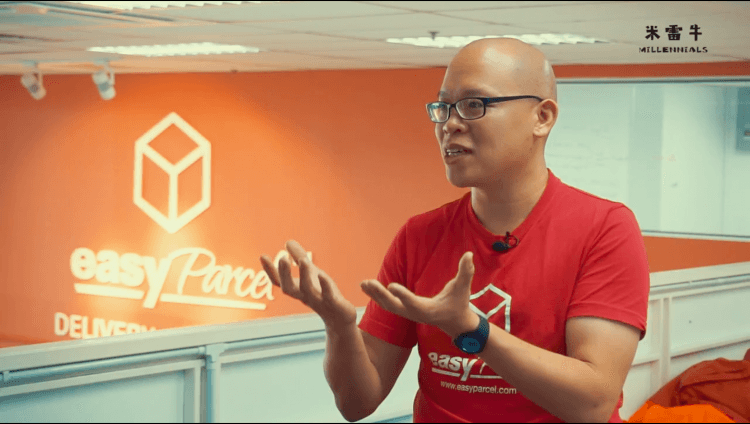
EasyParcel founder Clarence Leong shares how he overcame failure.
This article is part of Tech in Asia’s partnership with 米雷牛 Millennials where we publish the revised transcripts from their interviews with millennial entrepreneurs. This is heavily revised from the original transcript of the interview. For the full interview, go here.
In this episode, we sat down with Clarence Leong, founder of EasyParcel. EasyParcel is an online comparison platform for parcel delivery, providing services to SMEs or individual ecommerce sellers. Dubbed Southeast Asia’s Booking.com for parcel delivery, it allows users to compare different service providers for logistics and parcel delivery.
Leong worked as an engineer in the UK before coming back to Malaysia to chase his dream of building tech companies. In this interview, he shares the many lessons he learned about failure.
How did you manage to give up your first startup, an online coupon platform, when Groupon entered Malaysia?
It’s definitely not easy. I treat each of my startups like my own kids. So, the process was pretty painful. I needed to evaluate many factors while remembering that my team joined me because they believed in me.
The market for our business then was huge, but when you see an international company with large funding and good talent, it’s tough to stay in the game. Our startup, EziVoucher, was just a small, self-funded company in Penang. There’s no such thing as funding back then. The competitor was giving out free stuff and captured the market by using a zero-sum game.
So, when a company plays the game at that level and your startup’s accounts are diluted, you have to make a decision no matter how tough it is.
How did you communicate it with the team?
I needed to make them understand the problems we faced and what we were planning to do next, and that we have to work together to solve the problem. Most founders only share the good news and keep the bad news to themselves until the last day when it’ll be shocking for everyone. So, be open to the whole team. Make sure they know the company’s situation—good or bad.
What did you learn from your first startup?
It was tough because I was doing everything—HR, finance, the payroll, taxes, etc. These tasks take up a lot of time. So if you’re starting up, consider outsourcing some work, and focus on your strengths. You only have 24 hours in a day, and you need to manage your team, your business, your revenue, etc. The admin side is not as important. Spend most of the time coming up with business plans and marketing ideas, as that’s how you can generate more revenue.
Tell us about your second business, the EasyCorner magazine.
Building EasyParcel’s platform took some time. I still have the same team from EziVoucher, most of whom did offline work, so I thought, “What should they do?”
Another challenge was that a lot of our contacts were in the food and beverage industry, and many of them were asking us to help bring in more customers. I realized that we have editors, photographers, 150,000 users, and existing partnerships and content, so why not work on a magazine.
But we never intended to run the business for a long time. We all knew that we would stop EasyCorner once EasyParcel was launched four years later.
How is EasyParcel different from the first two startups?
We moved from offline to online. There was a lot of offline work with EziVoucher (e.g. liaising with restaurants, striking deals for coupons, voucher redemption). It’s the same with EasyCorner.
With EasyParcel, we only have three salespersons, and there’s a lot of digital marketing involved. Compared to the previous businesses, it will be easier to replicate this same business model in other countries.
Do you agree that capturing Southeast Asia can boost a startup’s valuation?
If you face a big competitor this time, what would you do?
How should millennial entrepreneurs prepare for failures?
What should anyone who wants to build a startup know?





Stay updated on the go with our mobile app.
Get latest insights with smoother, more personalized experience through TIA mobile app.









📅 Upcoming Events
22 October 2026
Payoneer x CSPN Summit 2026