This is old news by now, but if you have been observing close enough, you would notice that viral content site Goodyfeed is up and running again.
Just a couple of months ago, they were temporarily taken down by Facebook, and no notice or statement was released to their followers on the page, or on their affiliate Facebook Page, Low Kay Hwa. Facebook removed all the posts on their page, and prevented anyone from sharing any articles linking back to the site.
The main reason behind the shutdown was presumably because of the usage of a social locker plugin on their site, which requires the reader to like the Facebook page before being able to access the intended content.
It was terribly annoying to most users, but the activation of the social locker was no doubt effective. It resulted in a gain of over fifty-five thousand followers within seven days.
With a brand new logo, a fresh site revamp, and the content machine churning once again, it’s easy to forget about the embarrassing shutdown. Most importantly, they got to keep their Facebook page, along with all 311,000 of their followers.
Facebook fans: a mere vanity metric?
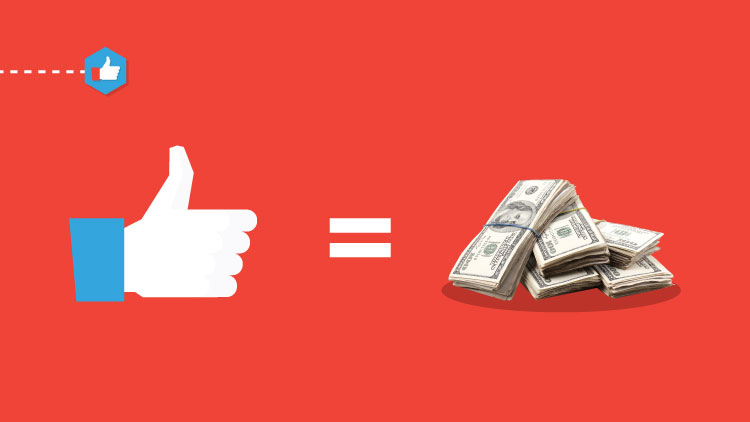
For most of us, a Facebook page is a good channel in the marketing stack to promote our product and engage our community, but the number of Facebook likes is a mere vanity metric. No founder will use Facebook likes as a business metric at a board meeting.
Facebook likes are no indicators of product or customer success; they merely reflect the effectiveness of a content strategy.
A Facebook page which does not have millions of followers does not mean that it is not successful. For example, Slack, the $3.8 billion business messaging platform, only has 37,000 Facebook followers even though they have 2.7 million daily users.
However, the situation is quite different if you are in the media industry, or if you make a living by selling content.
The existence of social media platforms like Facebook and YouTube has created a generation of content creators who are able to generate revenue through advertising or sponsorships. In fact, the world’s 13 top-earning YouTube stars raked in a combined total of $54.5 million in 2015.
Before you think about quitting your job to become a YouTuber, it is worth noting that each of these YouTubers have spent years creating thousands of videos to build a tight-knitted community of millions of subscribers in order to achieve this feat.
Media powerhouses like Buzzfeed, The Atlantic and the Wall Street Journal are not missing out on the fun too.
They are able to generate significant revenue by partnering with brands to create content that will engage, inform and hopefully, create awareness for the sponsoring brand.
How far is too far?





Stay updated on the go with our mobile app.
Get latest insights with smoother, more personalized experience through TIA mobile app.










