- Insights This article was written by a TIA community member. Insights pieces undergo the same rigorous editorial process that newsroom-produced articles have.
 Benny Tjia · · 4 min read
How to build an early-stage growth strategy around customer-value fit
There are two reasons early-stage startups struggle in Southeast Asia: either they can’t acquire customers fast enough or they can’t acquire customers sustainably.
In my previous startup, we failed partly because of the first case, where survival is much harder.
Here, founders tend to focus more on building the product rather than on identifying the right target market. The side effect is they skip solution-market fit.
At best, they have a great product that is nice to have for the broader market, but not a sufficiently good one that a particular market must have. When founders don’t build must-have products, they are at risk of building something that customers don’t want. Achieving product-market fit becomes significantly hard, so does growing and acquiring customers.
In such a case, founders only have two options: pivot or shut down.
In the second case, founders usually tackle a competitively huge market. Early customer acquisition and fundraising can be more straightforward than in the first case.
But often, founders tend to be driven more by the prospect of rushing for a winner-take-all spot than the prospect of gradual wins starting from a deeper core of their market. This leads to premature scaling, as the startup spreads itself too thin and risks diluting its value proposition over time.
Maintaining good unit economics then becomes challenging. Founders have three choices—continue burning money while building compelling sustainable growth narratives for fundraising, scale down, or shut down.
Achieving customer-value fit
One common approach to both problems is customer-value fit. Founders can start by segmenting customers by values that appeal to them, and then narrow down to segments that truly see their solution as a must-have. This is the target market.
The target market usually only makes up less than 20 percent of a hypothetical customer base. Yet, they create 80 percent of the value. They spend time on the app more, purchase more, or even recommend the solution to others.
Growth is a complex problem. But customer-value fit reduces that complexity by allowing founders to channel their energy on the 20 percent of customers that create 80 percent of the value for their startups.
Understanding the Elements of Value Pyramid can help founders in discovering customer-value fit:
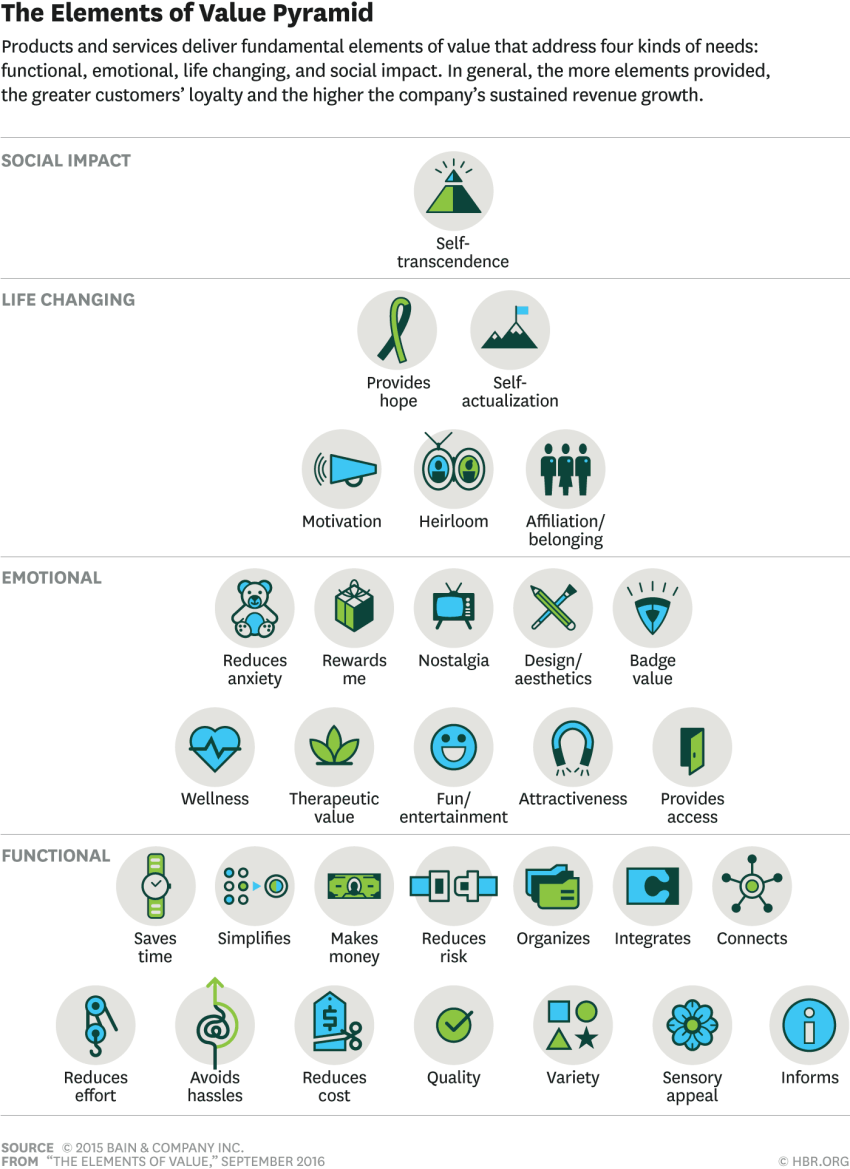
The Elements of Value Pyramid / Photo credit: Harvard Business Review
For instance, gamers appeal to emotional values (fun/entertainment). In Southeast Asia, functional values tend to have the strongest appeal.
Case study: Go-Jek





Stay updated on the go with our mobile app.
Get latest insights with smoother, more personalized experience through TIA mobile app.








📅 Upcoming Events
22 October 2026
Payoneer x CSPN Summit 2026