- Insights This article was written by a TIA community member. Insights pieces undergo the same rigorous editorial process that newsroom-produced articles have.
 Joe Liebkind · · 4 min read
Opinion: How blockchain can help Asian startups leapfrog the West
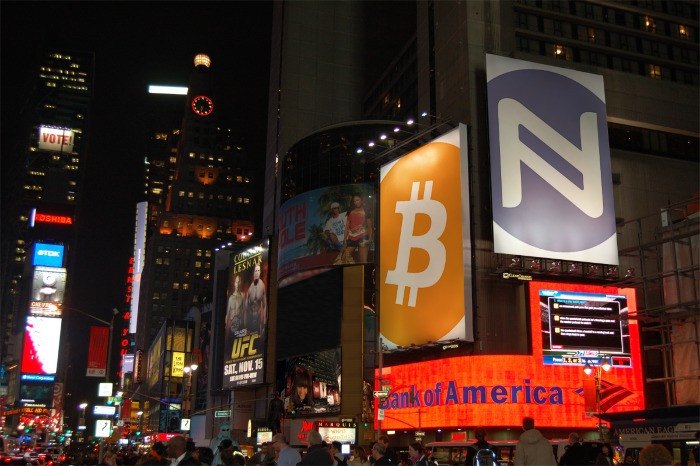
Photo credit: Namecoin.
Much of the excitement in tech today is brought about by blockchain. With the meteoric rise of bitcoin’s price, cryptocurrencies have been all the rage. Blockchain is now also being used in a variety of applications, especially in financial services and related industries.
In Asia, several startups have already made strides developing blockchain-based services. There’s an abundance of tech talent and ventures focusing on the technology’s development. Blockchain platforms have also emerged, leaving startups with lower barriers to entry and more platform choices to build their products.
Asia can take advantage of its unique position to leverage blockchain and contend with the West. Here’s how.
Financial inclusion
Traditional financial institutions struggle to cope with the changes brought by technology. Legacy issues in banking and finance allowed financial technology to disrupt the industry. Modernization continues to be a major challenge for banks’ stalling capability to offer digital experiences that today’s customers are looking for. This has allowed tech companies to meet this demand.
For instance, bitcoin is a hot commodity these days, but banks and payment services still aren’t widely supporting it. Bitcoin wallet Cryptopay, for example, found a way to serve users’ bitcoin needs by offering merchant services, transfer services, and bitcoin-backed debit cards. But the majority of banks have yet to offer any support to bitcoin.
“One of the main things holding back customer adoption is the lack of legacy financial services which are available,” said Cryptopay CEO George Basiladze.
Asian markets may not even have to greatly deal with legacy issues and just focus on offering new services. In China, 76 percent of consumers use mobile payments (only 36 percent in the US). A key reason for this wide adoption is Chinese consumers are more exposed to mobile technologies than to traditional banking and payment methods. It was simply convenient for them to adopt mobile services.
Similarly, Asia’s emerging markets may find adopting blockchain services quicker and easier. The number of unbanked consumers in regions like Southeast Asia already made it possible for phone-account mobile wallets to become alternatives to banks. The combination of ready access and bank-like functionalities of these services increases financial inclusion for consumers in such markets, and this plays a crucial role to development.
Funding options
Blockchain startups can now also opt to hold ICOs to get their efforts started. New blockchain platforms that support smart contract allow developers to create their own cryptocurrencies. In ICOs, companies offer these coins to investors in lieu of stock certificates. While there is no shortage of interest from global investors, ICOs are yet another means to raise funds. Taking on investments this way is also more attractive than business loans.
ICOs have proven to be quite lucrative. Asian companies like Israel’s Bancor and Hong Kong’s Block.one were able to raise US$127 million and US$185 million from their ICOs, respectively. ICOs can also be conducted faster than traditional means such as taking on private investment or waiting for the company to get publicly traded.
The effort of the US to regulate ICOs creates more opportunities for Asian markets that are more open and embracing of blockchain to nurture new ventures. Startups can consider building businesses in Asia more if the US and Europe become more restrictive to blockchain and its application on funding methods.
Room for innovation
Blockchain has a wide range of possible applications beyond cryptocurrency and finance. The numerous startup launches and ICOs being held are just the tip of the iceberg. Distributed ledger technology can be used for just about any activity that requires secure and immutable record keeping.
We’re already seeing its applications in payments, remittance, healthcare, and digital identity. With the emergence of smart contracts in blockchain, startups are now into tokenizing real-world assets and legal technology. Parallel developments in other technologies such as machine learning and internet of things can also yield more options for developers to explore.





Stay updated on the go with our mobile app.
Get latest insights with smoother, more personalized experience through TIA mobile app.








📅 Upcoming Events
22 October 2026
Payoneer x CSPN Summit 2026