Jeffrey Towson · · 4 min read
Opinion: Baidu sold its food delivery service, reveals 3 trends of Chinese internet firms
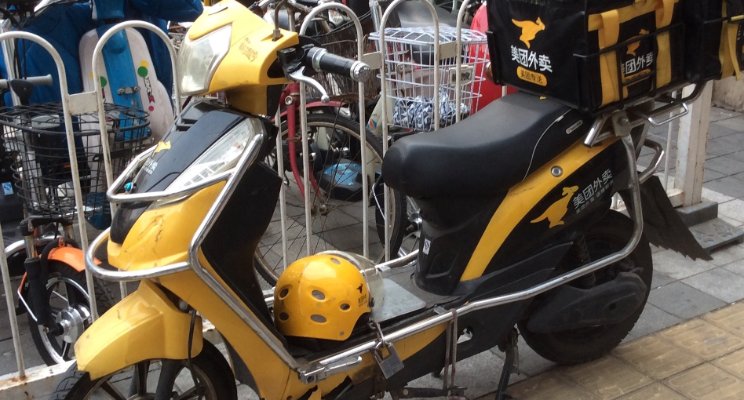
Last month, Baidu sold its O2O food delivery service, Baidu Waimai, to Ele.me. This means that now, the Alibaba-backed Ele.me and Tencent-backed Meituan dominate the space:
- Together, Ele.me and Baidu Waimai make up about 55 percent of the market.
- Meituan has around 41 percent of the market, according to the market research firm iiMedia.(That said, Meituan recently announced that they are at 54 percent.)
- Giants Tencent and Alibaba now dominate online food delivery in China, a business that grew 44 percent annually between 2013 and 2015, according to Bain & Company.
- Baidu now appears to be out of this booming business, which iiMedia says will be worth US$30 billion this year.
So, why did Baidu exit, especially after jumping in so aggressively between 2014 to 2015?
I don’t know the exact reason, but it seems likely that it was to avoid the ongoing operating losses in this hyper-competitive and subsidy-prone business. Plus, both Meituan and Ele.me have been increasing their market share, while Baidu Waimai’s had held at around 13 to 15 percent.
The more interesting story here, however, is what this deal says about the state of Chinese internet in 2017. I think we can point to three big trends.
Trend 1: Convergence is continuing
China’s internet giants (Alibaba, Tencent, and Baidu) are continuing to move into each others’ spaces and are converging. This is a big change from a few years ago when Tencent mostly stayed in gaming and messaging, Alibaba in ecommerce, and Baidu in search. Now, Baidu wants to get into ecommerce, Tencent wants to get into transactions, Alibaba wants to go international and get into entertainment, and so on.
China’s internet elephants are increasingly rubbing up against each other, and this has interesting consequences.
China’s internet elephants are increasingly rubbing up against each other, and this has interesting consequences. As the white space between these companies disappears, smaller companies are finding it increasingly difficult to live in that space. As Alibaba and Tencent now dwarf Baidu in market cap, the latter’s exit from food delivery implies that it’s tired of being caught between much larger competitors.
Another important aspect of this convergence is how these big companies are jumping into areas that are outside of their core competencies. Baidu, a search engine, is jumping into delivery and AI. Tencent, a gaming company, is jumping into on-demand transportation and feature films. Alibaba, an ecommerce company, is jumping into cloud computing. And so on.
This behavior does change the competitive dynamics of these industries, and it reveals a lot about the differing levels of management ability at these companies. Tencent, in particular, seems very good at jumping out of its core expertise and succeeding in totally new areas, while Baidu has less of a track record.
Trend 2: China-specific solutions are increasingly important
The Chinese O2O food delivery trend created an army of delivery people on scooters. They race around streets, alleys, parks, and sidewalks and congregate outside storefronts and subways.
Mobike and Ofo similarly pioneered bike-sharing, with their unique smart locks and non-inflatable, solid rubber tires. Didi Chuxing pioneered taxi-hailing in coordination with local governments, and Tencent pioneered micropayments, which are increasingly being used in online videos and other places.
What all of these have in common is that they are very China-specific solutions. They targeted China-specific problems and came up with pretty novel solutions to them. This is an important trend.
Trend 3: The Chinese internet is prone to money wars
Conclusion





Stay updated on the go with our mobile app.
Get latest insights with smoother, more personalized experience through TIA mobile app.