- Insights This article was written by a TIA community member. Insights pieces undergo the same rigorous editorial process that newsroom-produced articles have.
 Jianggan Li · · 4 min read
Why Alibaba is investing in AI for pigs
Jianggan is a TIA Star Contributor and publishes high-value content that serves the Asian tech community. Read more from TIA Star Contributors here.
In one of the earliest articles of our blog, The Low Down, we talked about painting the walls in rural areas. Recently, this wall ad was spotted in many places in China:
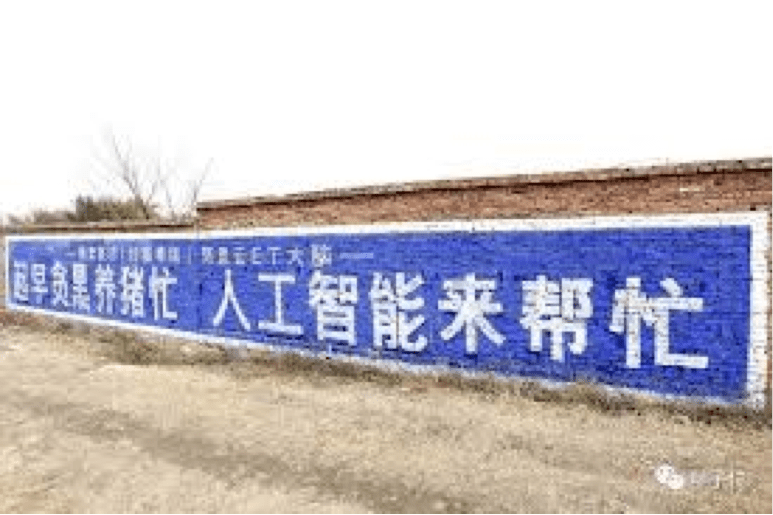
“Wake up early and stay up late to raise pigs, now AI comes to your aid.”
Yes, it is an ad from Alibaba targeted at pig farmers. But why would a posh tech company like Alibaba be interested in pig farming, which seems low-level and dirty?
Once you understand a bit of the market, it will become obvious.
Huge market ripe for disruption
According to the United States Department of Agriculture’s (USDA) data, China contributed more than 53 percent of global pork consumption in 2016. Domestic economists estimated that the total pork market in China amounted to US$220 billion (CNY 1.4 trillion). That’s more than twice the size of the smartphone market in the country.
The following USDA graph, albeit old, shows pork consumption growth and pork’s dominant position in Chinese meat consumption.
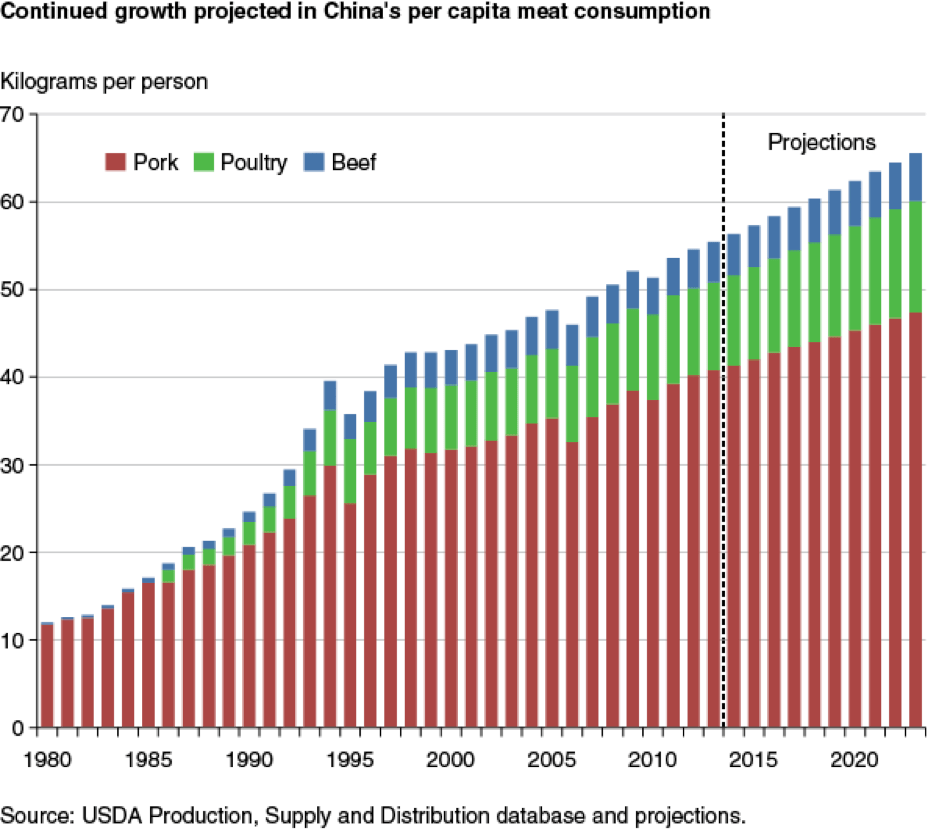
Photo credit: USDA
In 2015, the government started tightening and enforcing environmental regulations aimed at controlling swine farm pollution. Many small and less efficient pig farms closed down. As a result, the profit for pig farming soared, reaching as high as US$100 per head in some of the more efficient farms.
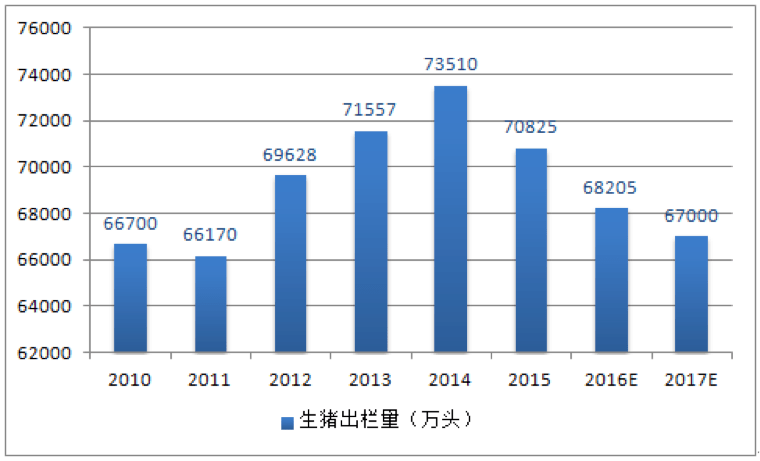
The annual pig livestock numbers (in 10,000s). The reduction was caused by environmental regulations. / Photo credit: USDA
Alibaba is not the first
Now, many parties, including investment banks and large technology companies, are trying to fill this void. In fact, Alibaba is not the first large tech company to enter the market. NetEase (a Nasdaq-listed Chinese internet firm) announced its entry into pig farming back in 2009.
After a few iterations, NetEase’s pork was available at the company’s canteens for “internal testing.” The market launch soon followed—the pork is priced higher than most branded pork and is still selling fast. The company also opened a restaurant chain featuring its pork, where it takes a few weeks of queuing to get a table.
Data leads to trust
Alibaba won’t miss this
More wall ads





Stay updated on the go with our mobile app.
Get latest insights with smoother, more personalized experience through TIA mobile app.