- Insights This article was written by a TIA community member. Insights pieces undergo the same rigorous editorial process that newsroom-produced articles have.
 Ganes Kesari · · 4 min read
4 ways to fail a data scientist job interview
Data scientists might well have the sexiest job of the century. But hiring one is anything but that.
For companies trying to identify one, it’s like finding a needle in a haystack. After years of hiring data scientists at Gramener, I’ve seen conspicuous patterns of skill gaps in the market, and being aware of your weaknesses is a sure and steady step to fixing it.
While there are hundreds of ways to fail an interview, these can be isolated into four broad paths.
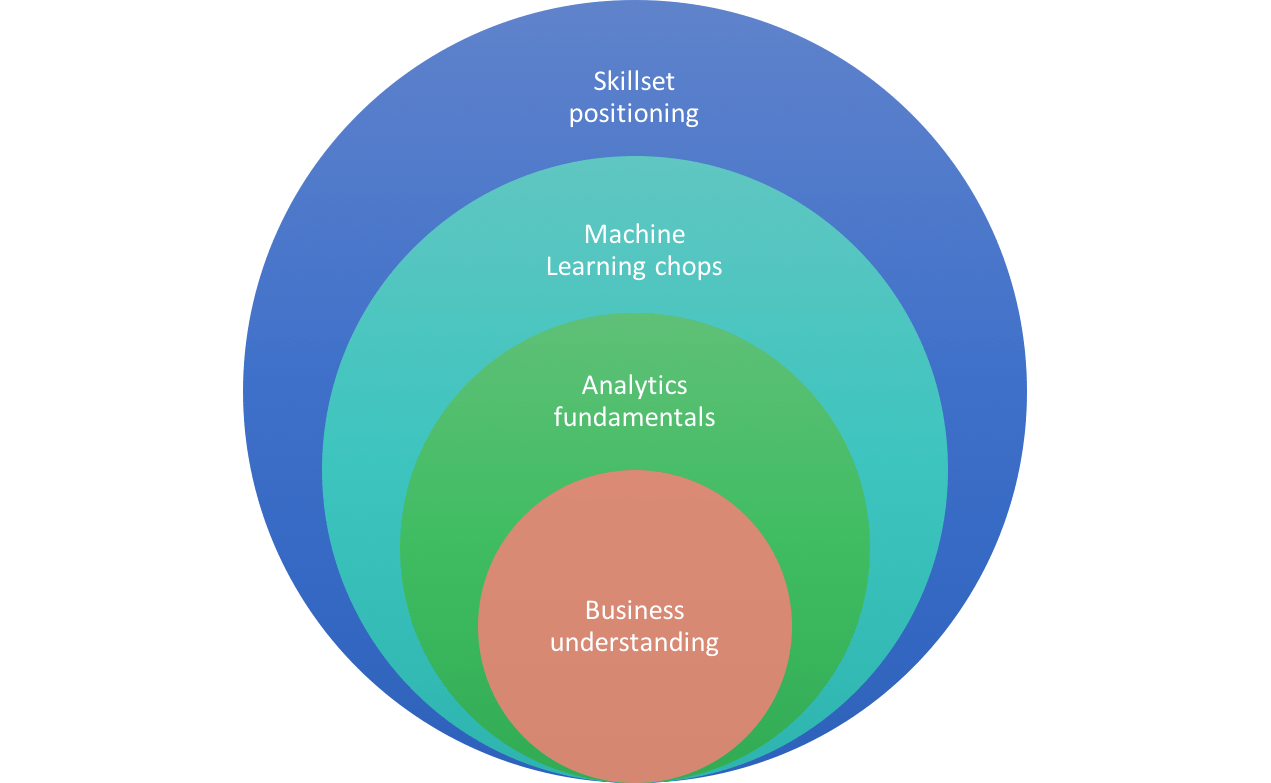
The four common points of failure in data science interviews
1. Window dressing the CV with machine learning buzzwords
As with any job, it may be tempting to tailor your resume by peppering it with industry jargon, and data science has no paucity for buzzwords. While window dressing does improve a CV’s chances of getting picked by the automated scoring bots in HR, this can backfire rather quickly.
It’s not uncommon to find that the advanced analytics skills candidates claim on paper actually translate to nothing more than basic familiarity with Excel pivot tables, SQL queries, or Google Analytics. Even ignoring this, the tactic sets candidates up for big failure and bigger demotivation.
For a sniper, this act equates to donning the garbs of a soldier and picking up a gun, without putting any time into training. As absurd as it sounds, it’s no fun for a sheep to go hunting in wolves’ clothing.
2. Reducing model-building to just making library calls
Many candidates who claim to know all about modeling struggle greatly to explain beyond function calls and parameters. Even before asking what a technique like random forest does, a more important question is why it is needed in the first place.
To be fair, a model can be up and running with a single-line library call. But machine learning (ML) is not that simple. One needs to understand, say, where logistic regression is more suitable than SVM. Or, when simple extrapolation is more powerful than forecasting techniques like ARIMA or Holt-Winters.
A good sniper needs to do a lot more than point and shoot (shooting is just 20 percent of the course in sniper school). He needs nuanced skills like patience, discipline, and great observation to estimate target ranges from afar.
3. Lacking the essential fundamentals
While an intuitive understanding of ML techniques can serve as a strong plus for candidates, they often stop short at that. Investing in hands-on training to master more fundamental skills like statistics and exploratory data analysis are often overlooked.
Modeling accounts for just a small portion of the analytics lifecycle. In any successful ML project, over 50 percent of time is spent prior to that in data preparation, wrangling, and approach. And almost 25 percent of time after is spent in model interpretation and recommendations.
Even as candidates flaunt 90 percent accuracy levels in projects, it’s a tragedy when they struggle to explain what a p-value is and when their confidence diminishes when explaining why we need confidence intervals for models.
A firm grip on fundamentals is critical in all disciplines, and a sniper first needs to be a great infantryman. Of what use is excellent marksmanship, if one can’t fix a gun that jams or misfires in the midst of battle?
4. Inability to apply analytics to solve business problems
In pursuit of data science





Stay updated on the go with our mobile app.
Get latest insights with smoother, more personalized experience through TIA mobile app.








📅 Upcoming Events
22 October 2026
Payoneer x CSPN Summit 2026