- Insights This article was written by a TIA community member. Insights pieces undergo the same rigorous editorial process that newsroom-produced articles have.
 Rishabh Singhi · · 4 min read
4 startup lessons I learned from Alibaba’s founders program
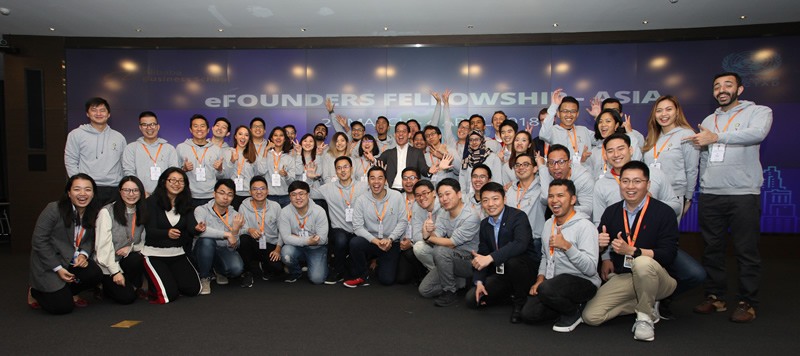
Asian entrepreneurs at Alibaba’s e-Founders fellowship / Photo credit: Alibaba
I was very excited to have been offered the opportunity to attend the e-Founders fellowship program at the Alibaba headquarters in China. My reasons for excitement were two-fold: it was a joint program between Alibaba Business School and United Nations Conference on Trade and Development (UNCTAD) and there was a chance to meet and learn from 36 other startup founders from Southeast Asia.
Here are four key takeaways that will help me in my startup journey.
1. Western management meets Eastern wisdom
While we’re usually in awe of the “westernized” working style, Asians think and act differently.
For example, when I lived in the US, I would go for my morning coffee at Starbucks. There, it was often stressed that customers should know their order so they won’t hold up the queue, as cashiers do not like delays. However, in Southeast Asia, cashiers tend to be more patient and provide suggestions. In both cases, the objective for cashiers is to make more sales, but the working styles are different. The western style is more target-driven and the eastern style more people-driven.
Ideally, we want to adopt both working styles in our organization with team members who are driven by incentives, perks, culture, values, and affection. Thus, we need people who are both learning on the job and not afraid to take risks (Western management style) and be driven by culture and ethos (Asian management style).
2. Two-sided platforms and the network effect
A true platform provides value for all transacting parties involved. Most platforms provide value only for the customers who pay. However, the trade enablers also demand equal attention, as they play a pivotal role in enabling the transaction.
A good example are the popular ride-hailing platforms which let both its riders and drivers rate each other, providing value for both stakeholders. However, one popular global ecommerce platform only lets its users rate the sellers, and not the other way around. This means there is not enough value for sellers who only have connections with the platform and not the customer. This restricts the platform’s ability to onboard more sellers exponentially.
Platforms like Alibaba allow all stakeholders to review each other and display that information to all transacting parties. This leads to more trade on the platform, as the seller is more willing to trade with those customers who have a higher rating. This also allows sellers to offer more credits or discounts to highly rated customers.
However, creating a network effect is not only limited to displaying ratings or providing reviews. It goes beyond simple confidence-building measures to more data-driven analytics.
For example, when a customer books a travel package to Antarctica, sellers could use big data and AI to sell winter jackets, frozen foods, or selfie sticks to the same customer. This platform can also be used to recommend services to friends and family members. It can make suggestions to both the customer and the seller and give suggestions to friends and family members who have previously used such services, introducing a social element.
However, creating a robust network effect may come with privacy-related concerns.
3. Hard work wins over everything
In one session, Jack Ma convinced me of the importance of hard work. According to him, when the company was on its first five years, they worked really hard—almost 18 hours a day. Hard work for them was the most important KPI, not the end result.
Each individual in the company was very critical about the work ethic of the people they were interacting with. It was almost impossible for anyone to slack off and be respected at the same time.
4. Culture is more important than KPI





Stay updated on the go with our mobile app.
Get latest insights with smoother, more personalized experience through TIA mobile app.