- Insights This article was written by a TIA community member. Insights pieces undergo the same rigorous editorial process that newsroom-produced articles have.
 Sheji Ho · · 13 min read
11 trends that will shape Southeast Asian ecommerce in 2017
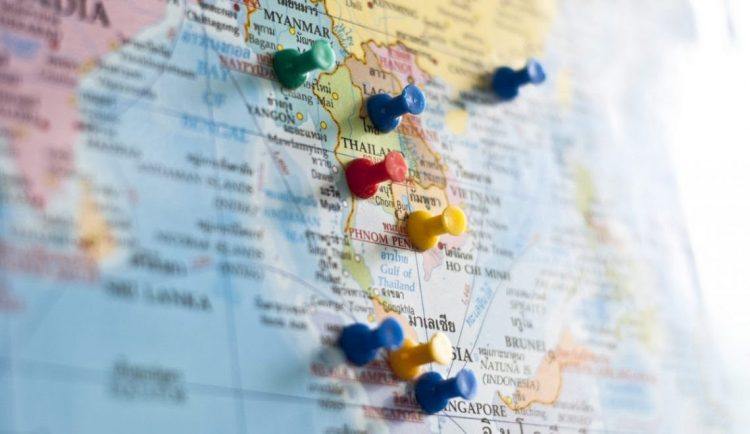
While president-elect Donald Trump is working hard to stop China from becoming a global superpower, the country hasn’t slowed its digital hegemony in Southeast Asia — China meaning Alibaba of course. After calling out Southeast Asia as being on the cusp of an ecommerce golden age in our 2015 trends edition, Jack Ma and his team swooped in four months later and picked up Lazada, the region’s leading ecommerce marketplace, for a crisp US$1 billion.
The Lazada-Alibaba deal, Alibaba’s largest overseas acquisition to date, is a pivotal event for Southeast Asia as its implications span the entire commerce value chain from digital advertising, logistics, finance, insurance, to even healthcare.
A look back at 2016
Even without the Lazada deal, last year still proved eventful for ecommerce in the region: fast-fashion fizzled out, and Rocket Internet’s Zalora ended up selling for peanuts to Thai retail conglomerate Central Group.
Singpost’s headaches also continued after the sudden removal of its Group CEO Wolfgang Baier in 2015. The company also lost its COO, CFO, and the group’s chairman stepped down amidst a corporate governance scandal. These events pushed back the company’s deal with Alibaba a third time and weren’t closed until October.
Across the region, asset-heavy B2C ecommerce suffered. Singapore homegrown RedMart was acquired by Lazada after it couldn’t bleed any more money; Ascend Group’s iTruemart shut down in the Philippines only a few months after boasting of becoming the first Thai regional ecommerce player by 2017.
Japan’s ecommerce juggernaut Rakuten, on the other hand, withdrew from Southeast Asia and sold its Thailand business back to the original founder. Moxy moved away from traditional mass ecommerce while merging with Indonesia’s Bilna to become Orami, a female-focused content and commerce play that raised funding from Facebook co-founder Eduardo Saverin.
Borrowing Jack Ma’s terminology, if 2016 was the appetizer, then 2017 will be the main course for ecommerce in Southeast Asia. With a US$238 billion grand prize and Amazon poised to enter Singapore in Q1, it’s already shaping up to be an interesting year.
Game on.
1. The giant finally awakens: Alibaba becomes more active post-Lazada acquisition
Arguably the biggest ecommerce milestone in Southeast Asia this year was Alibaba’s US$1 billion acquisition of Lazada. However, not much action has taken place at the surface level since the deal. That is slowly changing and Alibaba will soon introduce its entire ecommerce ecosystem to Southeast Asia in the coming year. It consists of Ant Financial, Cainiao, and the Taobao Partner (TP) program just to name a few.
Launched in China seven years ago, the TP program aims to enroll suppliers to provide ecommerce related services to Taobao’s merchants. TPs such as Baozun and Lili & Beauty offered store operations and fulfillment services that enabled Taobao and Tmall to grow into two of the biggest ecommerce platforms in China.
The imminent launch of a similar program in Southeast Asia (ahem, Lazada Partners?) will create ample opportunities for an entire ecosystem ranging from digital agencies to delivery companies. Full-service ecommerce enablers such as aCommerce and SP eCommerce are well-positioned to further grow the US$238 billion Southeast Asian ecommerce opportunity.
2. Last-mile logistics will get commoditized, accelerated by Alibaba’s Cainiao Network
Logistics is often considered the biggest bottleneck to ecommerce growth in Southeast Asia. This has resulted in plenty of venture capital funding spawning an army of last-mile and on-demand delivery startups such as Ninja Van, Ascend Group’s Sendit, and Skootar. Even cab and bike hailing apps like Go-Jek and Grab have tapped into delivery services as an additional revenue stream. All this has added pressure to incumbents like Kerry Logistics, DHL, and JNE who are only scratching the surface in the fast-paced ecommerce logistics space.
This nascent, fragmented, and hypercompetitive ecosystem is similar to that of China a decade ago and was what spurred Alibaba to launch Cainiao Network, an open platform that aggregates all last-mile vendors. This asset-light approach addressed Alibaba’s weakest link: logistics. It also enabled the company to leverage its massive demand to control the conversation.
3. The battle for “first-mile”: New threats to Google and Facebook
4. Alipay’s entrance into Southeast Asia will drive consolidations in the online payments sector
5. Ecommerce 1.0 to Ecommerce 2.0
6. Expect more casualties from a potential Alibaba and Amazon face-off
7. Brands skip the marketplace bait-and-switch and go direct-to-consumer or multi-channel
8. Hyper-competition will drive entrepreneurs and established firms to explore insurance, finance, and healthcare
9. Ignored but not forgotten, companies will focus on the last remaining vestige in Southeast Asia: Myanmar
10. On-demand in Southeast Asia will whittle down to a few industries where the model actually makes sense
11. Amazon to enter Southeast Asia (finally)





Stay updated on the go with our mobile app.
Get latest insights with smoother, more personalized experience through TIA mobile app.