 Jonathan Chew · · 6 min read
A tale of three startups from HKSTP’s Elite Programme

What’s it like to hear and learn from the best of the best?
On November 14, Hong Kong Science and Technology Parks Corporation (HKSTP) organized Elite Global Inno Day for startups from its Elite Programme, an initiative for firms with high growth potential. Launched in 2019, it has supported 42 companies with their expansion outside Hong Kong.
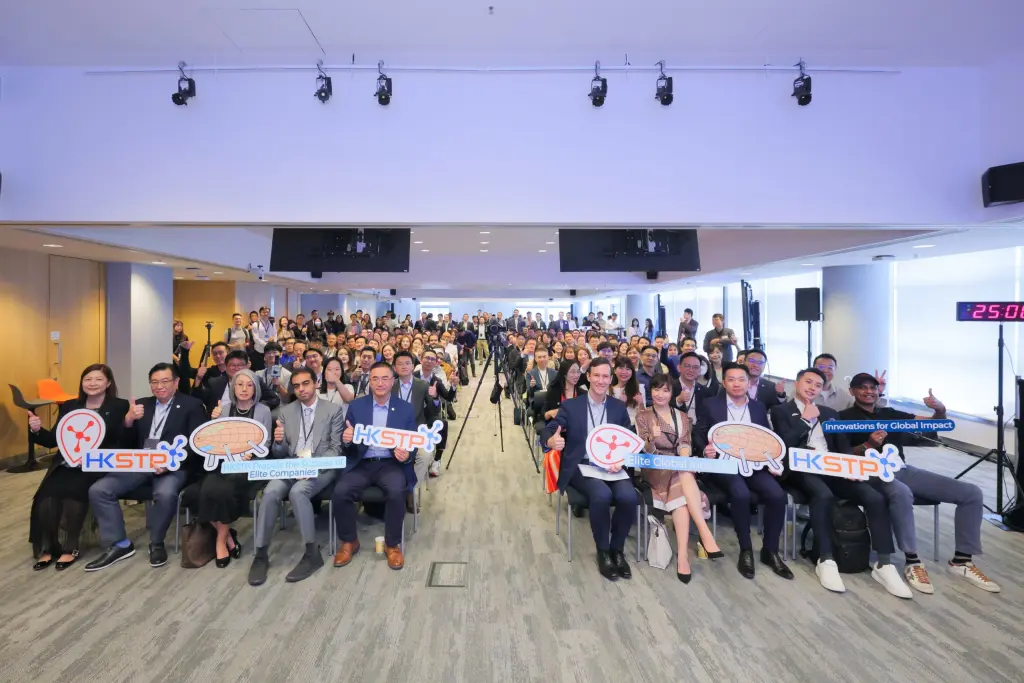
An elite bunch of founders at HKSTP’s Elite Global Inno Day / Photo credit: HKSTP
“The Elite Programme’s goal is to help these companies thrive, grow, and achieve their global ambitions,” says Eric Or, chief corporate development officer at HKSTP. “In generating significant global impact, Elite Programme startups can also attract global talent to Hong Kong, reinforcing our status as a tech and talent hub.”
More than 200 partners and investors joined the event, with 17 Elite Programme companies pitching to attendees as well. Several Elite Programme startups also took part in panel discussions, sharing insights on key issues.
One such topic was strategies for global growth. The panel consisted of industry representatives and three startups: Buy&Ship, b-One Ortho, and Ksher Group.
Even though these firms come from very different backgrounds, each have displayed similar levels of grit and ingenuity. Here’s a closer look at their stories.
Bridging China and SEA
In 2020, Ksher Group was faced with a choice: pivot or die.
Founded in 2016, the company initially provided a payment gateway for merchants in Southeast Asia that enabled them to seamlessly accept Alipay, WeChat Pay, and other payment methods used by Chinese travelers.
“In three years, we were EBITDA positive and ready to expand,” says Siva Ramanathan, senior vice president and chief corporate officer at Ksher. “Then Covid-19 came and killed the business.”
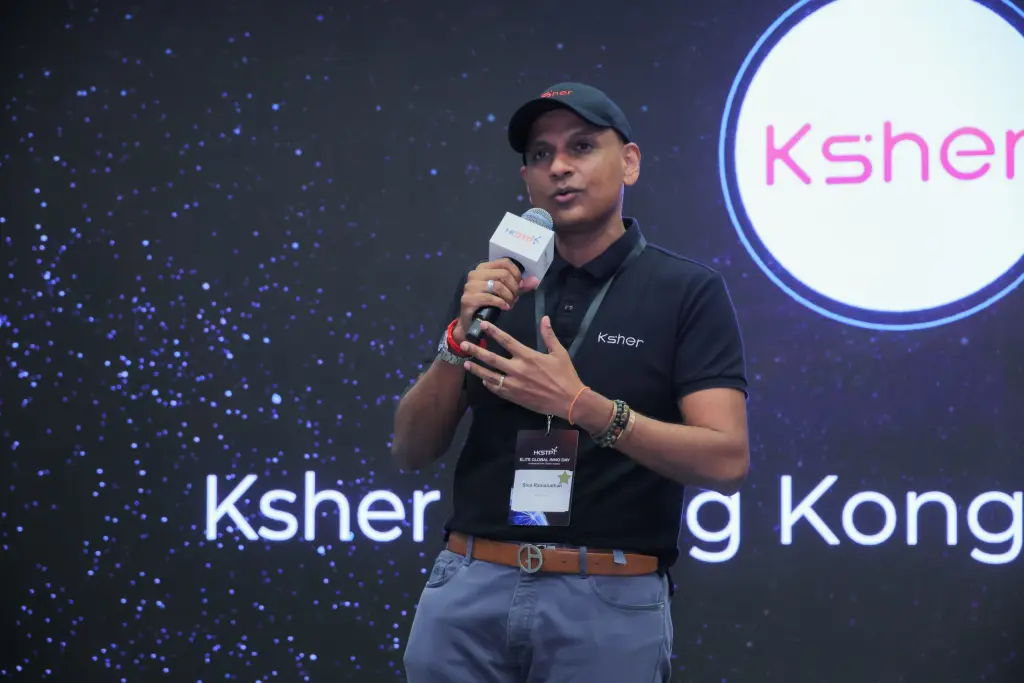
Siva Ramanathan, senior vice president and chief corporate officer at Ksher / Photo credit: HKSTP
Ksher pivoted to focus on its strength – understanding the relationships between China and Southeast Asia. The company zeroed in on issues SMEe faced when selling to Southeast Asian consumers.
At the time, Chinese SMEs lacked secure and compliant options to receive payments. Some merchants would even resort to illegal middlemen networks, Ramanathan says.
To solve this, Ksher built a fully compliant and secure payments infrastructure that collects payments for merchants and remits that to a locally accessible account, allowing them to receive cross-border payments safely and cheaply. The company also works with large banks to get merchants access to better foreign exchange rates and proper banking infrastructure.
Ksher’s strategic advantage lies in how it’s led and run by local teams that deeply understand local concerns, according to Ramanathan. For instance, transaction limits in the Philippines can be a challenge.
“The limit is low, so it hinders fund transfers by merchants,” he explains “Our ground teams talked to the relevant stakeholders and set up an arrangement, successfully solving this problem.”
Looking ahead, Ksher is looking to serve ASEAN better.
“There’s a lot of Southeast Asian blood in our veins,” says Ramanathan. “We’re well positioned to serve intra-ASEAN trading as it gets stronger in the coming years.”
The world at your fingertips
Ten years ago, Sheldon Li’s sister complained to him that many of the things she wanted to purchase online couldn’t be shipped to Hong Kong. That was the aha moment – Li established Buy&Ship to eliminate barriers in cross-border ecommerce.
Today, the company offers two main services.
The first is logistics-oriented. When a customer wants to purchase from an overseas seller, Buy&Ship helps them consolidate shipments, deals with administrative issues like customs declarations, and handles last-mile delivery.
“Initially, we were primarily delivering things from the US and Japan to Hong Kong,” says Jeff Zielinski, Buy&Ship’s chief financial officer. “We’ve since added markets such as Korea, the UK, and Australia.”
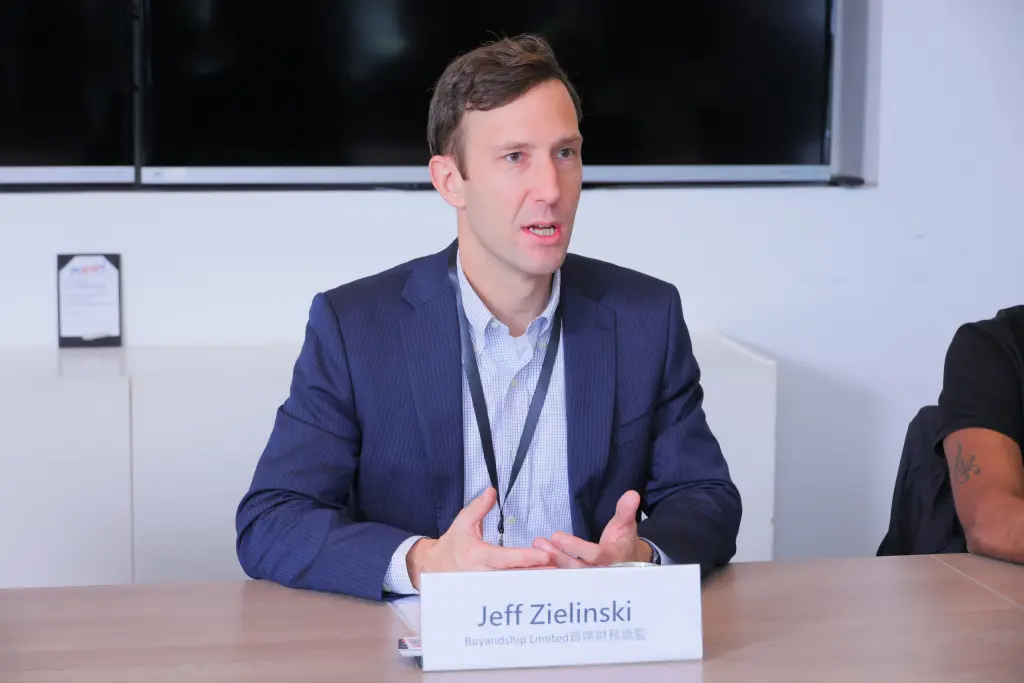
Jeff Zielinski, chief financial officer of Buy&Ship / Photo credit: HKSTP
The second service is a proxy buying solution.
“Users simply need to put in the URL of the product and pay for it, and we get it to their houses,” Zielinski explains. “It’s great for people who can’t read the local languages on the websites or don’t have a local credit card for payment.”
As the company scaled, it incorporated more automation to meet customer demand. For example, some warehouse processes – such as the packing and tagging of packages – are now powered by robotics.
Buy&Ship is now looking to break down the information gap in international shopping. It’s developing an AI-powered system that will automatically compare products from sellers in different countries, helping users get the best deals. The system will also help with other details like translation and standardizing sizing of clothes.
“Global shopping has always been a bit troublesome and nontransparent,” says Zielinski. “For us, it’s all about offering consumers a great service.”
Building bones
How many startups can say that they’re helping to literally build people back up? This one does.
Founded in 2014, b-One Ortho makes artificial joints for reconstruction surgery, such as for hips or knees.
A worrying trend has emerged among orthopedic patients in the past few years. Those seeking joint replacement surgery have been getting younger as people’s increasingly active lifestyles lead to exacerbated joint wear and tear.
“Anecdotally, implants can work well for 15 to 20 years, which is fine if you get them in your 70s,” observes Eric Yang, co-founder and chairman of b-One Ortho. “But if you’re getting the operation earlier and living longer, your implants might not last.”
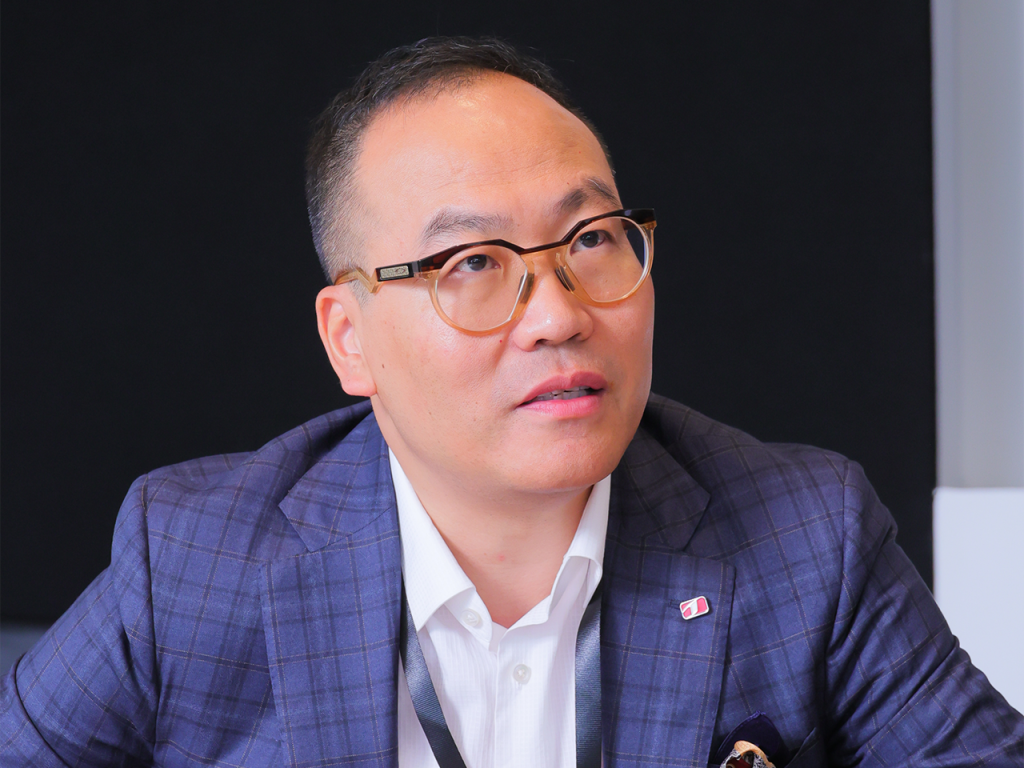
Eric Yang, co-founder and chairman of b-One Ortho / Photo credit: HKSTP
Ceramic-made inserts used to be the gold standard as they were durable, Yang says. But they were prone to fracturing, making them a “disaster to treat,” he adds.
The alternative was polyethylene, a plastic material that is less brittle, lighter, and resistant to abrasion. The downside was that it could wear out faster than ceramic inserts.
B-One Ortho sought to combine the flexibility of polyethylene with the durability of ceramic. After five years of intense R&D, the company succeeded in producing a material that was as hard as ceramic on the surface but was still quite flexible, alleviating the fracturing issue.
The firm is now looking at using 3D printing technology on a wide scale to drive down the cost of artificial joints. It’s also developing a robotic system to help surgeons perform orthopedic operations more quickly and effectively. This addresses both the dwindling supply of surgeons and the growing demand for replacement surgeries.
“Training to perform the surgery usually takes 10 years,” Yang says. “With our robotic system assistant, we could help younger surgeons perform at the same level as fully-fledged experts in a safe way.”
A launch pad
For these startups, many of the opportunities that spurred their growth required not just money but time and the right connections as well.
The founders cited how the Elite Program gave them the chance to meet investors, get publicity, and network with potential partners. Additionally, the program served as their home base, allowing them to spread their roots in new markets or set up a hub for technical development.
“I’ve said that there’s good feng shui here, and HKSTP has been instrumental in helping us – having a partner like that is invaluable,” says Ksher’s Ramanathan.
As one of the largest innovation and technology ecosystems in Hong Kong, HKSTP is home to over 2,000 technology companies and aims to develop the city into an international hub for innovation. To connect with HKSTP and its partner companies, get in touch here.
This content was produced by Tech in Asia Studios, which connects brands with Asia’s tech community. Learn more about partnering with Tech in Asia Studios.
Stay updated on the go with our mobile app.
Get latest insights with smoother, more personalized experience through TIA mobile app.
Recommended reads
 Indonesian AI startup goes global
 Forrest Li on scaling Sea, building smarter bots, and founder grit
 An AI assistant that joins sales calls and scores team skills
 SGX’s CEO says it doesn’t need a unicorn to win
 SMEs want AI too, but not the kind Big Tech is selling
 Oatside’s alt-milk rise hits a profitable gear
 Alibaba’s financial health in 12 charts
 Asia’s telcos bundle AI into mobile plans. Will it pay off?
 M-Daq chases bigger clients as revenue falls, losses grow
 VC tracker: Accel raises US$3.5b, including US$550m for India





Editing by Winston Zhang and Eileen C. Ang
(And yes, we’re serious about ethics and transparency. More information here.)




