
Smart cities are the future of urbanization. They’ve been put forward as the way to more efficient, and sustainable living.
A key aspect of these cities is smart access, which includes replacing traditional locks and keys with smart locks that can be opened using mobile phones.
Smart-access solutions are especially beneficial to infrastructure management businesses, such as telecommunications firms, logistics providers, and utilities companies, where multiple workers need access to various facilities across a country.
Knowing who has access to a location, for how long, and how frequently enables businesses to optimize workflows and assign work in the most effective manner. It is also helpful in the event of a security breach, such as theft or vandalism.
“With telcos, you regularly need to pass keys to people to do servicing. Every month or two, you need someone to go in to check [if] everything’s OK, and someone needs to open up the cell tower for repairs when something goes wrong,” explains Anthony Chow, CEO of Igloohome. “The last thing you want is for the keys to go missing or end up in the wrong hands.”
Anthony Chow, CEO of Igloohome / Photo credit: Igloohome
Igloohome is a Singapore-based provider of keyless access solutions. It started out building smart locks for homeowners to grant access to visitors remotely by sending an access code to their smartphones.
In 2019, after seeing that enterprises also have the same need, it launched Iglooworks, a platform which helps businesses solve various access-related problems.
With Iglooworks, a manager can remotely grant entry to a facility, allowing only specific employees to unlock the door.
This is done through a centralized platform, where managers can view all the different locks under their control and grant or revoke permissions to entry accordingly.
Such solutions enable companies to deploy staff more efficiently, as it cuts down the back-and-forth process of passing keys around and eliminates concerns about keys being mislaid.
Security concerns
Despite the advancements in smart-city technologies, they also bring along with them a world of security issues, from concerns about data privacy to system vulnerabilities.
One of the biggest issues with smart locks, which often rely on the internet of things (IoT), is that they can be easily hacked.
IoT systems are some of the most vulnerable in the smart-city landscape, as they are usually connected to a network but are only protected by the most basic of security measures, such as passwords.
This provides a point of entry for hackers to infiltrate the other devices connected to the same network.
“This sounds very scary coming from a lockmaker, but the truth is, nothing is hack-proof,” says Chow. To ensure device security, relevant measures should be put in place to make hacking so difficult, “it becomes pointless for the hacker,” he adds.
Iglooworks uses a variety of different technologies and strategies to make its system as secure as possible. By using cryptographic algorithms to generate one-time passwords, together with a proprietary Bluetooth software and multi-factor authentication options, the company eliminates the need for a lock to be connected to a larger network.
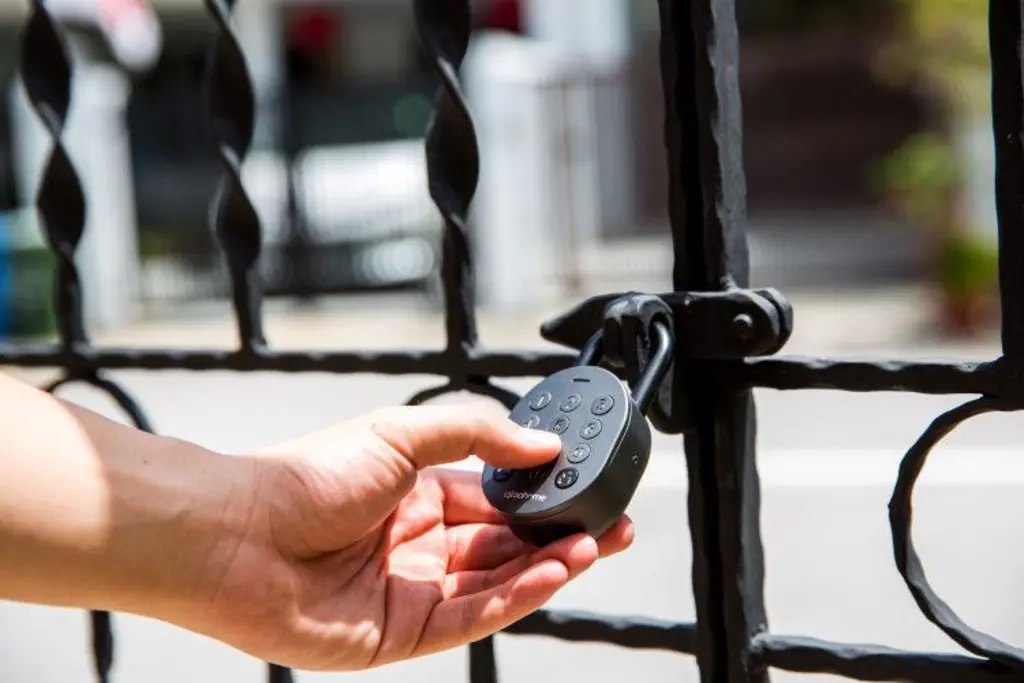
Photo credit: Igloohome
And when connectivity is required, such as with larger systems of locks, Iglooworks taps into the networks of telcos and takes advantage of the security that is built into the telecommunications system.
Even simple measures like locking someone out after multiple failed login attempts help keep the system secure.
Working with regulators
The use of IoT in smart-city initiatives exposes even governments to security issues. These occur when products from different vendors with varying systems are made to work together, using intermediates like the open internet to connect everything.
These isolated systems have greater gaps between them, creating more opportunities for hackers.
As such, governments must also work together with businesses to develop regulatory frameworks that address the various concerns of smart cities, says Chow.
With clear guidelines in place, governments can ensure that all the different parts in a smart city work as a cohesive unit and eliminate weak points. This, in turn, assures the public that any device it uses in projects meets the necessary security requirements.
In Singapore, for instance, the Cybersecurity Labelling Scheme is being piloted to rate the security of IoT devices, with the aim of encouraging manufacturers to make security one of their priorities.
“The cities of tomorrow will be the ones where there is an ecosystem in place today to enable growth,” says Chow.
Ultimately, the security of smart cities – and their future for that matter – hinge on the cooperation between the private and public sectors.
Igloohome is a provider of keyless access solutions, bringing the convenience of smart locks to homeowners. Its new service Iglooworks is a platform that enables enterprises to manage access points seamlessly.
Find out more about Igloohome on its website.
Stay updated on the go with our mobile app.
Get latest insights with smoother, more personalized experience through TIA mobile app.
Recommended reads
 Anthropic CEO sees AI fuel growth, not employment
 Singapore to establish National AI Council, AI missions
 The hardware secret that gave OpenAI the edge on Anthropic
 Southeast Asia’s data center boom has a water problem
 ASEAN gets a tailored risk tracking tool
 A middleman model makes free patient tracking possible
 Making carbon emissions data auditable for financial regulators
 The digital conscience proposed by Anthropic CEO
 ‘Not how humans act’: how agentic AI is changing cyberattacks
 The self-driving truck problem is no longer about software





Editing by Nathaniel Fetalvero, Jaclyn Teng, September Grace Mahino, and Eileen C. Ang.
(And yes, we’re serious about ethics and transparency. More information here.)




📅 Upcoming Events
22 October 2026
Payoneer x CSPN Summit 2026