- Insights This article was written by a TIA community member. Insights pieces undergo the same rigorous editorial process that newsroom-produced articles have.
 Chris Ryan · · 4 min read
Sustainable banking may be the new vision for financial firms in the post-pandemic future
Despite the upheavals brought by the global financial crisis over a decade ago, trust in traditional banking institutions remains strong – at least, among their core demographic. The struggle for these financial firms has always been to make their established and traditional brand values relevant to a new generation of digitally native customers.
But with the rise of virtual banks and other disruptive financial service providers, they face yet even more pressure. Virtual banks have taken the time to understand the particular needs of younger generations and are building a new mobile-first, customer-centric banking experience from the ground up. By the end of 2025, it’s expected that the neo and challenger banking market will be worth over US$30 billion.

As 2020 sees the world tilting on its axis once more, both traditional and challenger banks are having to rethink the ways they address what matters most to millennials and Gen Zers who are increasingly making up the majority of their clientele.
Baby boomers and Gen X kids grew up with the Cold War and the threat of a nuclear holocaust looming over them, but their children have a different perspective on mutually assured destruction. We’ve seen them march in protest over how the planet they are inheriting from us has already been burned, flooded, and experiencing extreme weather events with escalating rapidity.
My 20-year-old son is coming of age with these existential threats and the sentiment that the past generations have failed him and his peers. In fact, he considers it his generation’s duty to put things right.
“I think it’s critical to our future for our generation to be sustainably inclined,” he told me recently. “Luckily, I believe most of us think that way, so I’m looking forward to seeing new solutions for cleaning up the mess.”
His words reflect a global unease: Climate change is the biggest concern among those between 13 and 36 years old. Research for this study had been conducted before the onset of the current pandemic – which, ironically, is offering us redemptive optimism, given the measurable improvements in air quality and lowered carbon emissions resulting from quarantine measures that have been implemented around the world.
Shortly before all travel ceased, I attended the Singapore Fintech Festival where, for the first time, “sustainable banking” was the core theme.
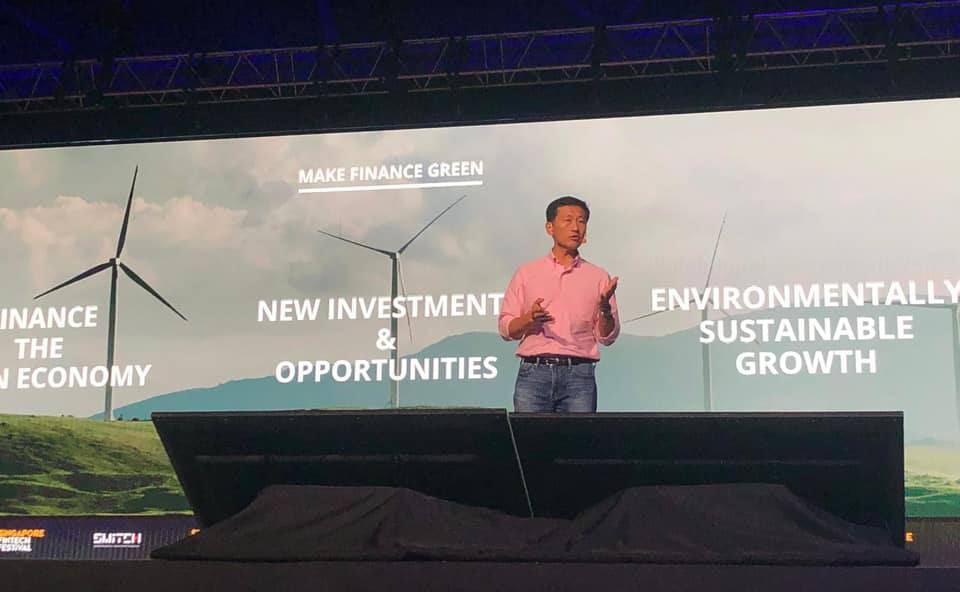
Singapore Minister for Education Ong Ye Kung delivering his speech at the Singapore Fintech Festival / Photo credit: SG Fintech Festival’s Facebook page
An inspiring keynote from Singapore Minister for Education Ong Ye Kung called for the city-state – which accounts for only 0.11% of global carbon emissions – to take the lead in green finance and in mobilizing global capital for the green economy.
Singapore’s measures include a green bond scheme, incentives to encourage growth in loans for sustainable initiatives, a program to encourage asset managers who drive green-focused market investment strategies, and collaborations with educational institutions.
This messaging is a powerful call to action for my son’s generation and highlights the role that the banking industry can play in the new wave of innovations waiting for us on the other side of the current crisis.





Stay updated on the go with our mobile app.
Get latest insights with smoother, more personalized experience through TIA mobile app.










📅 Upcoming Events
22 October 2026
Payoneer x CSPN Summit 2026