Malavika Velayanikal · · 8 min read
Suppressed for decades, Kolkata sprouts green shoots of a startup renaissance
I am always running into Bengalis in Bangalore. People from West Bengal are everywhere in professional fields, given their strong academic roots and proficiency in English. And the startup space is no exception. Yet, when you talk about startup hubs in India, you first hear of Bangalore, Delhi, and Mumbai, and then of Hyderabad, Chennai, and Kochi as the emerging ones. Kolkata, the capital of West Bengal and the oldest metropolis in India that produced three of India’s five Nobel laureates, is never in the list. Why not? I have often wondered.
This is a question that troubles Ravi Ranjan. And he is on a mission to set things right.
Ranjan is in charge of the first incubator for technology startups in Kolkata – Startup Warehouse of the National Association of Software and Service Companies (Nasscom). Nasscom is India’s leading technology industry association. “I want to make people in this part of India believe in entrepreneurship. I want more people to think, ‘instead of going for a regular salaried job, why don’t I look at entrepreneurship as a career option?’ That is my personal KRA [key result area is a measure of performance at work],” Ranjan tells me.
We are on the seventh floor of Monibhandar building in Webel Bhavan, the large HQ of a government-held company called West Bengal Electronics Industry Development. The top floor is a 10,000-square-foot glass-encased space with a panoramic view of Salt Lake. The West Bengal government has given it to Nasscom to develop as an incubation center for tech startups, but it’s empty when I reach there. “White space” and “blue ocean” flash through my mind as Ranjan hurries up from the floor below, where Nasscom is using a couple of rooms until the seventh floor is redesigned to meet the requirements of about 20 startups.
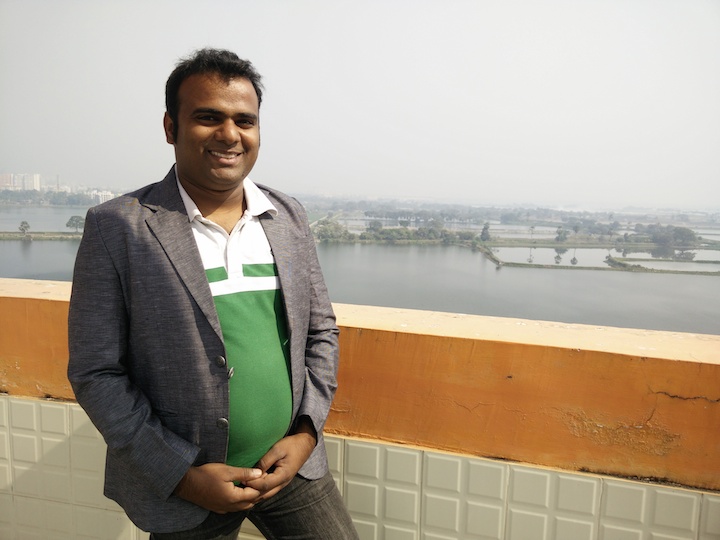
Ravi Ranjan leads Startup Warehouse in Kolkata
“If a couple of youngsters can create a Flipkart or an Ola in Bangalore, a Snapdeal or Zomato in Delhi, a Housing.com or BookMyShow in Mumbai, why not here in Kolkata?” Ranjan asks me. It’s a question he often throws at students on his entrepreneurship evangelizing tours of 200 engineering colleges in eastern India, comprising the large states of West Bengal, Orissa, Jharkhand, Bihar, and northeastern states of India.
The answer to the question is not easy. Let’s start with a bit of history.
Rich in intellectual capital but …
Kolkata was the first Indian city colonized and developed by the British in the 18th century. Renamed Calcutta, it served as the capital of India under the British Raj until 1911, when nationalistic fervor grew in the east and prompted the colonists to shift their capital to Delhi in the north.
Kolkata was a hub of politics, arts, science, culture, and education in India. But it was ravaged during the struggle for independence, and World War II when the Japanese bombed the city several times. The Bengal famine of 1943 killed millions, and communal violence followed the partition of Bengal when India became independent. After a period of corrupt rule, a communist movement swept through West Bengal, and in 1977, the Communist Party of India – Marxist (CPM) was elected to power. The CPM ruled West Bengal for the next 34 years. Trade unionism thrived under CPM rule and scared off investors and industrialists. Unlike in China, where Deng Xiaoping ushered in a pragmatic form of communism, the Jyoti Basu government in Bengal resisted economic liberalization every step of the way.
Somewhere along the way, the city grew weary, its people risk-averse and laid back. It still produced leading intellectuals, artists, and writers, but the enterprising ones migrated to other cities to find their fortunes.
That is why Kolkata, the biggest hub of eastern India, hasn’t yet produced any tech superstars, despite the presence of around 200 technology colleges, including three Indian Institutes of Technology (IIT), three Indian Institutes of Management (IIM), and two National Institutes of Technology (NIT) in the region.
“I miss home, but I don’t think I can work from there,” is a refrain I often hear when I talk to Bengali entrepreneurs in Bangalore.
Saptarishi Basu, founder of big data analytics startup Analyse, has experienced this first hand.





Stay updated on the go with our mobile app.
Get latest insights with smoother, more personalized experience through TIA mobile app.