- Premium Content It takes our newsroom weeks - if not months - to investigate and produce stories for our premium content. You can’t find them anywhere else.
 Emmanuel Samarathisa · · 5 min read
Malaysia, Indonesia overhyped Elon Musk’s Tesla, Starlink
Dan Lain-Lain (Malay for “and others”) is a weekly column by Tech in Asia journalist Emmanuel Samarathisa that dissects the goings-on in the Malaysia tech scene but with a heavy mix of current affairs, policy, and politics. Click here to read past articles.
We have seen over the past few weeks the extent to which Malaysia and Indonesia have gone to lure Elon Musk and his billions.
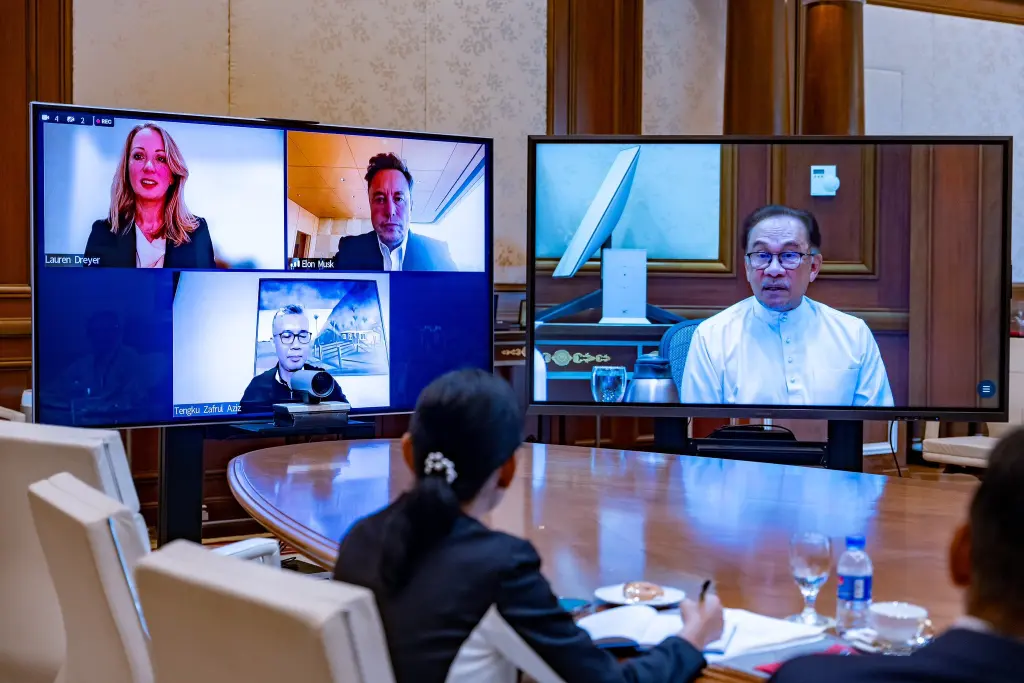
Malaysian Prime Minister Anwar Ibrahim (right) in talks with Tesla and SpaceX founder Elon Musk during a July 14 virtual meeting / Photo credit: Anwar Ibrahim’s Twitter account
For instance, Malaysian Prime Minister Anwar Ibrahim had a virtual meeting with Musk on July 14, claiming that the billionaire would consider investing in the country. But the deal turned out to be the setting up of a Tesla sales and services office in Kuala Lumpur and the licensing approval of Space X’s Starlink in Malaysia.
This came at the cost of rare exemptions and concessions. Ibrahim still hopes Musk himself will join him in opening Tesla’s Malaysia office in September.
Not wanting to be outdone, Indonesia’s Coordinating Maritime Affairs and Investment Minister Luhut Pandjaitan said in an August 14 Instagram post that the country will be signing two deals with Musk soon. These involve the construction of a lithium battery factory and the approval of Starlink for rural areas.
Pandjaitan claims the business magnate will be visiting the country in September or October.
But the swooning over Musk is too much.
Consider Tesla. In Malaysia, the cheapest model, the Tesla Model Y Standard Range RWD, is 199,000 ringgit (US$42,858). The long range and performance versions of the vehicle retail for 246,000 ringgit (US$52,962) and 288,000 ringgit (US$62,004), respectively.
Want a blue-colored one? That’ll cost you too — 5,000 ringgit extra (US$1,076) for black, silver, or blue paint. There are other add-ons, from interior color to full self-driving mode, that range from US$2,153 to US$6,890.
If Malaysia was a high-income nation, then this wouldn’t be a problem. But it isn’t. Economic Affairs Minister Rafizi Ramli believes that Malaysia could surpass the high-income threshold by 2026 if the country maintains 4% in annual growth. Indonesia is expecting to breach that threshold by 2045.
Clearly, the Tesla price tag is out for many middle-income earners. This is where Chinese EV makers, which typically provide cheaper options, take the stage.
BYD, for example, is making inroads in Malaysia. Distributed by government-linked Sime Darby, BYD has two models that are currently sold in the country.
The first is the Atto 3, which has been available since December and is priced between 149,800 ringgit (US$32,256) and 167,800 ringgit (US$36,137), depending on the model.
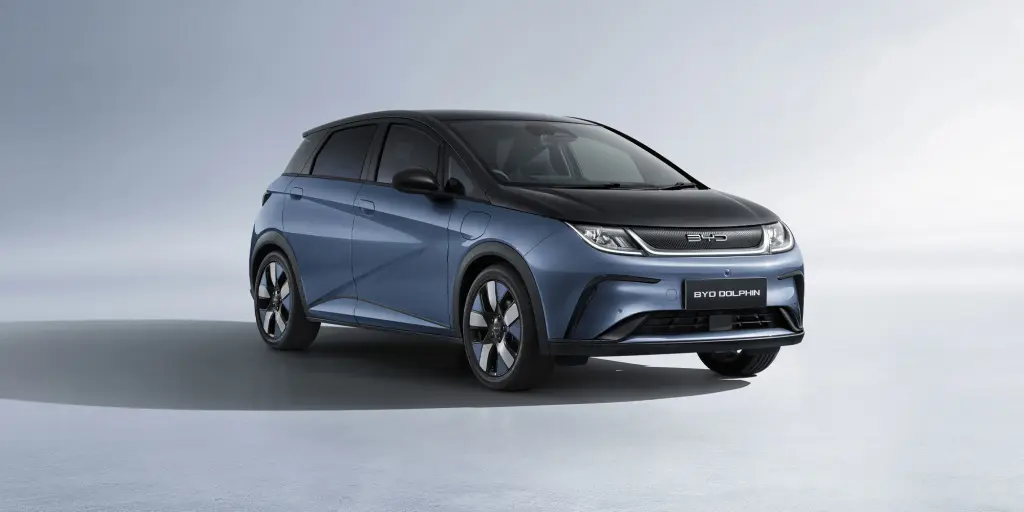
Out of reach
Stay ahead in Asia’s tech landscape
This is premium content. Subscribe to read the full story.
The tech mogul will need to stave off cheaper alternatives if his products and services are to make an impact in the two key Southeast Asian markets.
We know this is not ideal. ⌛ Sign up in 20 seconds. Cancel anytime.
Our subscriber community includes professionals from these companies:





Stay updated on the go with our mobile app.
Get latest insights with smoother, more personalized experience through TIA mobile app.