Zen Soo · · 6 min read
Will Alibaba be safe into the next century as Jack Ma steps down?
When Alibaba’s Jack Ma said last September that in 12 months’ time he was going to hand over the role of executive chairman to chief executive Daniel Zhang Yong and step away from managing the ecommerce behemoth he founded, the announcement came as a surprise.
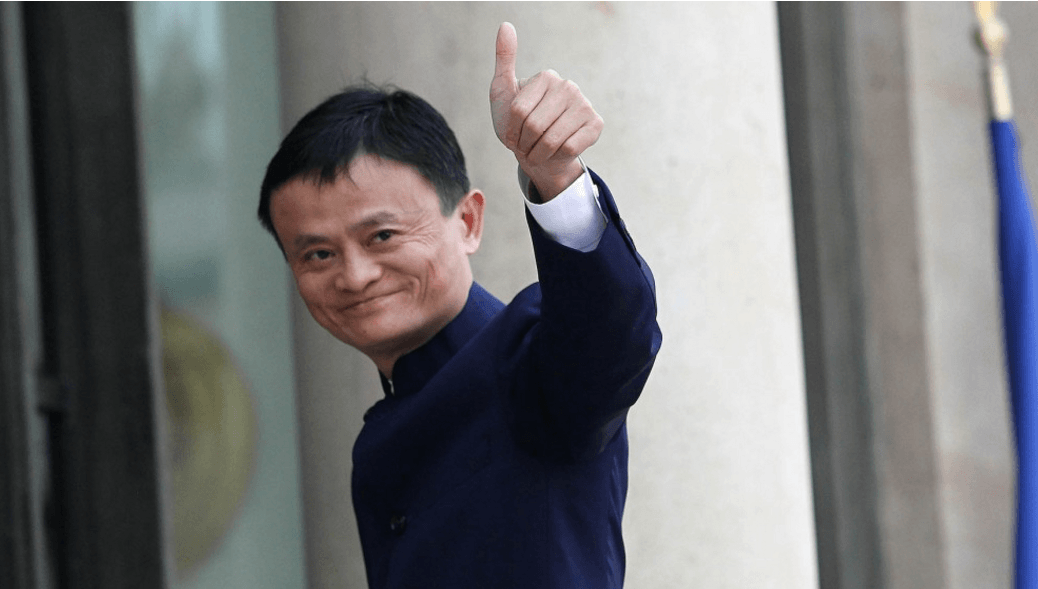
Alibaba founder Jack Ma / Photo credit: Alibaba
Alibaba’s stock price fell nearly 4% in New York on the news, before recovering over the next two days.
The reason was simple – for nearly two decades, Ma has been the face of Alibaba, the company he founded in his Hangzhou apartment in 1999 together with 17 others.
Ma, who turns 55 on September 10, is considered young to be stepping away from the company he helped to build from the ground up in a country where founders are inclined to wield a tight grip over their companies well into their 80s, in some cases.
Ma’s departure from the executive chairman role, which coincides with Alibaba’s 20th anniversary, is perhaps the biggest indication that Alibaba has fully transitioned to a new era, with control handed over to a younger generation of leaders that have been tasked with keeping the firm going for at least 102 years – by which time its history (from inception in 1999) will have spanned three different centuries.
The company is also the owner of the South China Morning Post.
“Jack famously communicated his desire to retire one day from Alibaba almost from the very beginning of the company’s founding,” said Duncan Clark, a friend of Ma’s and author of the book Alibaba: The House That Jack Ma Built.
“Jack doesn’t have professional qualifications in management nor technical or finance skills, so he has always sought out talented professionals [like Zhang] to help,” said Clark.
“In that sense, he’s been planning for this transition for a very long time.”
The fact that Ma had spoken of eventually stepping away from Alibaba so early also makes him unique, especially in China, where there tends to be a “cult of the founder” and a culture that tends to emphasize multigenerational businesses, according to Clark. Ma is one of the few technology company founders who has passed on the baton to a successor early.
Under Ma’s guidance, Alibaba has become the ecommerce leader in China. It has a market cap of around US$460 billion and the gross merchandise volume of sales in its Singles’ Day 24-hour shopping event hit US$30.8 billion last year. It was also named as the world’s most valuable retail brand outside the US in 2019, according to a ranking by global marketing group WPP and consulting firm Kantar.
Its financial affiliate Ant Financial is one of two dominant mobile payment providers in the country, and the company’s cloud business has, within less than a decade, clawed its way to the No. 3 spot in the global market.
Earlier this year, the company unveiled its first self-developed chip processor, amid a call from Beijing for the country to attain greater self-sufficiency in semiconductors. It has also been pushing deeper into AI.





Stay updated on the go with our mobile app.
Get latest insights with smoother, more personalized experience through TIA mobile app.