- Premium Content It takes our newsroom weeks - if not months - to investigate and produce stories for our premium content. You can’t find them anywhere else.
 Elyssa Lopez · · 8 min read
Are SEA’s deliveries about to get greener? These logistics startups think so
Before the pandemic, seeing an electric vehicle (EV) on the roads of some Southeast Asian countries would have been nearly impossible. By 2024, it’s become an ordinary sight.
From Manila to Jakarta, a number of logistics startups are driving the mainstream adoption of electric vehicles.
Image credit: Timmy Loen
Mober, a logistics firm based in the Philippines is one of them. The startup began in 2015 as an on-demand delivery service for large items with fleets ranging from delivery vans to six-wheeler trucks.
It proved too expensive to compete with similar companies in the market. “We didn’t have the war chest to compete,” Dennis Ng, founder and CEO of Mober, tells Tech in Asia.
So by 2017, he transformed the business into a third-party logistics provider for shops located in malls. It clicked.
In 2022, the company reached net profitability for the first time. So for a company that has had many U-turns, why pivot to adopt EVs now?
“I always listen to my clients,” Ng says. “When one of them asked if I offered deliveries through an EV, I said yes, I could. So in 2021, I bought two EV units.” It certainly helped that the client asking was the multinational furniture maker Ikea.
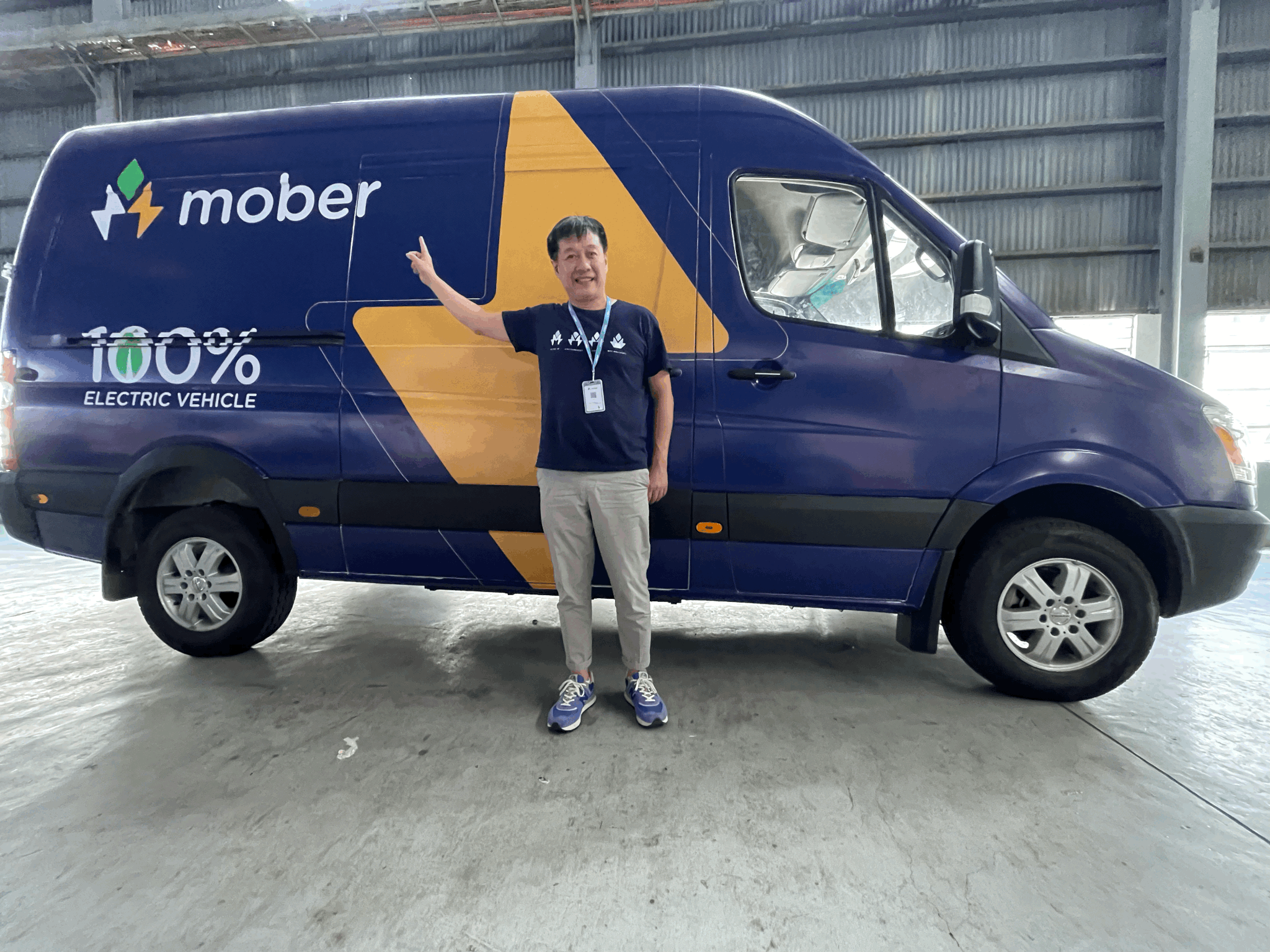
Mober CEO Dennis Ng / Photo credit: Mober
Ever since it became evident that the world had to stay within the 1.5 degree Celsius climate threshold, governments and corporations alike have taken their part in ensuring that the planet does not exceed that limit.
Multinational companies, in particular, have pledged to achieve net-zero emissions in their operations. This means they would either drop or limit activities that emit greenhouse gasses or counterbalance the activities that do so through natural means or through carbon capture technologies.
So for Ng, whose clients include the Philippine offices of Ikea, Nestle, and other multinational firms that have pledged to net-zero operations by 2050, a bet on EVs is not rocket science.
“I’m giving Mober just a two- to three-years window of when it can enjoy itself as the only logistics company that offers deliveries through EVs,” Ng says. “After that, I expect most logistics companies to make the switch.”
Cutting emissions and costs
Charging challenge
Cost barriers
EV push by SEA countries
Stay ahead in Asia’s tech landscape
This is premium content. Subscribe to read the full story.
Logistics firms in Southeast Asia are turning to electric vehicles for cost savings. But a lack of charging infrastructure remains a major problem.
We know this is not ideal. ⌛ Sign up in 20 seconds. Cancel anytime.
Our subscriber community includes professionals from these companies:





Stay updated on the go with our mobile app.
Get latest insights with smoother, more personalized experience through TIA mobile app.