Daniel Tay · · 5 min read
The stethoscope hasn’t been updated in 200 years. This doctor has an idea how to do it
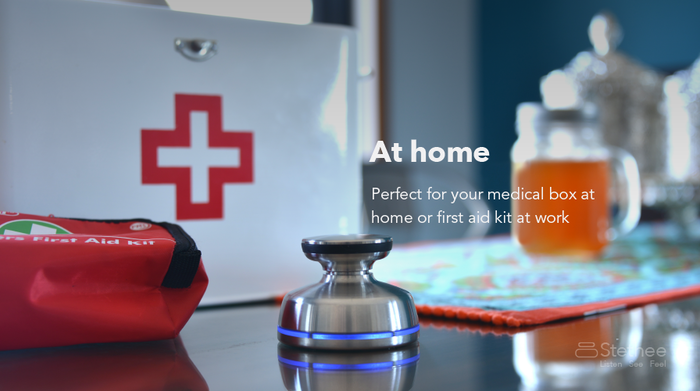
Having to deal with lives on a daily basis, the medical industry is a crucial sector that is constantly seeking advancement – for the most part. Startups such as Singapore-based i3 Precision – creator of Medsafe, a medication registration and identification system – lead the way in making use of technology to this end.
On the other hand, several relics continue to be widely used in the profession without improvement for years. An example of this is the stethoscope, which according to Dr. Nayyar Hussain hasn’t evolved in over 200 years.
“We use it every day to listen to the vital signs of almost every patient we see, [yet] all existing stethoscopes and products are still based around the old design of the stethoscope with the short tube and very poor fitting ear buds,” he explains. Electronic ones, Hussain adds, are far too expensive to be used widely.
Hussain’s experience with infectious disease patients was the motivation he needed to work on creating a better alternative. According to him, the stethoscope forces doctors to be very close to the patient in order to listen to their heart or lungs, which puts them at risk of contracting the disease themselves. The recent Ebola outbreak has proven that this threat cannot be taken likely.
“I thought it would be cool if you only had to look at a device on someone’s chest without listening to it to work out their heart rate,” he recounts.
Frustrated by the limitations of the current design, Hussain decided to work with cardiologist and medical experts in Australia to create a stethoscope “for the 21st century,” and Stethee was born.
Not just for doctors
Hussain’s goal was to make Stethee so simple that an eight year-old could operate it. “In a busy clinic, you don’t want to fiddle with buttons or on-screen menus,” he explains. “Stethee is so simple to use that it transcends culture and language. There is no instruction manual.”
 What Stethee does is to let the user see, hear, and feel a patient’s heartbeat. He or she can see whether the patient’s heartbeat is within the “everything is okay” range if the device lights up green. An orange light indicates that attention is required. The actual heartbeat – or any other body sounds – can be streamed via bluetooth in high quality audio if Stethee is paired with the user’s phone or bluetooth headset. Finally, a vibration mechanism within the device allows the user to feel the heartbeat too.
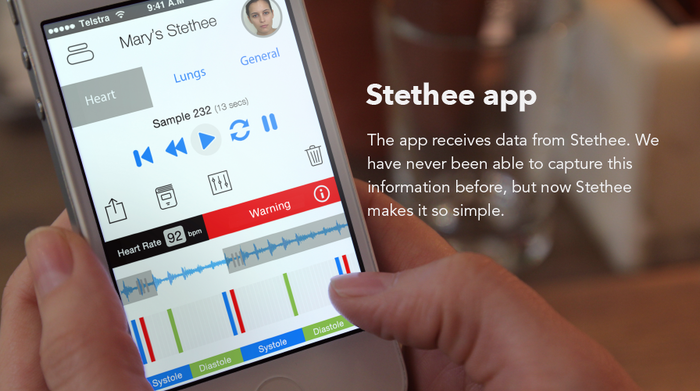
All the data is captured in the companion app, which can then be shared with loved ones, or analyzed in-app to help you better understand the state of your health.





Stay updated on the go with our mobile app.
Get latest insights with smoother, more personalized experience through TIA mobile app.