Meghna Rao · · 2 min read
Uber’s been in India for two years and it has gone through hell
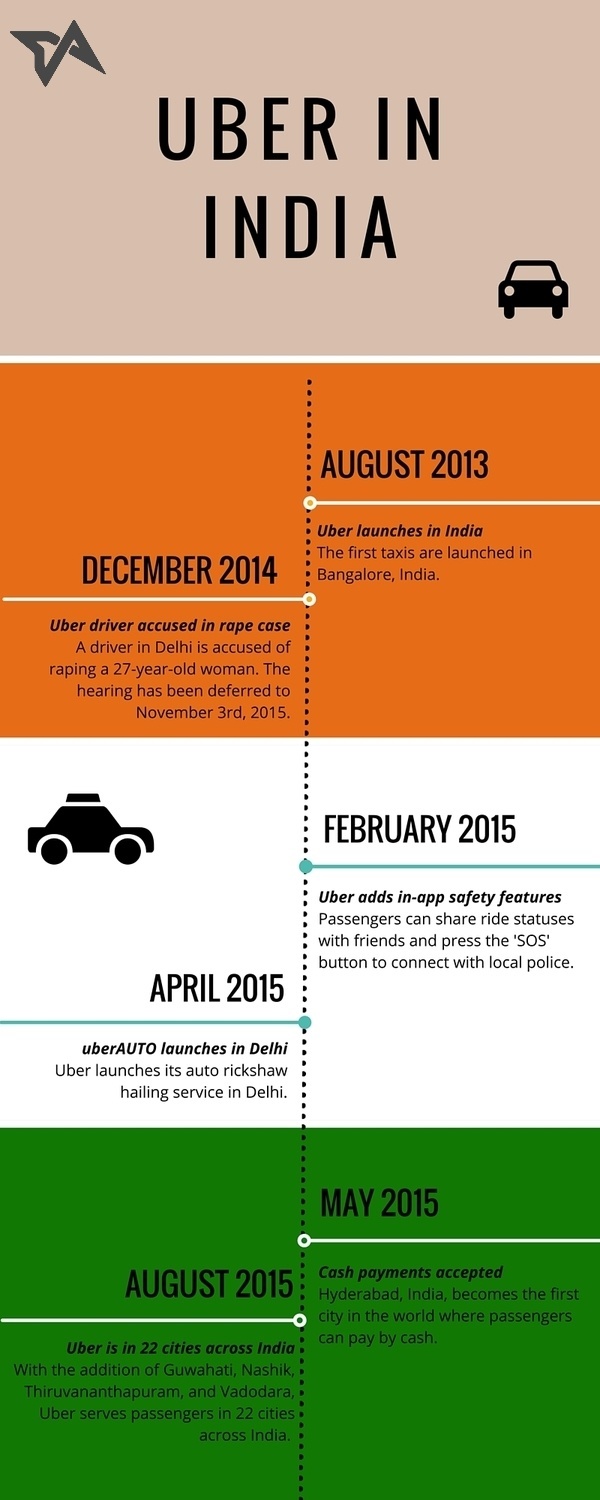
This past Friday marked Uber’s second year running in India. Although the ridesharing giant has been through quite a bit, India has become its second largest market after China. The time it has spent in the country has been far from easy.
Tension between Uber and the government
After an incident in which a driver was accused of raping a woman in December 2014, Uber was banned in Delhi. Despite the state ban, it continued to operate under massive fines, and was expected back in July. As luck would have it, the ridesharing app’s license was banned again in September. The war has been bitter and some sources have even gone so far as to claim that police officers were booking cabs with the sole intention of arresting drivers.
It seems that the struggle will come to an end soon, however – just last week, the Indian central government finally released a series of guidelines for ridesharing apps. The regulations include things like driver verification and GPS trackers in each taxi. Although this comes a sign of relief, each state government will have the right to pass its own laws, so Uber’s not entirely out of the regulatory woods yet.
Uber’s PR is working extra hard in India
The company has made several moves to win back the approval of the general public. In February, it tied up with Safetipin, a map-based mobile app that collects data about different parts of cities and scores them on a safety scale. Uber drivers were asked to mount smartphones on the outsides of their cabs in order to capture photos of Indian cities at night.
It also installed an ‘SOS’ feature in its app that would allow passengers to contact police directly. Passengers were also given the ability to “share” their ride details with their friends and have their progress be tracked via GPS.
The cab service has also started to work with the government on skill development. This past month, it agreed to train and certify over 100,000 individuals to work as drivers on its platform over the next three years.
Uber also recently partnered with local telco Airtel in order to provide wifi access in cabs. This is the first time that it has ever offered this service.
As one Tech in Asia commenter put it, “Has Uber ever had a greater learning experience than what it’s seen in India?”
Bhavish Aggarwal, CEO of Uber’s Indian rival Ola Cabs, last week commented that, despite Uber’s efforts, it still was “not tuned to the needs of the Indian customer”. Do you agree?
Editing by C. Custer
(And yes, we’re serious about ethics and transparency. More information here.)





Stay updated on the go with our mobile app.
Get latest insights with smoother, more personalized experience through TIA mobile app.