Sign up for the Daily Newsletter, sent exclusively to our Premium subscribers. We break down the big and messy topics of Asia’s tech and startup community. Get the newsletter in your inbox everyday with a Premium subscription.
Hello reader,
During the weekend, I received a metal straw as a gift for ordering a new value meal at a fast food restaurant. I’ve never had one before, but I’m happy to try and pick up a new, helpful habit.
That said, I’ve always believed that actual change in the sustainability situation can only come from the world’s governments and conglomerates.
What does it matter if a thousand people switch to metal straws if massive factories are still belching out hundreds of metric tons of carbon emissions every year?
The premium article today explores the current lay of the land in the journey toward net zero emissions and what Southeast Asian tech companies are doing – or not doing – to try and alleviate the issue.
Today we look at:
- The net zero equation in Southeast Asian tech
- How Traveloka is moving on from its failed SPAC plans
- Other newsy highlights such as Lazada’s latest new group CEO and the soft launch of Ant Group’s digital bank
Premium summary
Cleaning up in Southeast Asia tech
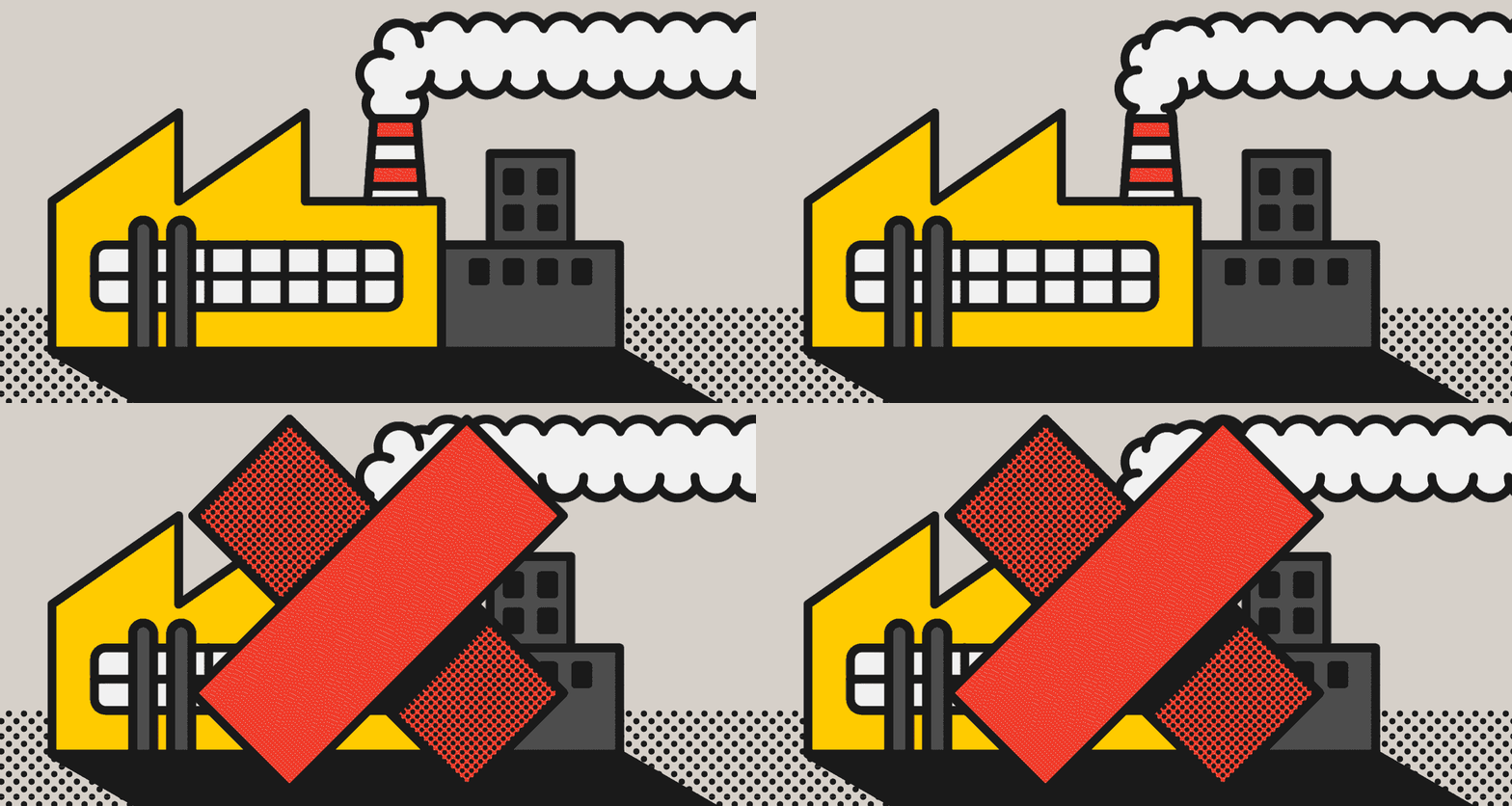
Image credit: Timmy Loen
Did you know that Southeast Asia’s appetite for energy has doubled over the last couple of decades – from 550 terawatt-hours in 2000 to 1,100 terawatt-hours in 2018?
A lot of this comes down to the rapid digital transformation and technological advancement in the region. And while these have brought a lot of benefits, we need to ask ourselves whether the speed of this progress is worth the cost it’s imposing on our environment.
- It’s never enough: The global tech ecosystem uses 1% of the world’s electricity. On average, big tech companies have seen a 20% year-on-year increase in electricity consumption, reaching as high as a 43% rise in some years.
-
Baby steps: Businesses of all stripes are also hopping on the net zero bandwagon. For example, Thailand-based CP Group generates nearly 26% of the electricity it uses from solar, biomass, and biogas sources. Some Southeast Asian tech companies, like ecommerce major Bukalapak and super app Grab, have also started their own net zero initiatives.
No SPAC, no problem
Grow your digital capabilities on the cloud
Quick bytes





Stay updated on the go with our mobile app.
Get latest insights with smoother, more personalized experience through TIA mobile app.