 Osman Husain · · 5 min read
Winter is coming. What should startups do to survive?

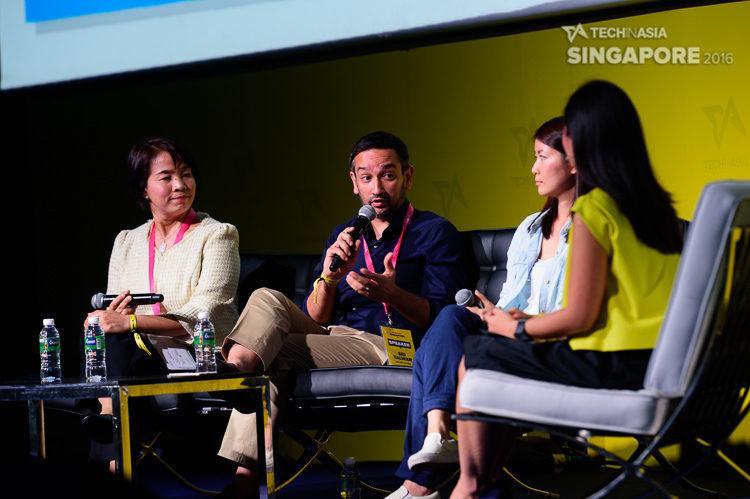
Carmen Yeun (left), Sid Talwar (centre), and Akiko Naka (right).
An impending winter for startup investment and growth was a hot topic of discussion at Tech in Asia Singapore 2016. Strategies for how to prepare for battle were debated on the “No Winter Lasts Forever” panel – featuring Carmen Yeun of Vertex Ventures, Akiko Naka of Wantedly, and Sid Talwar from Lightbox.
Sid – in his usual straight-talking mode – told the audience that the majority of his time is utilized in helping the Lightbox portfolio grow, with the rest in deal flow. A typical investment for his firm – which usually does late stage investments – is US$8 million in series A and can range, on average, between US$15 – 17 million across multiple rounds.
“Our fortunes are directly tied with the fortunes of our companies. We put our money where our mouth is,” he said.
Carmen, whose fund is a member of Temasek, the venture capital arm of the Singapore government, clarified that they look to invest anywhere between US$3 million to $10 million, primarily in late-stage investments.
What does winter mean?
According to Sid, winter is a “very ominous term,” but it’s actually a normal part of any economic cycle. India, unlike Southeast Asia, has already experienced several winters. The positive thing to take away, Sid says, is that despite these hiccups, India continues to see money coming in. The direct impact of all this cash is that consumer behavior is rapidly changing, which would not be the case otherwise.
“Bubbles are necessary,” he added.
Sid also explained that the investor ecosystem in Asia is still in its nascent stage. There aren’t enough large local funds that are ready to put in money after a series B or C, he lamented. The ones that do are sitting far away from the region, in Europe, the US, or Russia, and they “think about the world differently.”
He drove home the point that there need to be more large investors on the ground in Asia, understanding local needs and addressing challenges.
For Carmen, the growth trajectory of Grab was a compelling example of how companies have executed efficiently and learned from these changes in consumer behavior. This shows that despite uncertain economic climates, startups can remain lean and focus on execution.
“That’s why they’re now the leader in Southeast Asia,” she added.
Akiko Naka, CEO of Japan-based social recruiting site Wantedly, said that founders can no longer think locally from day one. They need to be more mobile, flexible, and cognizant to regional opportunities, she exhorted.
Personal stories of survival
Timely advice





Stay updated on the go with our mobile app.
Get latest insights with smoother, more personalized experience through TIA mobile app.











📅 Upcoming Events
22 October 2026
Payoneer x CSPN Summit 2026