Winston Zhang · · 5 min read
How corporate-startup partnerships can affect positive social change

Startups are agile by nature, so they’re well placed to react quickly to market changes and to rapidly come up with solutions to new and unexpected problems.
In Singapore, startups played a key role in the country’s fight against Covid-19, with some developing UV disinfection robots in shopping malls while others built remote patient monitoring technology, among other examples.
However, these companies often need the help of larger corporate entities to gain access to technology resources, networking opportunities, and markets they wouldn’t be able to reach on their own. On the flip side, large corporations also benefit from forming relationships with startups, which allows these multinational companies (MNCs) to learn about new innovations and applications for technologies on top of a host of other insights.
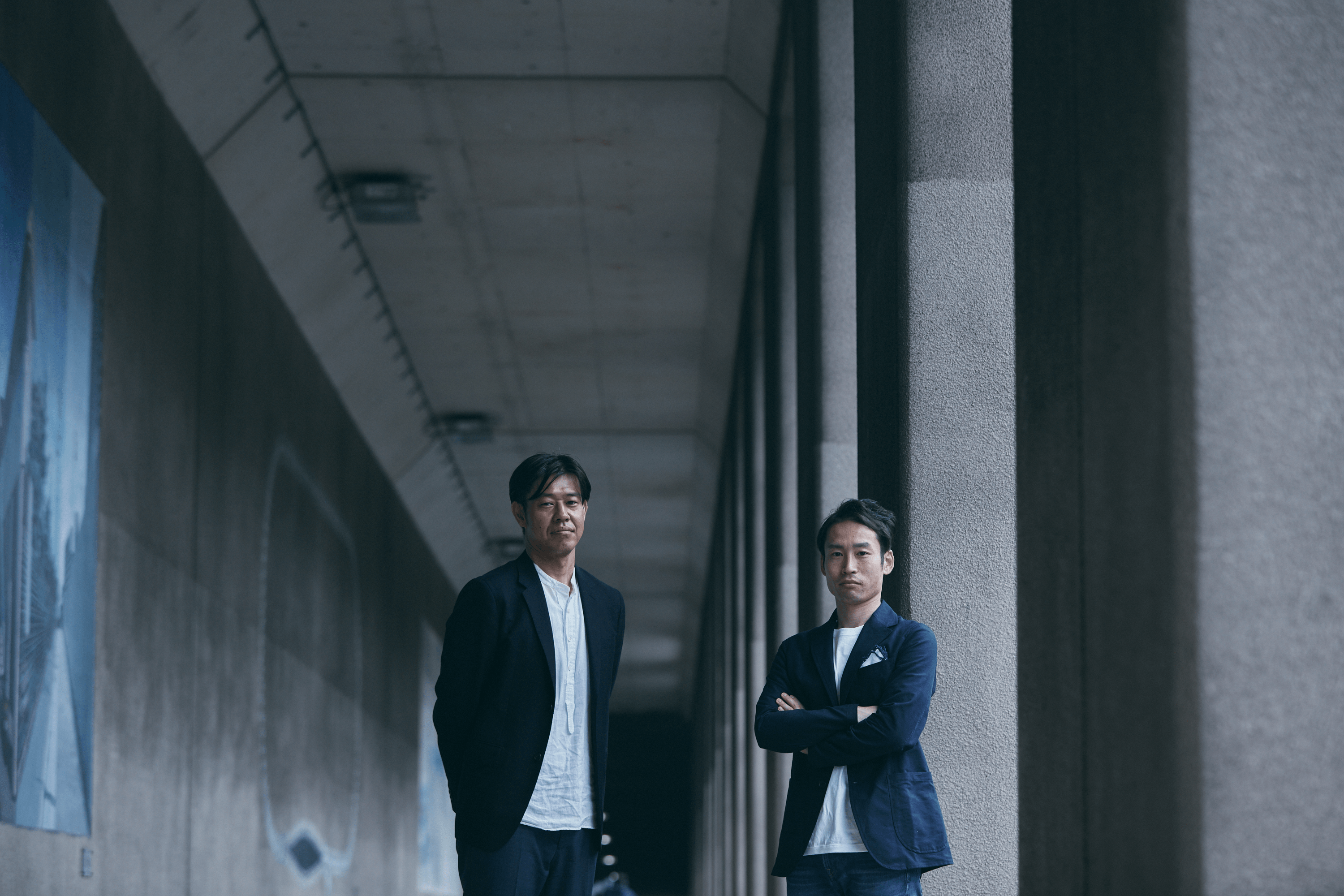
Satoshi Yamanaka (left) and Kenji Minefuji of Mitsubishi Electric / Photo credit: Mitsubishi Electric
“In general, it’s difficult for startups to build up technologies all on their own internally,” says Satoshi Yamanaka, senior manager at Mitsubishi Electric’s Center for Future Innovation.
At the same time, corporate research and development efforts are not good at pivoting business portfolios in an agile manner and tend to have an “ivory tower” air about them, adds Yamanaka. This is something that Mitsubishi Electric is trying to break past in its open innovation efforts. For the Japanese MNC, this manifests in the form of working with Southeast Asian startups to solve the social problems that the region faces.
“We can be described as a bridge or communicator, doing all we can to assist and support startup businesses,” adds Kenji Minefuji, innovation manager at the Center for Future Innovation.
Collaborating to fight dengue
The company’s efforts are most evident in its work with Singaporean biomedical startup StratifiCare. The firm has developed a diagnostic test for dengue fever that can determine if a patient’s case will become more severe. It is also increasing access to more accurate diagnosis by developing a microfluidic test chip.
While Covid-19 may have everyone’s attention now, dengue should not be ignored. Last year, Singapore suffered its worst dengue outbreak – 35,315 people were infected, and 32 people died from the fever, seeing even more fatalities than those from Covid-19 (29). This isn’t solely a Singapore problem either – other Southeast Asian countries such as Malaysia, Indonesia, and Thailand have to contend with tens of thousands of cases every year.
By helping to differentiate between severe and non-severe cases, StratifiCare’s solution aims to reduce medical expenses for patients who don’t suffer from severe forms of dengue and free up much-needed resources for caregivers to put toward other emergencies.
With the startup’s microfluidic test chip, test specimens and reagents will be passed through microscopic channels. To put it simply, if less water is retained in the microfluidic channels, the more accurate the test results will be. Compared to conventional methods of testing, less specimens and reagents are required, and chemical reactions can be performed more quickly. While that sounds easy in principle, the startup didn’t have the means to develop water-resistant coating in-house. This is where Mitsubishi Electric came in, providing its “smart air coating” technology, which uses nanometer-sized particles that are dispersed in water-insoluble resin, making the particles water resistant.
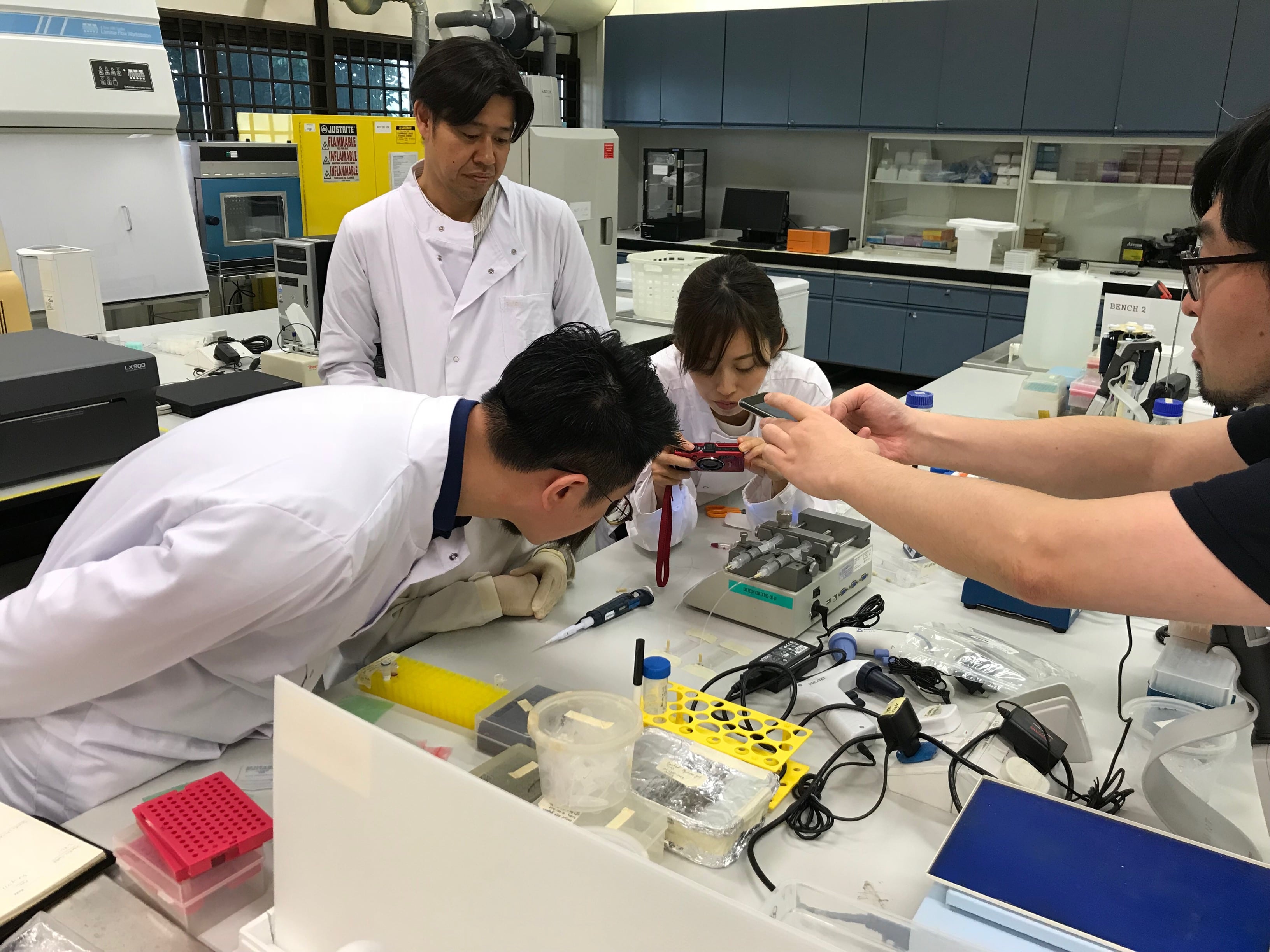
Mitsubishi Electric and StratifiCare researchers conducting an experiment / Photo credit: Mitsubishi Electric
“It’s very difficult to differentiate mild dengue symptoms from severe symptoms at the early stages of the disease – much like Covid-19,” explains Yamanaka. “That’s why StratifiCare is looking to improve the accuracy of the chips to better predict the outcomes of dengue patients.”
Though StratifiCare’s solution is still at the proof-of-concept stage, Mitsubishi Electric is ready to provide the resources to help scale up production of the chip and the overall system that the startup is working on once these products become commercially viable.
Mutually beneficial
While the startup received technological and manufacturing support, Mitsubishi Electric has learned a lot from the collaboration as well.
Since being connected to StratifiCare via the Tech Push program that the MNC co-organized alongside deep tech ecosystem builder Leave a Nest, its researchers have had the chance to do the ground work alongside StratifiCare’s staff.
This has helped the corporation learn how startups in the region operate, get to know new applications of its technology, and open up new lines of thought for future research themes.
“Mitsubishi Electric has had limited experience with the biomedical field, so this partnership has helped us to learn more about the industry and its technologies,” Yamanaka says. “This application of the coating material was a first, a totally out-of-the-box thing.”
Mitsubishi Electric has explored more than just the biomedical space as of late. It has also partnered with Azura Marine Indonesia, a company that is developing solar-powered electric motors.
Besides the obvious environmental benefits, the startup helps fishermen save on oil costs as well.
“[For Azura Marine,] we provide financial support to develop a proof of concept,” explains Minefuji. “It’s like a service agreement – we don’t touch the startup’s intellectual property.”
Solar-powered motors are another new business area for the MNC. Similar to its partnership with StratifiCare, it stands to learn a lot from the collaboration that can inform its own internal research and development efforts.
Working hand in hand
Despite the clear benefits, corporate-startup collaborations haven’t always been smooth sailing: A McKinsey Digital report shows that startups and their corporate partners alike have collided over issues such as a misalignment in commitment levels and goals and cultural and technological differences.
McKinsey also found that startups and their corporate allies are more satisfied with partnerships that are specific, such as with joint product development programs, rather than general institutional tie-ups.
This bodes well for Mitsubishi Electric’s approach. For the MNC, taking this co-creation angle to working with startups is the key to its open innovation efforts. It doesn’t want to just provide funding and take a share of ownership; it wants to be involved with the actual research and development efforts.
“We’ve realized that, for a lot of things, if we don’t try, we won’t know. Getting actual hands-on experience is very important,” says Yamanaka. “[Through our open innovation efforts,] we’re trying to create a new path that MNCs and startups can benefit from.”
These diversification efforts are emblematic of Japan’s overarching need for refreshment, Minefuji says.
“Japan is a developed country, but it is ageing. We will be in a position to need help before long,” the innovation manager explains. “Additionally, there are many social issues in Southeast Asia that need to be solved in order to achieve sustainable growth. The age of Asia is coming, and I think mutual development will become more important.”
Mitsubishi Electric is one of the world’s leading names in the manufacture and sales of electrical and electronic products and systems used in a broad range of fields and applications.
Find out how it has been successfully collaborating with Southeast Asian startups despite the current restrictions due to Covid-19 at its panel discussion at the Hyper Interdisciplinary Conference.
This content was produced by Tech in Asia Studios, which connects brands with Asia’s tech community. Learn more about partnering with Tech in Asia Studios.
Stay updated on the go with our mobile app.
Get latest insights with smoother, more personalized experience through TIA mobile app.
Recommended reads
 From science to public safety: turning discoveries into solutions
 Southeast Asia pulls ahead of global average on AI adoption
 AI uses pilot-style checklists to help doctors decide safely
 2 AI giants, 1 honesty problem
 A middleman model makes free patient tracking possible
 Can remotely operated excavators fix construction’s labor gap?
 How AI agents will be the new software buyers
 NUS talent joins OpenAI co-founder to rethink how AI models work
 Solving mid-market finance pain with AI agents
 From data to durians: H2O.ai’s journey to AI-led accessibility





Editing by Nathaniel Fetalvero and Jaclyn Tiu
(And yes, we’re serious about ethics and transparency. More information here.)