- Premium Content It takes our newsroom weeks - if not months - to investigate and produce stories for our premium content. You can’t find them anywhere else.
 Glenn Kaonang · · 5 min read
Indonesia’s new meal program serves questions for alt-meat firms
On January 2, Indonesia will officially launch the new administration’s free meal program, which aims to provide free daily lunches to 19.5 million school students and expectant mothers through 2029.
With a budget allocation of 71 trillion rupiah (US$4.5 billion) for 2025, the initiative aims to drive 0.1% in economic growth, according to estimates by the country’s ministry of national development planning.
The government is actively encouraging collaboration with the private sector, including startups and tech companies like Grab and GoTo, which in November launched its own free nutritious meal program.
Unlike GoTo, however, smaller startups are seeking opportunities to join the new initiative not just for the sake of corporate social responsibility but as a means to drive growth.
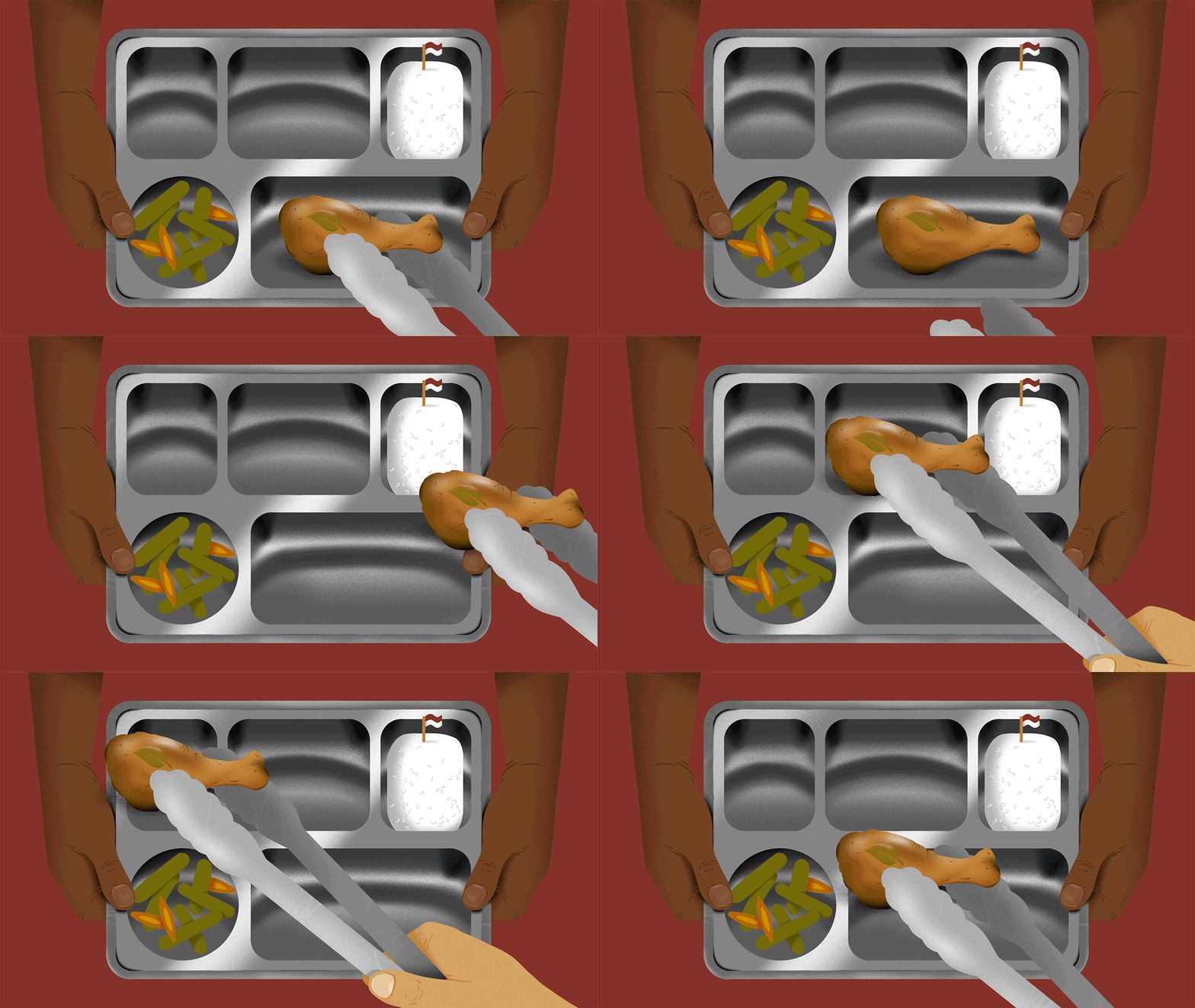
Image credit: Timmy Loen
The free lunch program could potentially help “grow our sales to like a thousand times,” said Helga Angelina Tjahjadi at the Tech in Asia Conference held in Jakarta in October.
Tjahjadi, who co-founded alternative protein firm Green Rebel with her husband in 2020, believes it makes sense for the government to work with alt-protein startups on a program aimed at tackling malnutrition.
However, many have raised concerns about the program’s lack of transparency and clarity, citing issues such as unclear registration processes and ambiguous details about the extent of government subsidies.
Massive protein demand
According to the 2024 Global Hunger Index, Indonesia ranks 77 out of 127 countries, with 7.2% of its population undernourished and 26.8% of children under five suffering from stunting.
The free lunch program is run by the National Nutrition Agency, which reports directly to President Prabowo Subianto, and has undergone trial runs over the past several months.
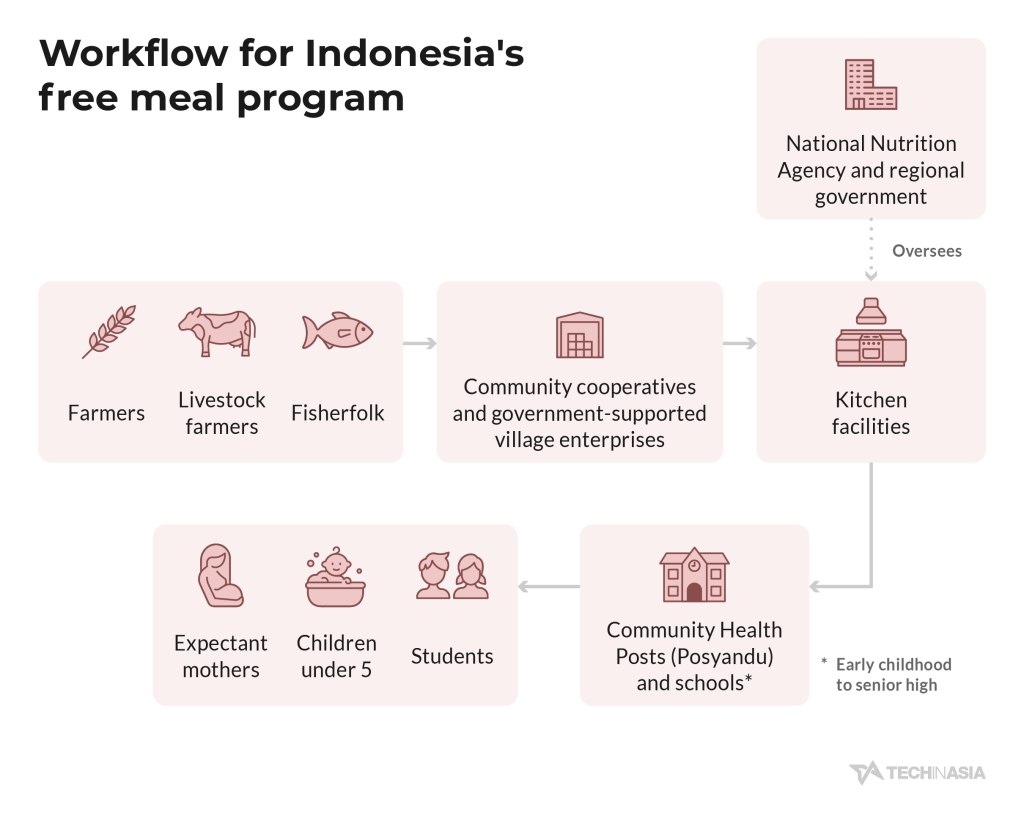
Dadan Hindayana, head of the agency, said in October that each kitchen facility tied to the program can produce 3,000 meals daily, requiring 200 kilograms of rice, 350 kilograms each of chicken meat and vegetables, and 600 liters of milk per day.
This immense demand for raw food materials creates opportunities for alt-protein startups to supply ingredients directly, says Nailul Huda, director of digital economy at the Center of Economic and Law Studies. This is particularly relevant given the government’s reluctance to depend on imports to meet these needs.
Concerns about feasibility
Stay ahead in Asia’s tech landscape
This is premium content. Subscribe to read the full story.
A lack of clarity and transparency are hindering startups from joining President Prabowo Subianto’s costly initiative.
We know this is not ideal. ⌛ Sign up in 20 seconds. Cancel anytime.
Our subscriber community includes professionals from these companies:





Stay updated on the go with our mobile app.
Get latest insights with smoother, more personalized experience through TIA mobile app.