Rita Liao · · 6 min read
Media regulation in China: Those who grow big get shot
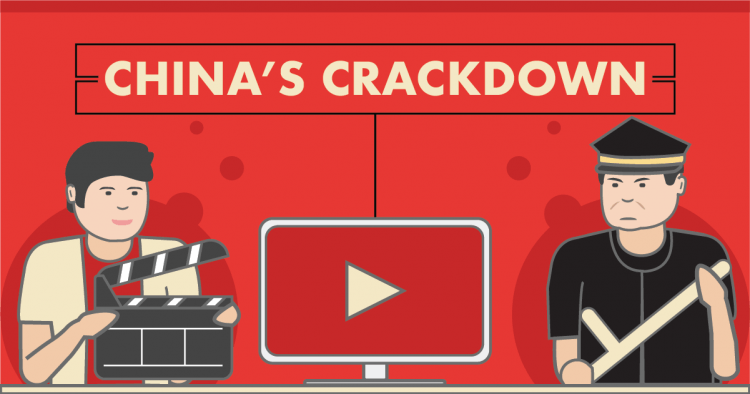
Infographic by Andre Gunawan, Tech in Asia
Short-video streaming in China, an industry that is projected to harvest a quarter of the country’s 1.3 billion population by 2018, has become the latest target of government censorship.
On March 31, state broadcaster CCTV scolded China’s top micro-video app Kuaishou for allowing content depicting adolescent pregnancies, including images of teenage girls with bare, swollen bellies.
A few days later, the State Administration of Press, Publication, Radio, Film, and Television accused Bytedance, which runs video-sharing app Huoshan, and rival Kuaishou of broadcasting without audiovisual licenses. The country’s media and entertainment watchdog ordered the apps to shut down accounts that “deviated from social moralities.”
That was followed by a demand from the Cyberspace Administration of China, the country’s top internet censor, for the besieged apps to halt algorithms that promoted offensive content.
While the crackdown casts a shadow over media providers, it’s nothing new in China. Ever since the Chinese masses got wired, regulators have been diligently ensuring that the web is under state control. Part of it stems from the need to discipline a new sector, which usually “develops ahead of the corresponding regulation,” observes Kelvin Jia, founding partner at Creation Venture Partners, a Chinese venture firm investing in online entertainment startups.
“Regulation usually arrives when [an industry] grows big in scale and influence,” says Da Lai, an analyst at entertainment research firm EntGroup. “That’s the same for every industry, not just online media.”
China also wants a firmer ideological grip over what information its people consume.
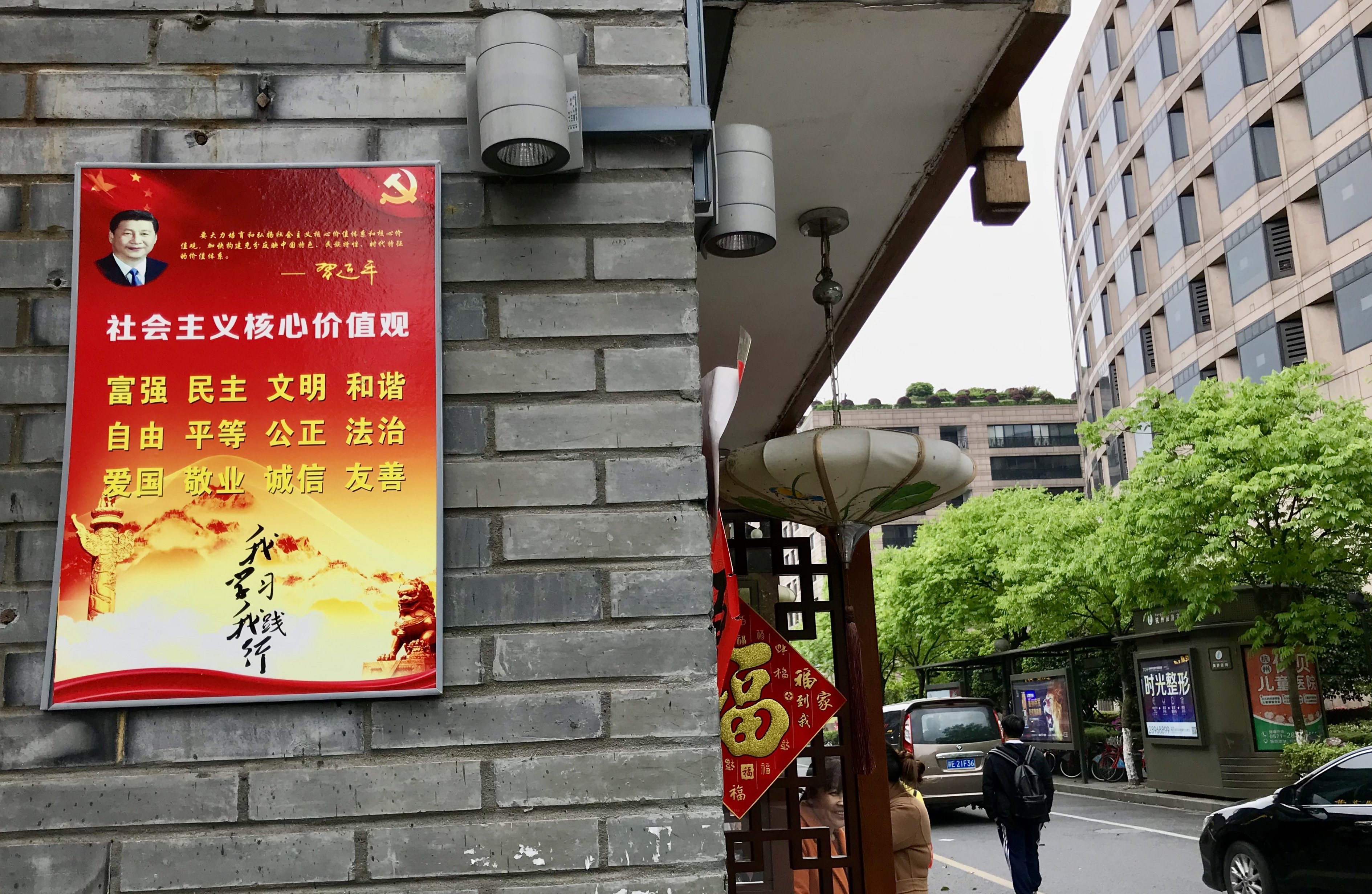
A propaganda poster about the Chinese Communist Party’s “core socialist values” in downtown Hangzhou / Photo credit: Tech in Asia
“There is a tidal wave of choices out there for informing consumers, and the Party is as eager to ensure its message isn’t drowned out in a flood of entertainment content as it is to ensure that a damaging story is kept under wraps,” David Bandurski, co-director of the China Media Project, previously told Tech in Asia.
While content crackdowns in China are cyclical, “one can be forgiven for thinking that [they] are occurring with increasing frequency,” says Greatfire’s founder, who uses the pseudonym Charlie Smith as his site monitors and challenges the Chinese government’s internet censorship.
Clever ways to clamp down
From Facebook-type video streaming to livestreaming and short-video apps, the government has been trying to wrest control from industry players.
It has done so, time and again, on the same grounds: the lack of a content license required to legally broadcast online and the proliferation of illegal content.
The punishment
The survivors





Stay updated on the go with our mobile app.
Get latest insights with smoother, more personalized experience through TIA mobile app.