 Steven Millward · · 4 min read
China’s hottest homegrown smartphones redefine what you get for just $300
The world has seen the new iPhone 6 and 6 Plus, Samsung’s Galaxy S5 is already out and gaining traction, and China’s top homegrown smartphone makers have just refreshed their line-ups. That all means the scene is set for China’s frantic smartphone battle for the rest of the year.
China already has 700 million active smartphones and tablets, according to the newest data from local app analytics platform Umeng, so it’s a mature market. But the competition has never been more ferocious as Chinese brands like Xiaomi gain traction, making ever better hardware at prices that undercut the iPhone and flagship Samsung smartphones by more than half. By two-thirds, to be exact.
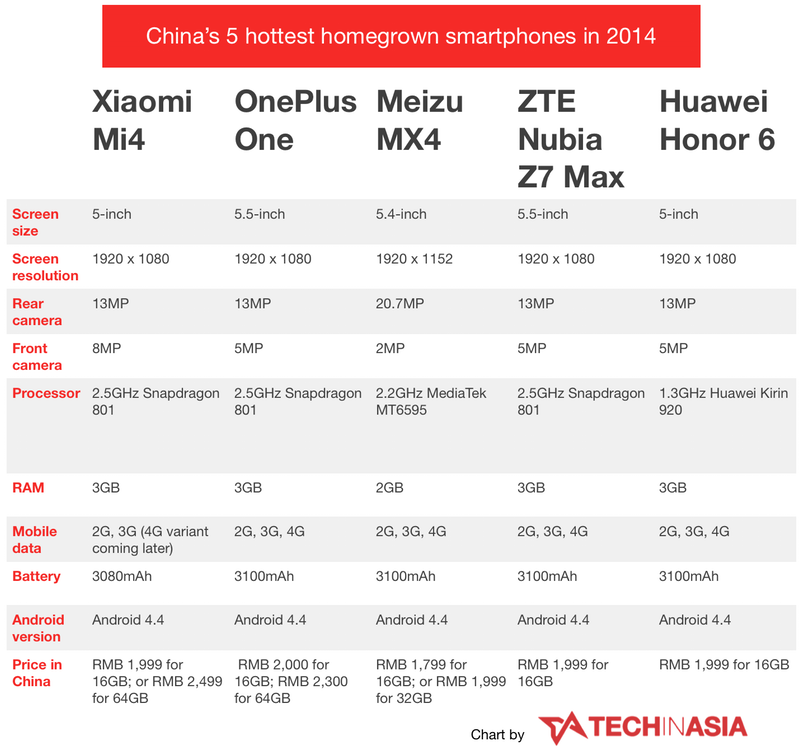
The key number in China these days when it comes to smartphones is 2,000 – that’s RMB 2,000, which works out to a little over US$300.
For that affordable price tag, consumers can get a top-end Chinese smartphone that competes with models from Samsung and Apple which cost from $650 to $900. That means quad-core or octa-core processors, 1080p HD screens, at least 13-megapixel cameras, and lots more.
$300 is the new normal for China’s smartphone buyers – but it’s still above the average of what most people spend. $300 is the new premium in China. The national average price for a newly purchased smartphone in China in 2013 was just over $200. While there are quad-core phones out there for as little as $130, such as the Xiaomi Redmi 1S, it’s only when you pay about $300 that you truly get a gadget than reaches quality levels comparable to more storied and more pricey rivals.
Samsung’s death by a thousand cuts?
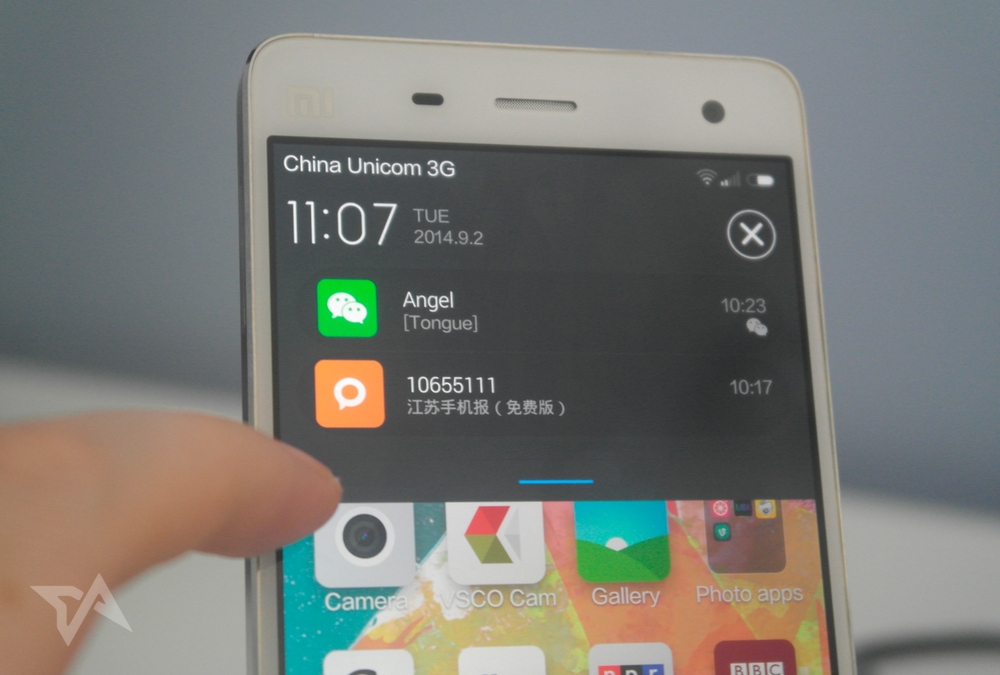
The Xiaomi Mi4 matches $600 or $700 phones on specs, but costs a few bucks over $300.
While Apple has built up a significant immunity to low-price rivals, the shifting trend is proving more damaging to Samsung. Samsung has not yet built up an ecosystem of services to lock in users to its brand, and neither has it burnished the kind of cachet and desirability needed to justify higher prices than its similarly specced new rivals that also use Android.
Xiaomi is already toppling Samsung’s statue in mainland China. The newest numbers from Canalys for Q2 2014 show that Xiaomi has leap-frogged Samsung to become China biggest smartphone brand in terms of shipments. Xiaomi has 14 percent market share of smartphone shipments in Q2, says the research firm, while Samsung, Lenovo, and Coolpad are tied for second place with 12 percent apiece. But there’s many a slip betwixt shipment and sale, so we’ll have to wait for sales numbers from both Xiaomi and Samsung at the end of the year to find out which is truly China’s top phone brand.
It’s not just China where Samsung, HTC, Apple and other established names face homegrown rivals that are making good quality and persuasive alternatives at a fraction of the price. An increasingly strong band of brands are doing the same in India, Indonesia, and numerous other Asian countries that are finding their feet in high-tech manufacturing.
For Samsung, looking at all its smaller rivals across Asia, it could be a case of death by a thousand cuts in the years ahead. Millions of people lured away to homegrown smartphone brands in Indonesia; millions in Pakistan; millions in Thailand; tens of millions in India and China. It all adds up to the beginning of the end of Samsung’s dominance, which the Korean behemoth first achieved with its Galaxy S range at the turn of the decade.
See: 15 new Asian smartphone makers hoping to crush Samsung and Apple
A lot of bang for 300 bucks
Here are five of China’s coolest smartphones that you can get right now for that magical $300 sum.
What’s next for China’s phone market?





Stay updated on the go with our mobile app.
Get latest insights with smoother, more personalized experience through TIA mobile app.









📅 Upcoming Events
22 October 2026
Payoneer x CSPN Summit 2026