 Osman Husain · · 4 min read
Startup wants to shake up customer service calls, because life’s too short to be kept on hold
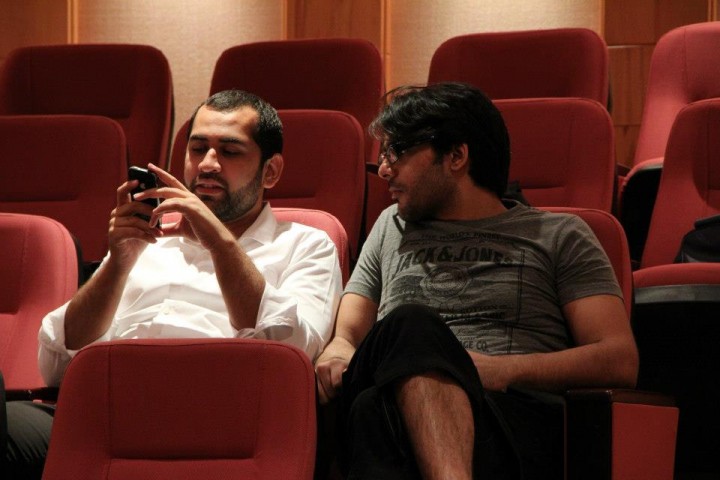
CEO Vivid Omer Khan explains the integrated solution to a friend
For most of us, the process of interacting with a customer service representative is downright boring. Being forced to repeat confidential information to an anonymous person on the other end of the line until they can establish, beyond reasonable doubt, that you are who you claim to be isn’t all that much fun. But it’s something that we put up with, because we have to.
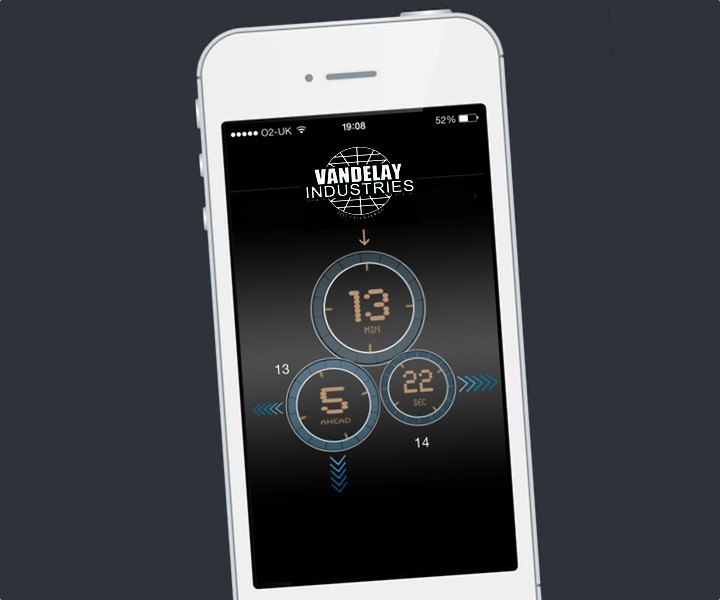
Vivid wants to disrupt this entire process completely. Its smartphone app integrates into the contact center solution of a company, showing its entire options menu in a visual format on your phone or tablet. Whenever there is a problem, consumers can simply tap their phone, navigate through the menu, select the issue that best applies to them and have the option of including a picture or audio note that explains the issue more thoroughly. If contact with a human agent is needed, then the app will establish a connection through a VoIP call and give the customer an estimated wait time, during which he is free to continue with his regular tasks. As soon as the connection is established, a notification will alert the user that they can begin the conversation.
The startup, which formed in Pakistan but is now based in London, is selling this app to corporate clients who can rebadge it as their own customer service portal.
Disrupting a $300 billion industry
Vivid co-founder and CEO Omer Khan conceptualized the idea while in the UK after an exasperating 45-minute long wait with the Manchester City Council contact center. His stints in companies such as Telenor, Merril Lynch, and Barclays also convinced him of the efficacy of his idea. “Contact centers are a US$300 billion industry worldwide,” he tells Tech in Asia. “I knew there was significant opportunity to provide a better solution as the current process belies the notion of effective customer service. It is frustrating and time-consuming for the person who it is supposed to help the most – the end consumer.”
According to Khan, existing practices are outmoded and archaic as they were first established in the 90s and haven’t changed much since then. He confidently asserts that his solution reduces wait times 10-fold and also decreases traffic for incoming call centres by approximately 35 percent. “Savings for infrastructure development, money, and resources are colossal, while at the same time making customer engagement more meaningful and interactive,” he adds.
Funding, more funding, and breakups
Initially incubated in Lahore, Pakistan, by Plan 9, Vivid was offered seed funding on two separate occasions, both of which the founders rejected. “In January 2014 and August 2014 we were approached with offers of investment,” asserts Khan. “However, both offers were not accepted due to their extremely low valuations and high stakes in the company.” It was only in November 2014 when the company received an offer that it found suitable, both in terms of the initial funding amount as well as the stake, that Vivid accepted investment. A combination of investors, consisting of Sunbridge Ventures, Rosemont Group, Telefonica, and Conrad Labs offered $350,000. For Khan, the cash came at a crucial time as he was burning through a large portion of his savings and feared bankruptcy.
However, his earlier refusals did come at a critical price. Vivid lost one of its co-founders, Riz Chandna, as he could not afford to pay his student loans and in the absence of a consistent cash flow, was forced to find another job. Half of the initial hires also quit as Khan was no longer able to pay their salaries. Despite these setbacks, he persevered and stuck it out. “It pays to be a cockroach,” he jokes.
At this point Khan also has some words of advice for budding entrepreneurs. “Getting funding isn’t incredibly difficult, especially if you have a game-changing product or solution,” he says. “What is crucial is that you don’t accept offers that undermine your company. Believe in yourself, your team, and your idea. The money will come to you.”
Future iterations of Vivid include options for value-added services for corporate clients as well as multimedia content that users can engage with while waiting to be connected to a call center agent. Some examples of these are chat room applications, company information, music, games, and videos. However, this is still some way away from being integrated into the Vivid architecture. For now Khan remains committed to his idea and is focusing on improving service levels, metrics, and engaging in business development. “Life’s too short to be hangin’ on hold,” he quips.
Editing by Steven Millward & C. Custer





Stay updated on the go with our mobile app.
Get latest insights with smoother, more personalized experience through TIA mobile app.











📅 Upcoming Events
22 October 2026
Payoneer x CSPN Summit 2026