- Premium Content It takes our newsroom weeks - if not months - to investigate and produce stories for our premium content. You can’t find them anywhere else.
 Nikita Puri · · 8 min read
Startup with prominent investors is quietly reshaping Indonesian transport
The year was 2018. Seasoned tech consultant and entrepreneur IM Shousha stood at the gates of Jakarta airport, looking out at the bustling city.
As the first drops of rain started to fall, all Shousha could think was why he hadn’t hailed a cab or opted for a bus ride to leave the airport. Instead, having booked a bike taxi, or ojek as it’s locally called, Shousha prepared himself for a trip that’d leave him drenched.
Questions around mobility and their possible solutions had brought him to Indonesia in the first place.
To better understand the transportation problems that Indonesians typically grapple with, Shousha would go on to take every form of transport in the days to come – from ferries to intrastate buses. He did this with Hussein Abdelkarim, his friend from school and a former CEO and founder under Rocket Internet.
These trips cemented the duo’s view that a lot could be done to make travel within Southeast Asia’s rapidly growing cities more efficient. Enter Bussr, the mobility-as-a-service (MaaS) startup that Abdelkarim and Shousha founded in 2018.
Earlier this year, the two welcomed their new co-founder and chief technology officer (CTO) Ajay Bhandari, a Microsoft and Google alum.
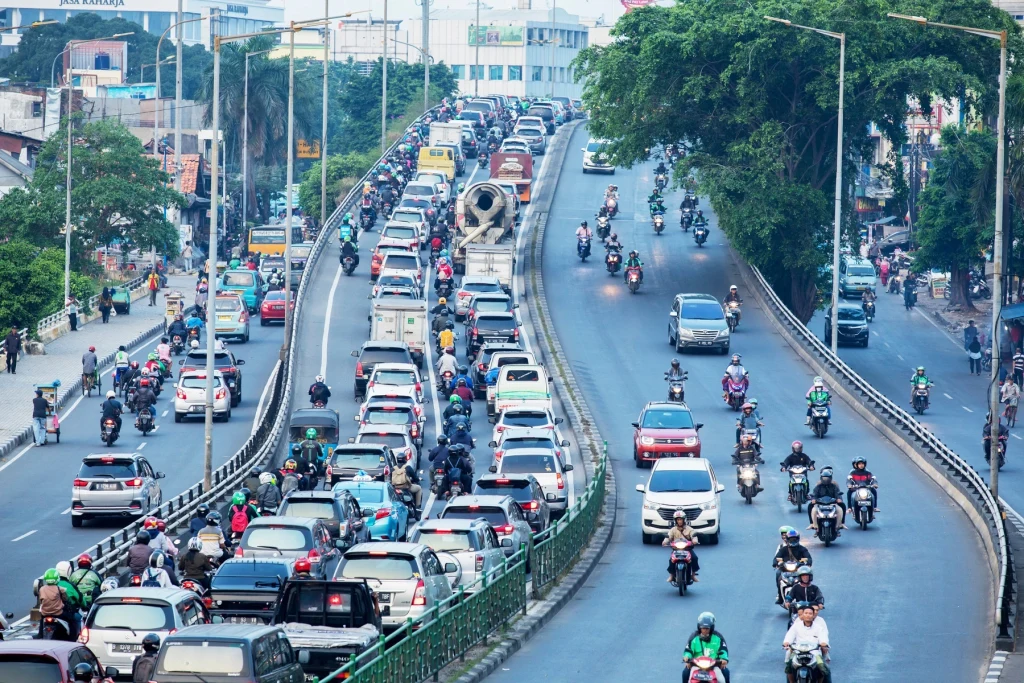
Traffic in Jakarta / Photo credit: 123rf
Bussr, which is headquartered in Singapore, is digitalizing a wide gamut of travel operators by offering them ticket-booking solutions which work for both online and offline customers.
The company’s white-label online platform allows travel operators to rebrand it as their own. Bussr also does the heavy lifting of integrating different payment providers on its app so that travel and transportation operators can focus on their core businesses.
The MaaS industry is still in its nascent stages in Southeast Asia, says Paulo Mutuc, principal consultant for mobility at Frost & Sullivan. But that hasn’t stopped a long list of investors from supporting Bussr.
The company is backed by the Bridford Group, Monk’s Hill Ventures’ Peng Ong, the Le Mercier Group, Thiel Capital’s Jack Selby, Altitude Partners, and Angela Huang, formerly of Hillhouse Capital.
Other investors include BDA China founder Duncan Clark, Andrew Huang of FountainVest Partners, as well as strategic angel investors from Facebook, PayPal, Lyft, Spotify, Zoom, Didi, and Impossible Foods, among others.
With Indonesia as its main market, Bussr’s initial plans involve bringing online the transport operators in Southeast Asian nations such as Vietnam, Thailand, and the Philippines, all while strategizing for other markets.
Life in a bumper-to-bumper world
Around the time Bussr started operations in the country, Indonesia’s president, Joko “Jokowi” Widodo, said the archipelago couldn’t continue with the losses incurred by perennial traffic congestions. In Greater Jakarta, the issue, he said, cost the country 65 trillion rupiah (about US$4.5 billion) every year, citing data from the National Development Planning Agency (Bappens).
How to win them all
The ace up its sleeve
A rising tide lifts all boats
Stay ahead in Asia’s tech landscape
This is premium content. Subscribe to read the full story.
Singapore-based Bussr is moving Southeast Asia’s transport operators online. But it has no plans of stopping there.
We know this is not ideal. ⌛ Sign up in 20 seconds. Cancel anytime.
Our subscriber community includes professionals from these companies:





Stay updated on the go with our mobile app.
Get latest insights with smoother, more personalized experience through TIA mobile app.