 Osman Husain · · 5 min read
Startup wants to disrupt the informal labour market in Pakistan using tech

The vast majority of Pakistan’s labor market is informal, unstructured, and highly unregulated. Figures from the government suggest that approximately 73.8 percent of its labor force work in an informal setting, which is problematic as it reduces taxation and lowers standards for employee welfare and benefits. Alarmingly, it also creates more traction for the black economy.
In the presence of a thriving informal environment, it is difficult to properly ascertain statistics on unemployment, consumption, income levels and growth. This may result in an undermining of official economic policies and drive away much-needed foreign investment.
For developing countries such as Pakistan, the reduction in tax collection as a result of activity in the informal sector deals the severest blow. As transactions in this sector are made in hard cash, it manages to escape scrutiny and compliance. To meet revenue targets, the government may take measures to increase tax rates, which can cause further growth of the informal sector as individuals and businesses alike seek to avoid paying their dues. A very heavy price to pay.
Most employees in the informal sector in Pakistan are employed within the retail, construction, and household services industry. A fairly large portion is employed as cooks, drivers, nannies, gardeners, and waiting staff for more affluent Pakistani families. Given the highly unstructured nature of the industry, most employment is arranged through personal references, and salaries are paid in cash, with the majority of households preferring to ignore Pakistan’s mandatory minimum monthly income requirement of US $120. Employees are given little job security, receive almost no benefits, and the concept of vocational training is almost non-existent.
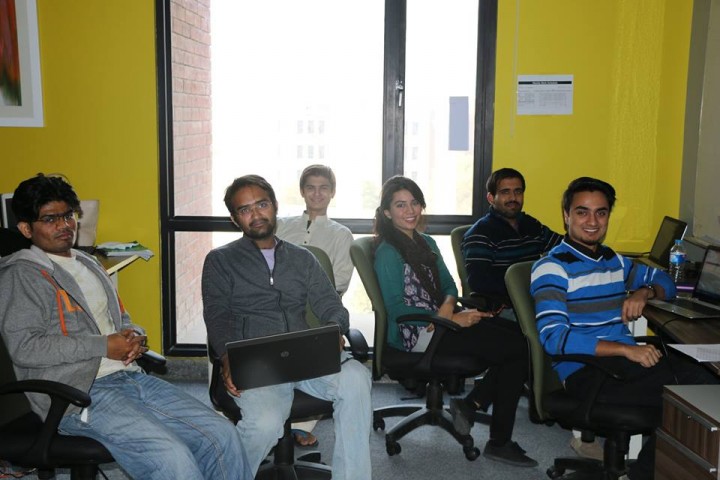
H&O Services team
Changing the existing model
Recent startups in Pakistan are looking to disrupt this model by adding value for both the employer and employee. One of them is H&O Services, which drew its inspiration from failed startup Kamata Pakistan. It is currently being incubated by the LUMS Center for Entrepreneurship, with several tweaks to the original model.
The CEO of H&O Services Muhammad Muddassar says that they initially needed to gain insights about which towns and villages workforce originated from, trends in their employment history, and length of association with employer, in order to build his database.
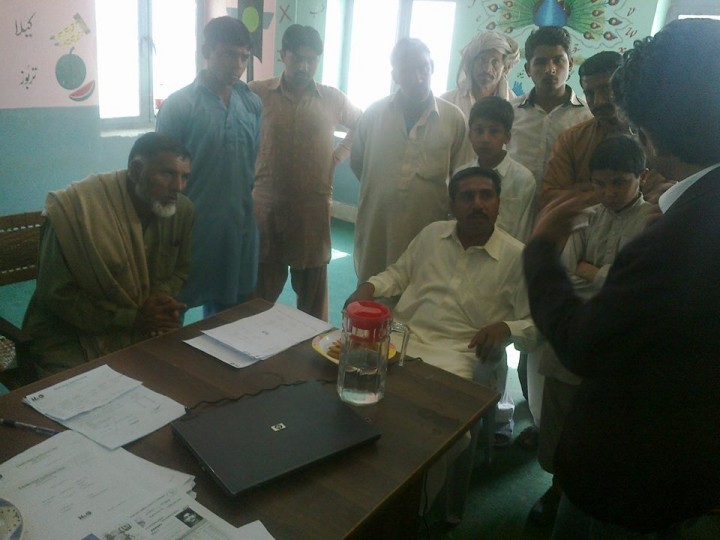
Mudassar knew that to market his service effectively, he needed to have a vast roster of jobseekers with diverse skillsets before he approached potential employers. Soon, his team realized that the majority of workers were based in small villages on the outskirts of Lahore. The next step was to organize recruitment drives in these areas, usually in coordination with the village chieftain in order to give their startup a degree of legitimacy.
At these recruitment drives, H&O services would conduct a short test and interview of each aspiring candidate, all of which was video recorded. Other details such as employment history, contact information, and salary demanded were entered into their database, to be matched later with employer requirements.
Jobseekers were told that if they were successful in finding employment, changing their status from informal to formal workers as they would enter into a contract with H&O Services, thereby making them eligible for state benefits such as health insurance and pension.





Stay updated on the go with our mobile app.
Get latest insights with smoother, more personalized experience through TIA mobile app.













📅 Upcoming Events
22 October 2026
Payoneer x CSPN Summit 2026