 Winston Zhang · · 5 min read
The startup that’s betting on the future of the cloud in Asia

A lot goes on behind the scenes for each innovation to come to fruition. It’s important to have the right people, the right processes, and the right technology.
As digitalization accelerates in Asia, it’s become clear that cybersecurity is one of the building blocks of this transformation.
“A lot of companies are starting to see cybersecurity as a business enabler. When you have large customers – especially if you’re a tech company – they won’t work with you unless you have your cybersecurity in place,” says Paul Hadjy, CEO and co-founder of integrated cybersecurity platform Horangi.

Paul Hadjy, CEO and co-founder of Horangi / Photo credit: Horangi
The firm’s vision is straightforward and ambitious: “to empower companies to innovate without fear.” It provides public cloud security solutions for prominent clients such as mobile savings and protection company Singlife and logistics player Ninja Van. Horangi helps clients manage their security obligations in the shared responsibility model, even across multiple platforms.
But before the Covid-19 pandemic cast a spotlight on the importance of cybersecurity, adoption for its services was slow to take off.
There was a hole here – it’s gone now
Prior to Horangi, Hadjy’s career consisted of stints at data analytics firm Palantir, where he assisted companies in securing their infrastructure in the cloud, and regional super app Grab, where he focused on protecting the startup’s cloud setup.
While he was at Grab, he realized that all of the companies that were offering cloud security solutions were based in the US or Israel and that “the majority of their customer bases were not situated in Asia.” This meant that there was a sizable underserved community in the region as far as cybersecurity was concerned.
“I saw this opportunity to build the business and help regional companies solve their security problems in the public cloud,” Hadjy recalls. Besides being compatible with global cloud service platforms like Amazon Web Services, Google Cloud Platform, or Microsoft Azure, Horangi’s focus on Asia also saw its solutions extend to Alibaba Cloud and Huawei Cloud.
That said, adoption was slow in the first couple of years when Horangi began offering its services in 2016. At the time, digital transformation was not as urgent a need as it is now, and many people didn’t fully understand the problems that Horangi was trying to solve or how much of an impact those issues could have on businesses.
It wasn’t just prospective clients that didn’t get it. Investors, who were more interested in quick wins, weren’t able to fully appreciate the long-term potential of the market, which made fundraising a tall order for the company.
“We spent a lot of time on education, whether that’s through conferences, content, or working in partnership with the cloud service providers themselves,” Hadjy recounts. “It’s starting to catch on. So it’s less of a problem for us now, but it was definitely a long haul kind of thing.”
An ongoing commitment
Hadjy admits that while the Horangi team was confident that the cloud was going to be a big thing, they weren’t sure just how huge it would become. They definitely couldn’t have predicted the onset of the Covid-19 pandemic, which accelerated the adoption of digital solutions across the board. As a result of the health crisis, many traditional businesses faced a reckoning, and they had to quickly learn how to support the shift to remote work processes.
“In doing that, a lot of them started making the switch to cloud in some way, as well as investing more in software-as-a-service (SaaS) solutions and other products to help make the transition easier for the organizations themselves and for their employees,” says Hadjy. “We’ve been able to grow alongside these clients, helping them solve their larger security concerns.”
For clients who don’t have years of experience with the cloud, Horangi offers a feature called one-click remediation, which runs a function that corrects the user’s security configuration and troubleshoots misconfigurations and compliance issues with the press of a button. In order to offer such a product, Horangi does the heavy lifting: Its cyber-operations team consistently keeps track of regulations and different cloud infrastructure pieces and then feeds the data into its offerings.
For larger clients with setups that don’t allow a one-touch solution, the company provides step-by-step instructions that walk them through the command line or the user interface so they can fix the issues themselves.
“We also offer a bunch of information about why it’s important to fix these issues – what it affects, what compliance standards they don’t comply with, and so on,” Hadjy adds. “I think from that aspect, we’re enabling them to learn about the cloud and solve their issues as they identify them. This is really important because not a lot of companies in our space do that.”
By its very nature, cybersecurity is a dynamic vertical; its scope changes as technology evolves and bad actors find new ways to attack vulnerabilities. To ensure that the company doesn’t get left behind, Horangi takes a holistic approach by seeking out the latest and best technologies to adopt and working with clients to not only address existing issues but to also suss out new ones. The information is then cycled back into its product development process.
Among its efforts, the company also maintains a presence in the cybersecurity community, allowing it to stay on top of the latest developments and stay ahead in recruitment and talent scouting. Hadjy is on the committee of a few cybersecurity associations, which he says is important in shaping best practices and keeping Horangi’s clients up to date with the latest regulatory requirements.
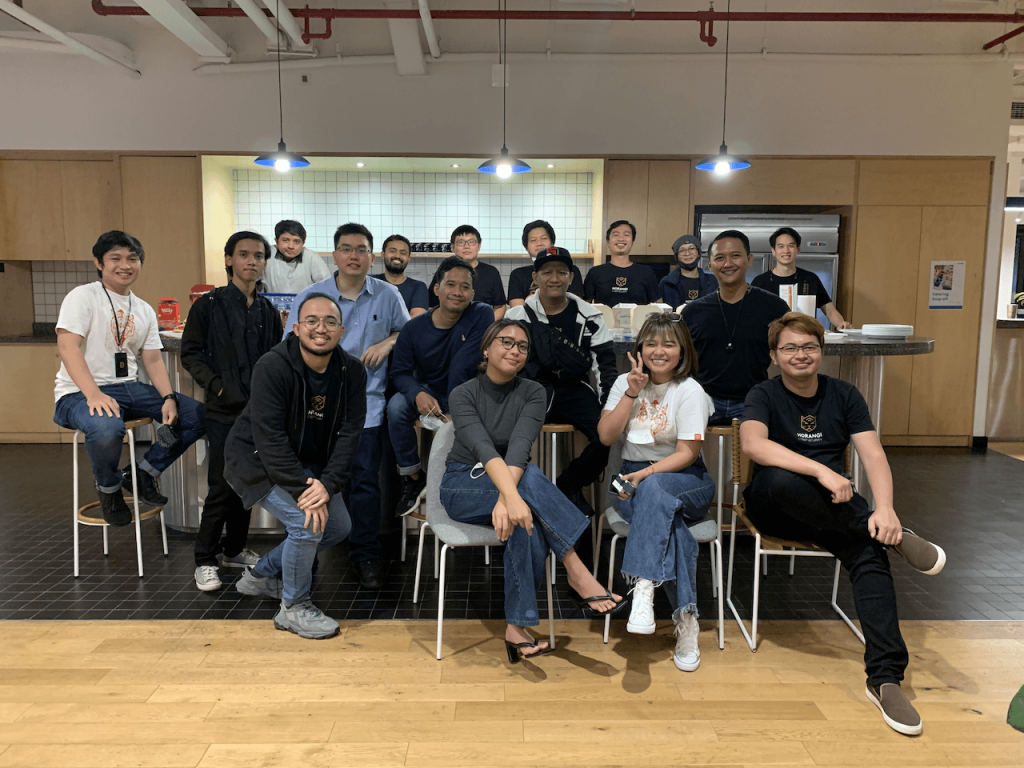
The Horangi team / Photo credit: Horangi
But meeting regulatory requirements is “the bare minimum,” the CEO points out. “We challenge all of our customers and companies in general to go beyond that and make sure that their security is the best that it can be, within whatever budget allocated for it.”
The future
Horangi is confident that the cloud will be a key enabler of future innovations. As Hadjy points out, “it’s the only way that you can rapidly develop solutions and software and support large-scale growth.” As such, the firm is dedicated to building its Warden platform to handle the different facets of cloud security as well as current and future issues.
“A big advantage for us in this region is that a lot of companies are making that transition [to the cloud], and Alibaba and Huawei’s cloud offerings are growing extremely fast as well,” Hadjy says, describing the market’s growth opportunities. “We’re focused on this region and building our product around the problems and the organizations that exist here. And you know, a lot of businesses value that type of partnership.”
Horangi is an IMDA-accredited cybersecurity company founded by ex-Palantir Technologies engineers and is headquartered in Singapore. Horangi’s best-in-class Warden cloud security platform protects organizations in the public cloud and is complemented by an elite team of cybersecurity experts providing CREST-accredited offensive and strategic cybersecurity services to customers across the world. Find out more about its solutions on its website.
This content was produced by Tech in Asia Studios, which connects brands with Asia’s tech community. Learn more about partnering with Tech in Asia Studios.
Stay updated on the go with our mobile app.
Get latest insights with smoother, more personalized experience through TIA mobile app.
Recommended reads
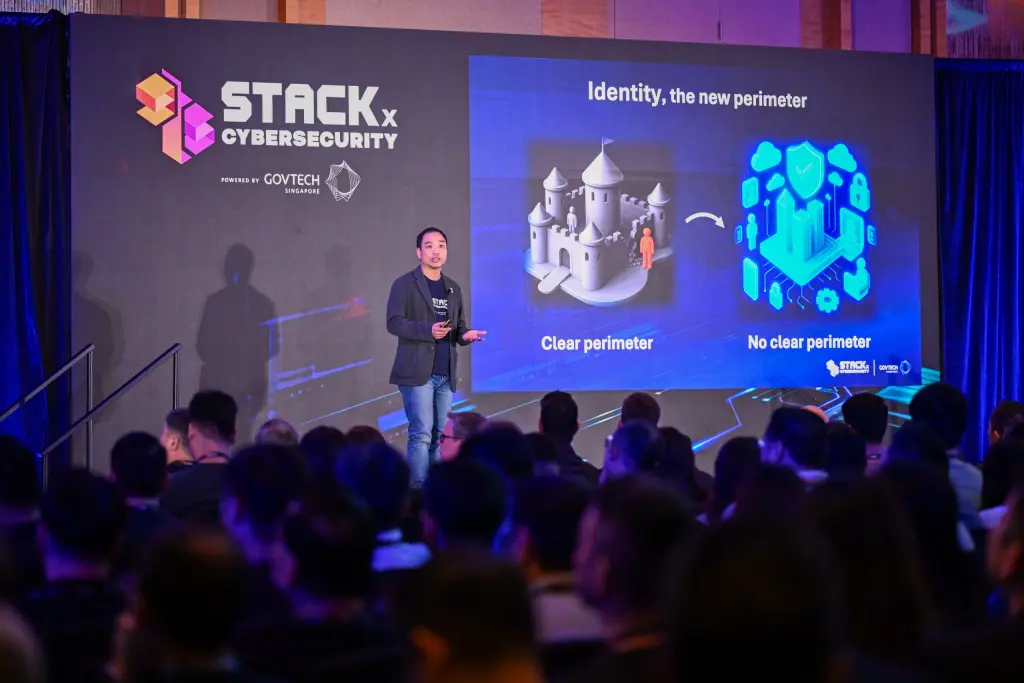 QuickBytes: How GovTech Singapore is fighting fire with fire in cybersecurity
 How AI agents will be the new software buyers
 The hardware secret that gave OpenAI the edge on Anthropic
 AI meets its newest constraint: war
 How Speechify justifies spending more on AI tokens than salaries
 Southeast Asia pulls ahead of global average on AI adoption
 How AI is breaking SaaS where trust matters most
 Could keeping devices safe be as easy as flipping a switch?
 Philippines’ Nasdaq dream meets market reality
 What VCs need in a fund administrator





Editing by Eileen C. Ang and Jaclyn Tiu
(And yes, we’re serious about ethics and transparency. More information here.)



📅 Upcoming Events
22 October 2026
Payoneer x CSPN Summit 2026