Jofie Yordan · · 3 min read
Kargo Tech rolls out EV trucks, eyes Middle East expansion
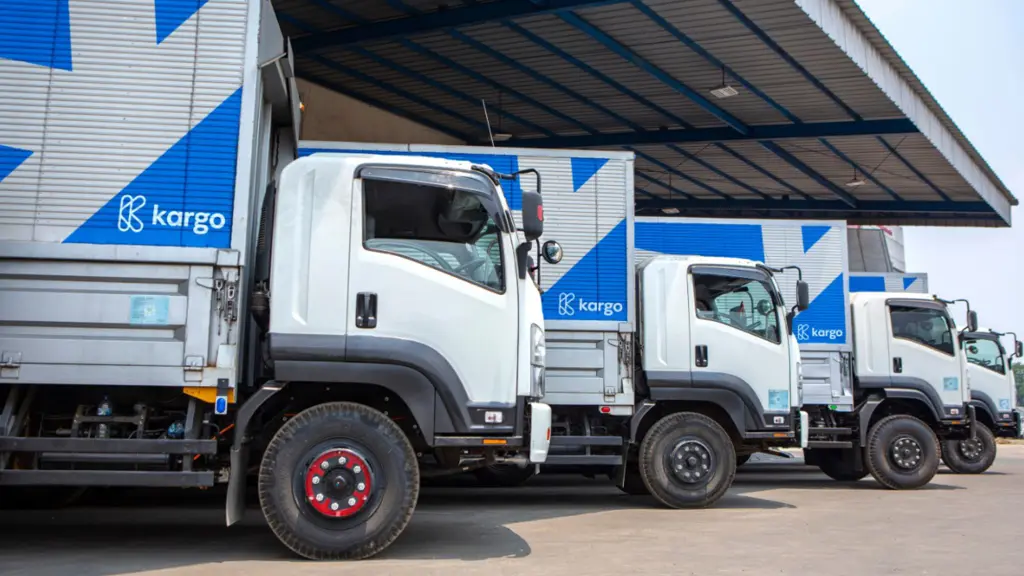
Kargo aims to fully electrify its operations by 2035. / Photo credit: Kargo Technologies
Indonesia-based Kargo Technologies has adopted electric vehicles for its freight logistics fleet, launching an EV trucking partnership program with select clients. The company plans to deploy more than 500 EVs this year and 2,500 vehicles by 2026, aiming to fully electrify its operations by 2035.
CEO and co-founder Tiger Fang says the company has begun testing its EV trucks in Indonesia, with pilot plans in Malaysia rolling out by the end of the year. Similar programs in Singapore and Thailand will follow sometime in 2026.
Sea’s logistics arm SPX, quick commerce firm Astro, and AirAsia’s delivery unit Teleport are among the first clients to use Kargo’s EV fleets.
The company, which operates a network of 40,000 trucks and serves more than 200 enterprise clients, is shifting to EVs as it pursues operating efficiencies, decarbonization goals, and the long-term potential of autonomous driving.
“EV cars and EV trucks are going to be a big technological difference,” Fang tells Tech in Asia. “Electricity is cheaper than gas, and maintenance is much cheaper because they don’t have so many moving parts.”
To secure EV supply, Kargo has signed a memorandum of understanding with EV makers, including Foton, JAC, Wuling, and VKTR. The logistics firm is also working with global financiers such as HSBC and local partners like Indomobil Finance and Chailease to develop structured EV fleet financing.
Expansion to the Middle East
Kargo ventured beyond Indonesia last year by acquiring TheLorry, giving it a presence in Malaysia, Singapore, and Thailand. The company also began operating in China this year through a partnership with AirAsia.
After Fang and his team visited Riyadh, Dubai, and Doha, Kargo is exploring an expansion into the Middle East. This is part of the company’s vision to help build what it calls an “Electrified Silk Road,” an asset-light logistics network powered by AI that’s projected to connect Southeast Asia with China, the Gulf, and the Global South.
“Expanding into the Middle East is a long process – you have to figure out who the right partner is,” Fang points out.
He adds that Indonesia offers ideal conditions for EV batteries because it doesn’t get too hot or too cold. In contrast, the Middle East requires batteries that can withstand 60-degree Celsius summer heat without risk.
“We need a lot of R&D, and that’s why we’re going there,” the CEO says.
He also brings up the strong economic ties between Indonesia and the Middle East. For one, Indonesia imports significant volumes of oil from the Gulf. Also, the 2023 Comprehensive Economic Partnership Agreement between Indonesia and the United Arab Emirates eliminates or reduces tariffs on goods traded between the countries.
On financials, Fang says Kargo achieved adjusted EBITDA profitability in the first quarter of 2025 and expects to reach net income profitability “very soon.”





Stay updated on the go with our mobile app.
Get latest insights with smoother, more personalized experience through TIA mobile app.