Erik Crouch · · 3 min read
Mind-controlled robotics company blasts through Kickstarter goal in just hours
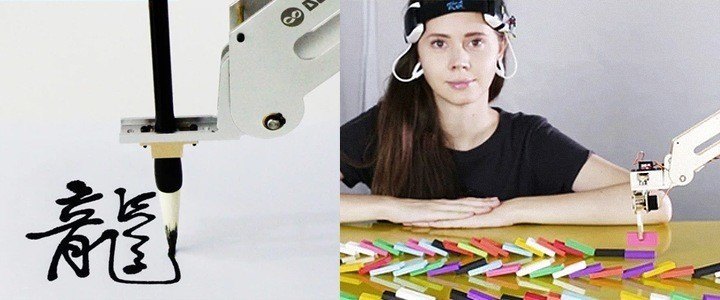
When I hear “mind-controlled super-accurate robot arms with lasers on them,” the first things to flash through my mind are Terminator and Inspector Gadget. But, as one Chinese startup has proven, this tech is a lot more science than fiction.
“We have been life-long hardcore roboticists,” Jerry Liu, CEO of Dobot, tells Tech in Asia.
Last summer, Jerry and his team of five Shandong University graduates left their jobs at various Chinese industrial and medical robotics companies to form Dobot. The co-founders’ goal was to build a cheap, precise robotics arm that could be used by hobbyists, educators, and industry alike.
Crowdfunding luck
The team spent much of the last year in Shenzhen, building the first Dobot. They designed the device last July, churned out the prototype in October, tweaked and redesigned through the winter, and had a model ready for production by late spring.
While they aimed to keep the price as low as possible, the Dobot team didn’t want to settle for anything less than premium accuracy and construction. “We wanted to build a made-in-China car that would run like a Ferrari,” says Jerry.
A bit more than a year after Dobot was founded, the team had a working model. Having funded the project to that point with their own savings and US$150,000 raised in a seed round, the team decided to launch a Kickstarter campaign on September 15. Their goal was to raise US$36,000.
Four hours after they posted the project, Dobot had raised more than US$50,000. As of publication, the company has raised nearly US$180,000, and their campaign isn’t set to end until early November.
Why Dobot took off
Hundreds of Kickstarter backers spent at least US$399, the minimum purchase to receive one Dobot device. The company has even seen four particularly passionate observers cash in on the US$4,500 Kickstarter option, which includes 10 Dobot robotic arms.
Why was there such an outpouring of support for Dobot? If Kickstarter comments are any indicator, the founders were able to tap into an eager pool of robotics programmers, garage-based makers, and tech enthusiasts.
Commenters range from scientists looking to automate boring laboratory tests to artists interested in laser etchings. The Dobot team has also been methodical about personally responding to each question that crops up on its Kickstarter comments page, a move that has surely encouraged buyers who were interested in purchasing the device but wanted a few clarifications.
One of the biggest selling points for Dobot is that it is open-sourced and infinitely customizable. It can be controlled by a computer, mobile app, gesture input, and even brain waves.
“One of our founder’s expertise was in biosensors, and thought it’d be cool to control a robot with concentration,” says Jerry. “It was not hard to implement.”
Selling big





Stay updated on the go with our mobile app.
Get latest insights with smoother, more personalized experience through TIA mobile app.