 Jum Balea · · 4 min read
The American who went to Korea on holiday and ended up launching a startup

Victor Ching, an American entrepreneur from Hawaii, came to South Korea on a leisurely trip with his cousins 10 years ago. Little did he know that the trip would open him up to the possibility of living in a foreign country. He stayed in Seoul, and with solid ties in Silicon Valley, got offered a job as the chief product officer of Yogiyo, Delivery Hero’s Korean food delivery company. He eventually ended his stint at Yogiyo to set up his own startup.
“From my experience at Yogiyo, I knew the important points about entering a specific market – market size, smartphone penetration, etc – and the key performance indicators for an ecommerce or on-demand business. All of the numbers look great for this market,” he explains.
He started up Miso in August, frustrated with local cleaning services, which he used occasionally.
Like with Uber and many other on-demand startups, customers can rate cleaners.
The on-demand service lets its users book cleaners in Seoul, Incheon, and Gyeonggi-do through the site or mobile app. House cleaning services in Korea are often slow to confirm phone call appointments because they manually match cleaners with clients. Plus they charge membership fees. So Victor wants Miso to be a better option. A user can reserve a slot for a cleaner and receive confirmation instantly. The cleaner comes within at least an hour and performs the task for four to eight hours – depending on the booking. A booking costs US$36 for the first four hours, which he says is competitive with traditional services.
Similar to Uber and other on-demand startups, Miso customers rate cleaners so that the company can weed out bad service providers.
“Miso means ‘smile’ in Korean,” says Victor. “We chose this name because of our larger mission to save people time so they can use that time to do the things they really want to do.”
Having the highest average internet speed and smartphone adoption in the world, South Korea is a breeding ground for online-to-offline (O2O) startups like Miso which are drawing customers away from offline services that generally take orders over the phone.
Victor says his startup is making cleaners’ lives easier by giving them access to customers whom they wouldn’t have known about otherwise. It’s also attractive for the workers since they can get clients at times and locations convenient to them and without the need to pay a monthly fee to a booking agency. Instead, Miso takes a 10 percent to 15 percent cut of each booking – that’s how it earns money.
That seems like a lot, but Victor says Miso is still a better option. “There are agencies, even worse than others, that have waiting rooms where cleaners show up in the morning and as orders come in, that’s the only time they get dispatched to the customer.” It’s a lot of time wasted for the cleaners.
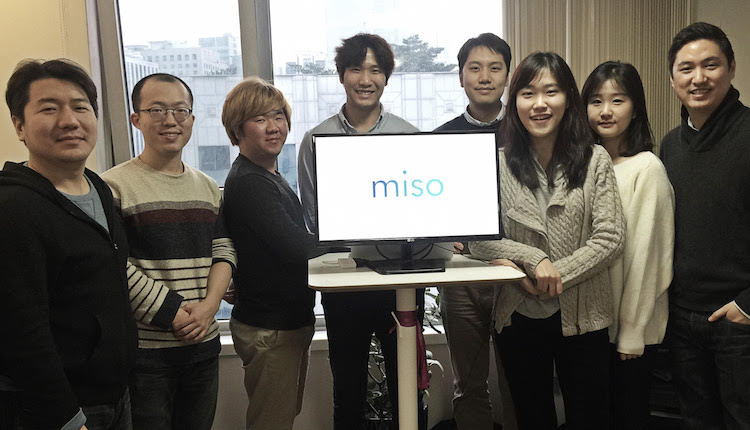
The Miso team today
The company has 4,000 registered customers who use the service on varying frequencies – sometimes once a week or as many as six times a week. There are 1,500 cleaners signed up to work. Across South Korea, there are around 200,000 independent cleaners working, notes Victor.
Seasoned entrepreneurs





Stay updated on the go with our mobile app.
Get latest insights with smoother, more personalized experience through TIA mobile app.










📅 Upcoming Events
22 October 2026
Payoneer x CSPN Summit 2026