- Premium Content It takes our newsroom weeks - if not months - to investigate and produce stories for our premium content. You can’t find them anywhere else.
 Simon Huang · · 3 min read
StashAway cut losses by half to $10.9m, grew top line by 10% in 2023
Investing involves trade-offs: Higher returns involve taking bigger risks, while lower stakes net a smaller return.
Robo-investment platform StashAway also had to make trade-offs in the past year.
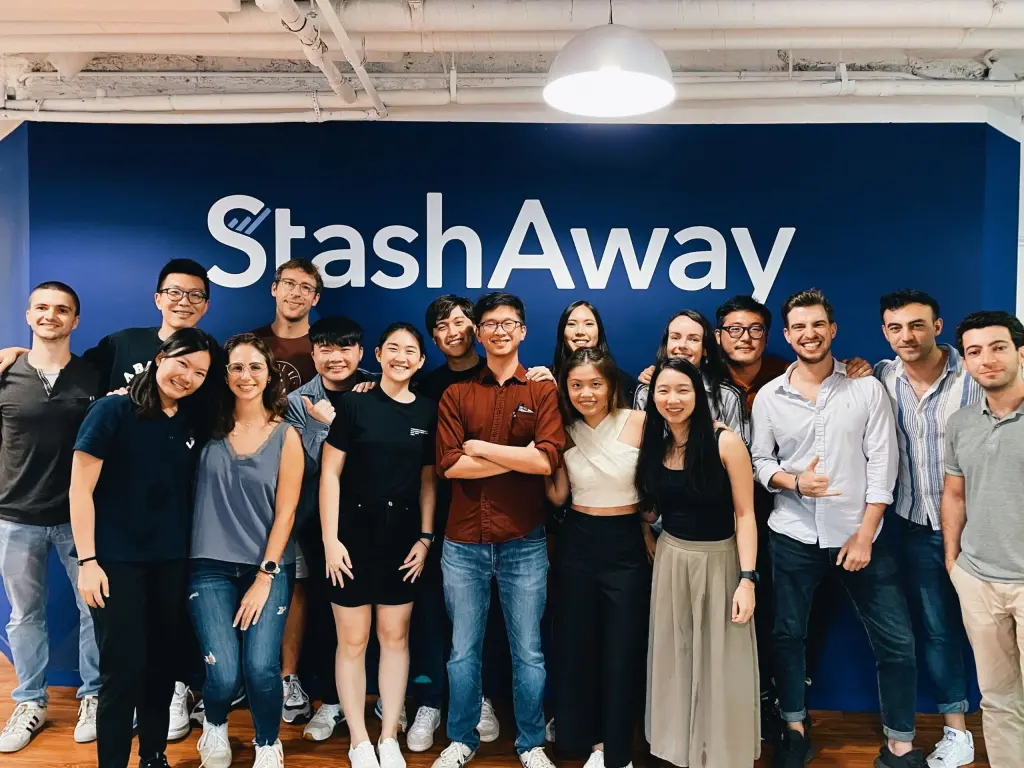
Team StashAway / Photo credit: StashAway
In 2023, the Singapore-headquartered firm slashed expenses and narrowed its losses significantly. But this came at the expense of its top line, with year-on-year growth slowing from 15.6% to 10.1%.
The company also operates in Malaysia, Hong Kong, Thailand, and the Middle East.
Accelerating revenue growth
Despite lagging growth, StashAway co-founder and CEO Michele Ferrario tells Tech in Asia that revenue has picked up since the third quarter of 2023, and this momentum has continued into 2024.
Based on Q2 2024, StashAway’s annualized net revenue was S$14.1 million (US$10.4 million), Ferrario shares. This is 41% higher than the company’s annualized revenue based on Q2 2023 figures.
Ferrario attributed the growth uptick to two factors. First, the performance of equity markets and StashAway’s portfolios have improved, leading to a rise in the platform’s assets under management (AUM).
Since StashAway makes money by charging its clients a percentage fee on AUM, higher levels of AUM translate to higher revenue.
Second, the platform’s low-risk cash management products have also been well received.
With the introduction of new products such as private credit and the expansion of StashAway Reserve, which offers high-net-worth individuals wealth advisory and access to private market investments, Ferrario expects the company’s revenues to be less dependent on public market performance over time.
“Much larger” opportunity
StashAway kept a tight lid on costs in 2023, with all line items falling in absolute numbers compared to 2022. The biggest cut was to marketing expenses, which dropped to almost 20% of 2022’s levels.
Since the firm has invested in building its brand over the years, it continued growing in 2024 even though its marketing spend has remained relatively unchanged, Ferrario says.
As a result of these cost reductions, StashAway recorded adjusted EBITDA losses of US$5.9 million, a 58% upturn from 2022.
Stay ahead in Asia’s tech landscape
This is premium content. Subscribe to read the full story.
The robo-advisor platform achieved adjusted earnings profitability in its largest market – Singapore – as of May this year.
We know this is not ideal. ⌛ Sign up in 20 seconds. Cancel anytime.
Our subscriber community includes professionals from these companies:





Stay updated on the go with our mobile app.
Get latest insights with smoother, more personalized experience through TIA mobile app.