- Premium Content It takes our newsroom weeks - if not months - to investigate and produce stories for our premium content. You can’t find them anywhere else.
 Sharanya Pillai · · 6 min read
Southeast Asia’s data center boom has a water problem
AI demand is driving major data center investments across Southeast Asia, but the region’s water supply is struggling to keep up. In November, Malaysia’s Johor state halted approvals for Tier 1 and 2 data centers due to water concerns.
These facilities, which have simpler infrastructure, tend to use older and more water-intensive cooling mechanisms. One such facility can consume as much as 50 million liters of water daily.

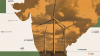
Image credit: Timmy Loen
The move highlights a growing challenge across Southeast Asia: Many cities seek foreign investment via data centers but must face the facilities’ massive water consumption.
“We don’t want a situation where data center operators have water and regular Malaysians don’t have water at home,” says Charles Santiago, the chairman of Malaysia’s primary water regulator.
See also: No bubble, doom, or trouble for Malaysia’s data centers
The challenge is acute in Johor, which already experiences supply disruptions. In the 2024 Hari Raya festive period, over 1,000 households faced water cuts.
River pollution also disrupts household supply, says Zayana Zaikariah, a senior researcher at Malaysia’s Institute of Strategic and International Studies. In November, almost 800,000 people suffered from water disruptions due to pollution in the Johor River.
“These disruptions raise questions of prioritization: who gets water first when supply is constrained,” she notes.
Investment at what cost?
Policymakers face a dilemma, as data centers represent significant investment from both pure-play data center operators and tech giants such as Microsoft and Google.
As a side benefit, data centers drive demand for local renewable energy projects. These centers may sign power purchase agreements for up to 20 years, and such long-term offtake agreements help solar and wind projects attract financing.
Southeast Asia is poised for strong data center expansion as both US and Chinese players ramp up capacity, says Charles Yonts, head of Asian sustainability research at Macquarie Capital.
He names Johor as the biggest growth market but adds that Thailand – particularly near Bangkok – is growing faster from a smaller base.
But while data centers are notorious for high energy needs, their water usage is the “hidden footprint of the digital economy,” says Professor Lee Poh Seng of the National University of Singapore (NUS).
Rethinking water sourcing
Race to cool
Regional solutions
Stay ahead in Asia’s tech landscape
This is premium content. Subscribe to read the full story.
Data centers need a massive water supply that Southeast Asia doesn’t have. See how major players are adapting and which new opportunities emerge.
We know this is not ideal. ⌛ Sign up in 20 seconds. Cancel anytime.
Our subscriber community includes professionals from these companies:





Stay updated on the go with our mobile app.
Get latest insights with smoother, more personalized experience through TIA mobile app.







📅 Upcoming Events
22 October 2026
Payoneer x CSPN Summit 2026