- Insights This article was written by a TIA community member. Insights pieces undergo the same rigorous editorial process that newsroom-produced articles have.
 Michael Lints · · 5 min read
An analysis on Southeast Asia’s exit landscape
Southeast Asia has a young and vibrant technology startup ecosystem. It’s maturing at a rapid pace, and capital is increasingly being allocated to up-and-coming players.
With the rise of unicorns, foreign venture capital firms, and corporates, Golden Gate Ventures, in partnership with Insead, felt it was time to revisit earlier research relating to the exit landscape.
In this analysis, we’re taking a deeper look at historical exits (strategic acquisitions, initial public offerings, and trade sales) and making a forecast of potential ones for the next five years.
We studied our previous predictions and found that they were generally in line (albeit slightly too conservative) with the actual exits that took place between 2016 and 2018.
The space has seen many recent developments, such as Sea’s 2017 IPO, Grab’s acquisition of Uber’s regional business, and the emergence of at least six new Southeast Asian unicorns since 2015. That’s why we decided to reevaluate the landscape, conduct a survey with Insead to gauge general partners’ (GP) sentiments, and develop a new forecast.
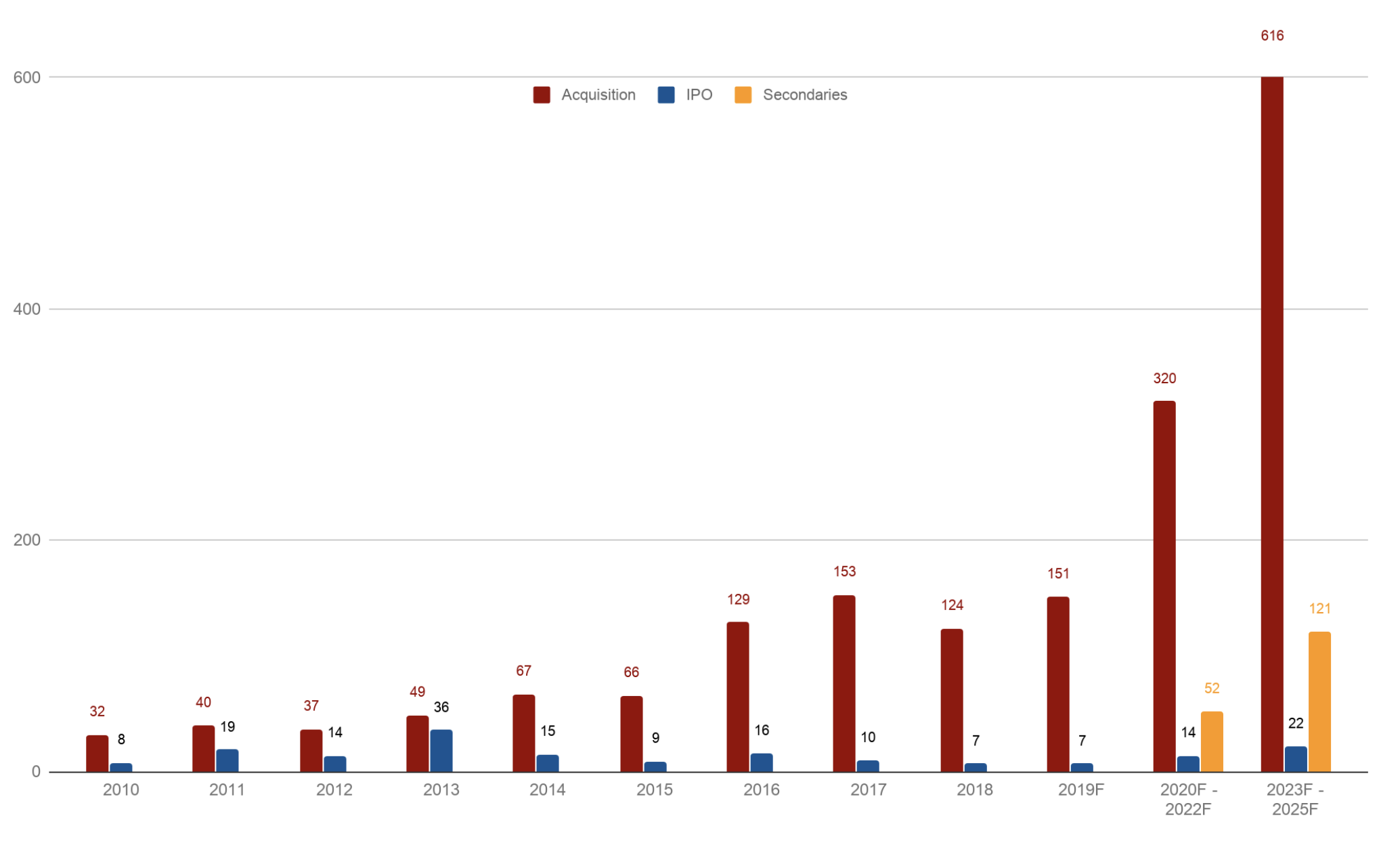
Number of exits by type
For this report, we decided to employ a new methodology, leveraging past Southeast Asia data, inputs from global benchmarks, and results from Insead’s survey.
Based on these, we estimate that there will be at least 700 startup exits between 2023 and 2025, which is in line with the overall optimism of other GPs, according to the survey.
Major drivers of future exits include:
- Unicorns becoming acquirers (Gojek bought majority stakes in seven other startups between 2017 and 2019)
- Growing corporate venture capital (CVC) investments (Toyota’s US$1 billion cash injection in Grab was 2018’s largest CVC deal globally)
- Increasing international private equity (PE) participation (e.g., Warburg Pincus’ US$4 billion+ dedicated fund for Southeast Asia and China)
- Initiatives by various stock exchanges to support more startup listings, sparked and inspired by Sea’s IPO in 2017
Overall trends
- In a maturing ecosystem, most exits are driven by regional tech giants. The large Chinese-based corporates have been absent from the acquisition market (apart from Alibaba acquiring Lazada).
- Secondaries will become a bigger trend post-2022, although there is currently very little to no public data about secondaries in Southeast Asia.
- There will be a large increase in exits after 2022 due to end of fund life for early venture funds (those raised in 2010 to 2012).
- An influx of fresh capital will help validate more business models and push companies toward growth and the pre-IPO stage.
CVC and PE creating more liquidity
Regional corporates have been more active in Southeast Asia, particularly in countries like Indonesia, Thailand, and Singapore. Over the last eight years, we have seen the number of CVC firms rise fivefold, with a hike in the volume of investments by 63% in the same period.
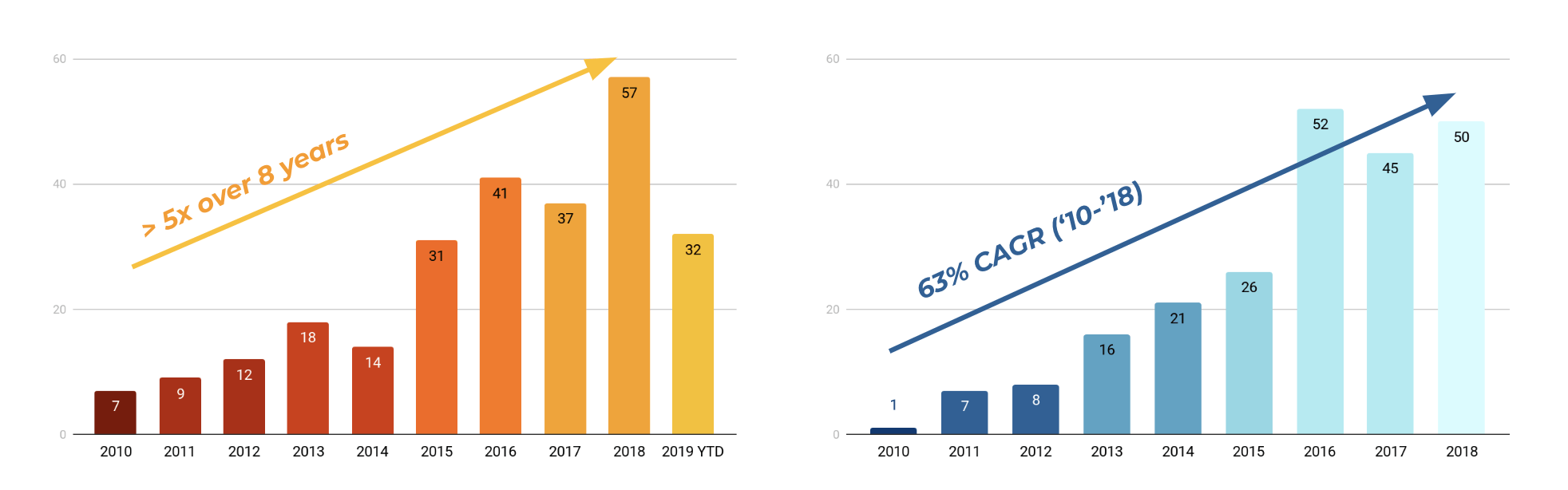
Number of CVCs in Southeast Asia (left) and the number of investments made by CVCs in the region
Key drivers
Survey results
Conclusion





Stay updated on the go with our mobile app.
Get latest insights with smoother, more personalized experience through TIA mobile app.