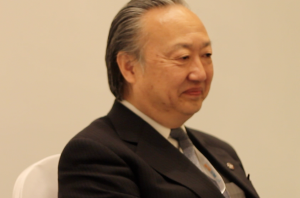
 This morning at GMIC, Bruno Bensaid (a founder and partner in Shanghaivest) hosted a fireside chat with SoftBank’s chief strategic advisor Ted Matsumoto. Although the main hall was a bit empty, Matsumoto didn’t seem to mind, launching into a passionate discussion of his company’s past and future.
SoftBank, Matsumoto argued, is a unique company in the mobile operations market because it comes from an internet services background, rather than from telecom. “Mobile internet is everything,’ Matsumoto said, and it sounded like he meant it.
Bensaid asked how applications were changing were changing the core business of mobile operations, and Matsumoto intimating that for SoftBank, it’s always about what best serves the user. In the case of Apple, for example, telecom operators make nothing whatsoever from app sales; however, SoftBank sells Apple phones because that’s what’s best for the user, Matsumoto claimed. (I suspect there’s also quite a lot of money to be made in selling the handsets anyway, though. It’s not like SoftBank is selling iPhones at a loss purely out for the sake of its users.)
With regards to Android, Bensaid pointed out that many users have complained about Google’s Android Market (now called the “Play Store” for some reason). Is SoftBank interested in developing its own Android app store? Matsumoto said the company was indeed working on a global solution with other companies, including China Telecom. But he also said that SoftBank has a good relationship with Google and it hasn’t had many complaints from users, so SoftBank is less motivated to create its own app store than other companies. “We are not so keen as other operators throughout the world,” Matsumoto said, “but we don’t preclude the possibility.”
A bigger issue for SoftBank has been the mismatch between Android apps and devices, given the fact that some apps won’t work on some devices. Matsumoto says he sees this problem decreasing over time, and said it’s one reason SoftBank has been a little slow in pushing Android devices.
Bensaid asked about 4G, and Matsumoto said it was something the company was pushing quite heavily. Specifically, SoftBank was the first company to launch a TD-LTE 4G network (the technology was developed by China Mobile, but it hasn’t been permitted to actually implement it in China yet). Matsumoto likes 4G so much because, as he describes it, it is faster and more efficient, allowing us to enjoy higher speeds at lower costs. Of course, he also said that SoftBank’s 4G subscription costs about 10 percent more than its 3G subscription, but it also has a much higher data cap: 7 GB for 4G vs. 1.2 GB for 3G.
Matsumoto also said SoftBank has been pushing customers to use wifi whenever it’s available, and has established hundreds of thousands of hotspots to release some of the pressure on its 3G network. Access to these hotspots is free; Matsumoto said it’s worth it to offer users this free service because it takes pressure off of the 3G and 4G mobile networks. “Without wifi,” Matsumoto said, “we could not survive.”
Then Bensaid popped the dreaded question: will SoftBank follow US telecom operators in charging overage fees for people who exceed their monthly data usage caps? Matsumoto said yes, and while he didn’t say what those charges would be, he gave the impression they’re pretty exorbitant, and suggested it’s something users will definitely want to avoid. But he added that SoftBank isn’t out to impoverish its customers: “We will give them all kinds of caution and guide them not to use more than 7 GB,” Matsumoto said.
This post is a part of our coverage of GMIC 2012.





Stay updated on the go with our mobile app.
Get latest insights with smoother, more personalized experience through TIA mobile app.