Priya Pradeep · · 2 min read
India’s competition watchdog puts a brake on Hyundai-Kia $300m investment in Ola
Indian antitrust watchdog Competition Commission of India (CCI) has put a spanner in the works of South Korean automobile maker Hyundai and affiliate Kia Motor’s plans to invest US$300 million in ride-hailing unicorn Ola.
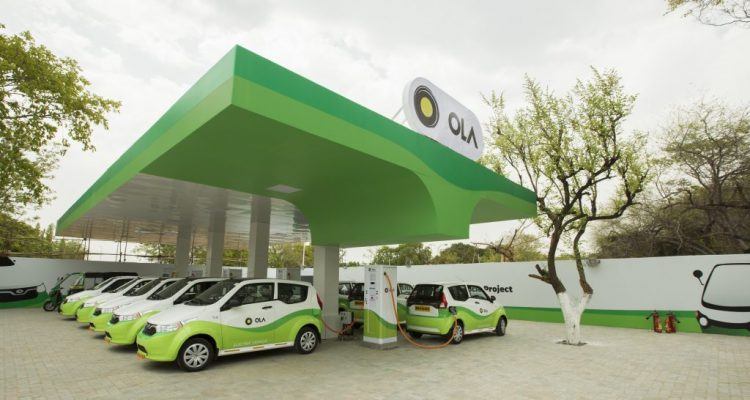
Photo credit: Ola
In response to the application sent by the trio to CCI seeking investment approval, the regulator asked Ola’s parent company, ANI Technologies, to define the competitive impact of car companies investing in ride-hailing apps.
As Ola dragged its feet on CCI’s directive and did not submit the report on time, CCI termed the proposal as invalid. Bengaluru-based Ola refiled its application early in September, stating the investment deal of US$300 million that was solely to go in ANI Technologies would now be split into two: US$250 million for Ola and the remaining US$50 million to go towards Ola Electric – a company forked out of its parent company to focus on electric vehicles.
“CCI thought that the deal might create a monopolistic situation for one car maker in the cab-hailing market,” a source told Moneycontrol.
In its second application for approval, Ola has dwelled on the competitive landscape in India, touching on points like the market size for production and sale of passenger cars in India, operational leasing services, radio taxi services, and charging infrastructure services for EVs. According to the source quoted above, Ola’s second attempt at getting CCI’s approval might not bring any different result.
In March 2019, Ola partnered with Hyundai and Kia Motors for strategic investment wherein the Korean automakers would build India-specific EVs and infrastructure around it.
Ola’s co-founder, Bhavish Aggarwal, personally owns about 40% stake in Ola Electric, making him the biggest shareholder, while the remaining 60% is divided between investors like SoftBank, Tiger Global, and Matrix Partners, among others.
Nine-year-old Ola, valued at over US$6 billion, has raised a total of US$3.3 billion to date from SoftBank, Tiger Global, Tencent, Matrix Partners, and DST Global, among others.
Meanwhile, Hyundai had launched its Kona electric SUV car in July 2019 in India and is now working on the prototype of a smaller electric car. Kia and Hyundai, on the other hand, are planning a slew of EVs tailored to the Indian market. At the 2018 Auto Expo, Kia had sounded out about the possibility of an India-exclusive compact EV between 2019 and 2021.
“We are ready to introduce EVs in India but it depends on infrastructure and government support policy. When the market is opportune, we will introduce EVs anytime to India,” Kia Motors Corporation president and CEO Han-Woo Park told local media Business Standard in June this year.
This report was first published on KrAsia.
Editing by Charmaine de Lazo
(And yes, we’re serious about ethics and transparency. More information here.)





Stay updated on the go with our mobile app.
Get latest insights with smoother, more personalized experience through TIA mobile app.