 Annie Teh · · 4 min read
How smart logistics can break the Asian ecommerce ceiling

It’s an exciting and terrifying time to be in ecommerce in Asia. Consumers are accepting ecommerce en masse, and ecommerce firms are registering record-high earnings. According to a white paper by Mastercard, Asia Pacific created over US$567 billion in total transactions in 2014, and is likely to become the largest ecommerce market in the world.
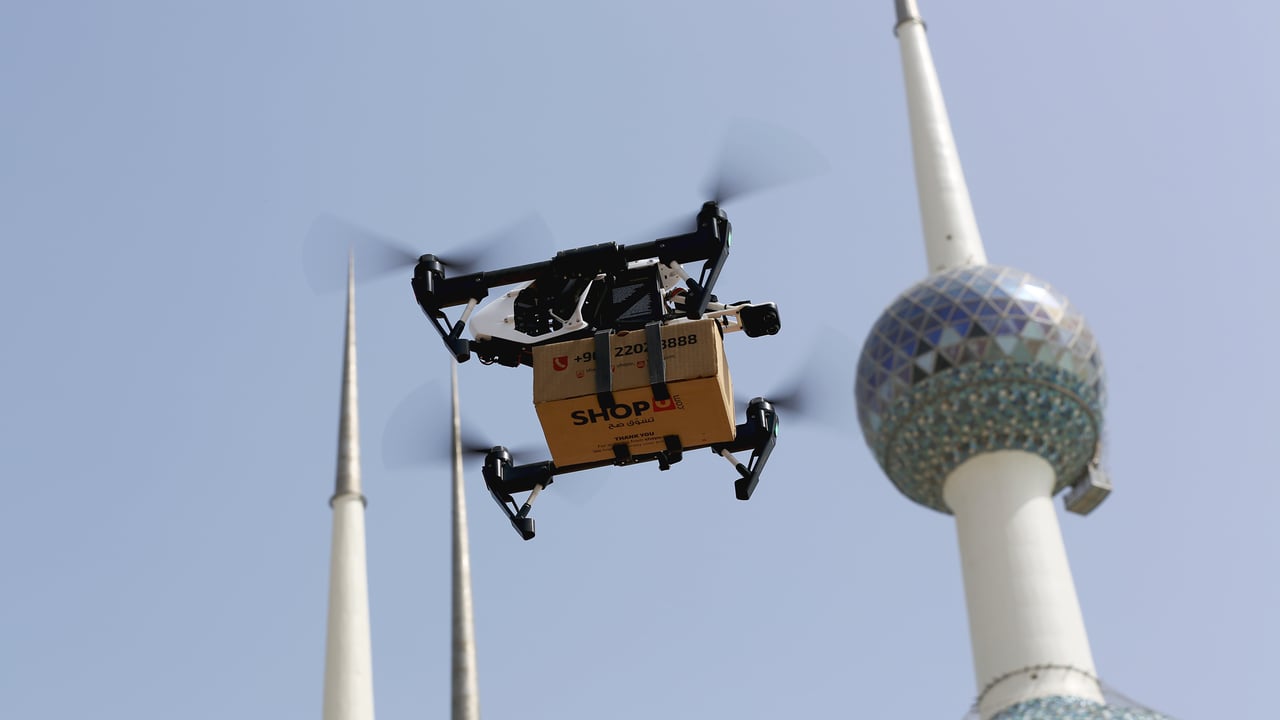
UAV technology being used as a last mile solution. Credit: Vimeo
The terrifying part comes in its equally record-high demands — people want better service with shorter waiting time and less cost. Delivering on the “customer promise” is everything in ecommerce — let your customer down enough times, and you’ll strike out.
For ecommerce to continue growing, it needs to address the bottleneck — logistics.
To meet the increasing standards of customer fulfillment, we see more companies offering more complex services with shorter timespans — Warby Parker rose to popularity thanks to its free Home Try-On service, while closer to home, fashion ecommerce service Zalora begun offering same-day deliveries and free returns, as did grocery service Honestbee.
“The main challenge is to ensure consistent customer experience to clients, guaranteeing a fast and reliable delivery of the products to customers’ doorsteps,” shared Alessandro Duri, regional director of operations for the Zalora Group. “The developing ecommerce last mile industry poses daily threats of inconsistent delivery lead-times and breached delivery promises.”
Logistics in Asia, however, can get quite tricky. According to logistic solutions’ company Dematic’s CEO, Glen Borg, Asia possesses a unique set of problems.
The first is its underdeveloped transport infrastructure. Transport issues in Asia can be as diverse as a lack of connectivity over large land masses and major congestion in urban areas. The Philippines, a country notorious for their traffic congestion, experienced a fall in import growth and a rise in food prices in 2014 thanks to serious port congestion.
The second is the falling availability of land due to rapid urbanisation, driving up inventory costs.
The last problem is, paradoxically, the low cost of labour. Many companies like Hermo, a Malaysia-based beauty and skincare marketplace, will continue to invest in third-party logistics services as they’re made affordable by low labor costs. In the short term, 3PL still make good business sense, but looking ahead, using labor as a solution will prove difficult to scale.
That’s why logistics companies like Singpost and Australia Post, who have the wallets to do so, are testing out UAV technology as a new form of last-mile delivery.
“Many companies address the problem of growth with hiring more warehouse workers,” said Borg. “However, this results in crowded, low productivity warehouses with uncompetitive order fulfilment speed and accuracy. Some companies, particularly the ecommerce companies in China and now India are seeing that adding labour is not the solution.”
The move to smart logistics
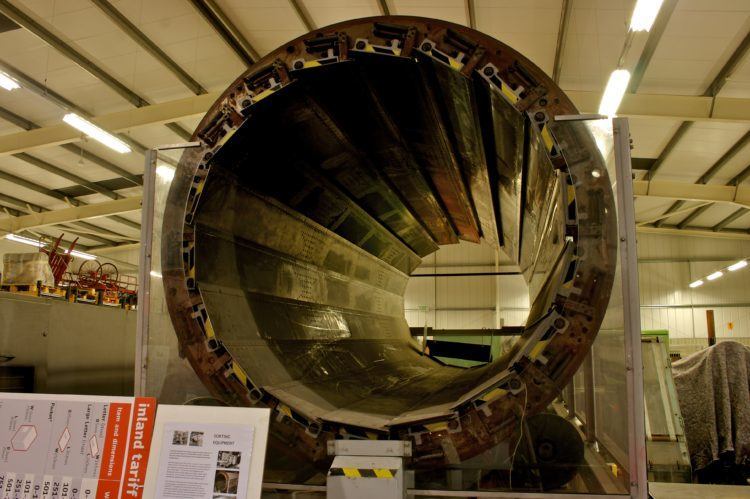
An automated mail-sorting system. Credit: Wikimedia
Ecommerce startups are taking matters into their own hands to invest in smart logistics — fulfillment tools that tap into data and automation to maximize efficiency.
Castlery, a Singapore-based online furniture retailer, shared with Tech in Asia that they’ve spent six months building an enterprise resource planning system (ERP) which links across their whole supply chain and syncs data real-time from their webpage, store, distribution center, and factories.
They also shared that they are working with international specialists to build and optimize a warehouse management system to run their distribution centers worldwide, and have an automated load simulator to ensure their products are packed effectively.
Declan Ee, co-founder of Castlery, commented that companies that have faster delivery, less product wastage, and great last mile delivery will prevail in the long-run.
Zalora, a fashion ecommerce site that delivers to six countries in Asia, has integrated a variety of automated tools into their end-to-end fulfilment cycle, including a system which shows customers the exact date of deliveries, to email confirmation to customers with order tracking details. They also have an in-house dynamic order prioritization system which ensures that all orders leave the warehouse on time.
Hermo has also shared that they are refining in-house inventory and order sorting algorithms to optimize pre-last mile processes.
Adapt or get left behind

Delhi traffic is a force to be reckoned with. Credit: Wikimedia
The market for logistics has become bigger than ever. Funding for logistics startups in Southeast Asia has hit an all-time high at US$28.16 million, a 110 percent increase from 2014, according to the Tech in Asia database. If ecommerce companies want to grow further, improving their logistics will be the first step to doing so.
According to Borg, we can expect more global ecommerce companies entering the market to build local logistics capabilities.
“As the leading ecommerce companies invest in automation systems, be they local or global players, others will also need to invest or fall by the wayside,” said Borg. “This will not be limited to pure-play ecommerce companies, but also traditional retailers building their omni-channel capabilities. In the end the consumer will win, with access to more products, at a better price, with faster, more accurate deliveries.”
Dematic is a leading supplier of integrated automated technology, software and services to optimise the supply chain. Dematic employs over 5,000 skilled logistics professionals to serve its customers globally, with engineering centers and manufacturing facilities located across the globe. Dematic has implemented more than 4,500 integrated systems for a customer base that includes small, medium and large companies doing business in a variety of market sectors.
Stay updated on the go with our mobile app.
Get latest insights with smoother, more personalized experience through TIA mobile app.
Recommended reads
 Life’s a game, and AI agents are Animoca’s new play
 Indonesian AI startup goes global
 Forrest Li on scaling Sea, building smarter bots, and founder grit
 An AI assistant that joins sales calls and scores team skills
 Beyond the check: Why VCs need more than capital
 SGX’s CEO says it doesn’t need a unicorn to win
 SMEs want AI too, but not the kind Big Tech is selling
 Oatside’s alt-milk rise hits a profitable gear
 Alibaba’s financial health in 12 charts
 Asia’s telcos bundle AI into mobile plans. Will it pay off?





Editing by Terence Lee
(And yes, we’re serious about ethics and transparency. More information here.)




