Terence Lee · · 4 min read
Why Rocket Internet’s Foodpanda is a safer bet than Zalora and Lazada
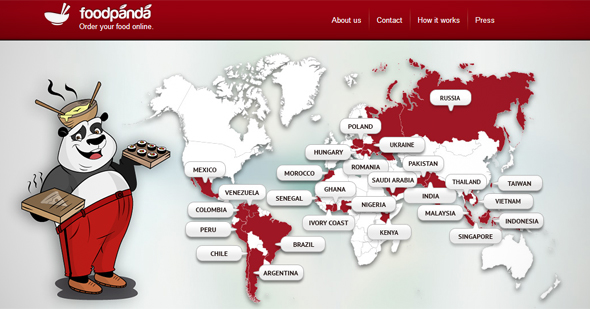
The last time I met Foodpanda Asia CEO Kiren Tanna, fittingly over lunch, the food delivery service hadn’t raised money and kept a lower profile compared to Zalora and Lazada, which combined have raised over USD 100M in funding.
On all counts, Foodpanda has a smaller footprint: It doesn’t hire as much, is a relatively younger business, and probably makes much less in revenue despite having a presence in eight Asian countries.
But to dismiss it as an inconsequential business would be a mistake: It recently raised USD 26M from Rocket Internet regular Kinnevik, Russia’s Phenomen Ventures, as well as Rocket Internet itself.
Foodpanda Singapore then announced a marketing partnership with RedMart.com, an up-and-coming online grocer, while FoodPanda Vietnam revealed that it will be delivering food for some prominent F&B brands, including Subway, NYDC, Gloria Jean’s Coffee, and Breaktalk.
The coordination of these news releases portray Foodpanda as an up-and-comer. While it’s easy to be cynical, that picture may not be too far from the truth.
Online food delivery is as old as … Facebook?
The online food delivery business, after all, has the potential to be high-margin and profitable. Grubhub and Seamless, both started deliveries between 2004 and 2005, are some good examples. Operating mainly in the United States, Seamless has grabbed USD 85M in revenue last year while Grubhub had some USD 60M in 2011.
Meanwhile, similar services are mushrooming in various markets around the world — Vietnam, Singapore, Indonesia, Middle East, just to name a few. A competing service, Yemeksepeti.com, has raised USD 44M simply by serving Turkey and the Middle East.
Foodpanda’s business model is quite different from Zalora and Lazada. As any Rocket Internet executive will tell you, doing e-commerce at scale in Asia is particularly challenging, especially in emerging economies where basket sizes are small and consumers are cost-conscious.
These factors may have deterred Amazon from entering Asia in the first place, giving companies like Rocket Internet an entry point into the high-growth market. While Zalora and Lazada don’t have physical storefronts, this is offset by the costs of logistics and delivery as well as returned goods. There’s no price advantage to be had.
Logistics is an even bigger headache for e-commerce companies in emerging markets due to an immature transport infrastructure, which could in turn affect service quality and turn away customers. Indeed, Zalora had trouble with service quality soon after its birth, leading to widespread customer complaints.
Besides logistics, Zalora would also need to spend on cataloging , warehousing, and marketing campaigns. Marketing doesn’t just include advertising — to appeal to the masses, they’ll need to conduct photo shoots with models, spruce up the website, and engage celebrities as advocates.
Which explains why even though Rocket Internet’s Zalando and Tony Hsieh’s Zappos have surpassed USD 1B in revenue, their profit margins are pegged at a measly 4-10 percent, which, by the way, gives them less operating leverage, more fixed costs, and less room for forecasting error.





Stay updated on the go with our mobile app.
Get latest insights with smoother, more personalized experience through TIA mobile app.