- Premium Content It takes our newsroom weeks - if not months - to investigate and produce stories for our premium content. You can’t find them anywhere else.
 Jack Ellis · · 9 min read
Singapore’s e-scooter ban will disappoint some, but there’s a silver lining for others
Beginning today, Singaporeans will no longer be allowed to ride personal mobility devices (PMDs) – otherwise known as e-scooters – on public footpaths and sidewalks in the city-state.
The ban effectively shuts down public scooter-sharing – which had sprung up to offer Singaporeans a “first- and last-mile” commuting solution – in the country. It also causes a massive headache for food-delivery businesses, as a significant number of their drivers rely on hiring e-scooters in order to perform their duties.
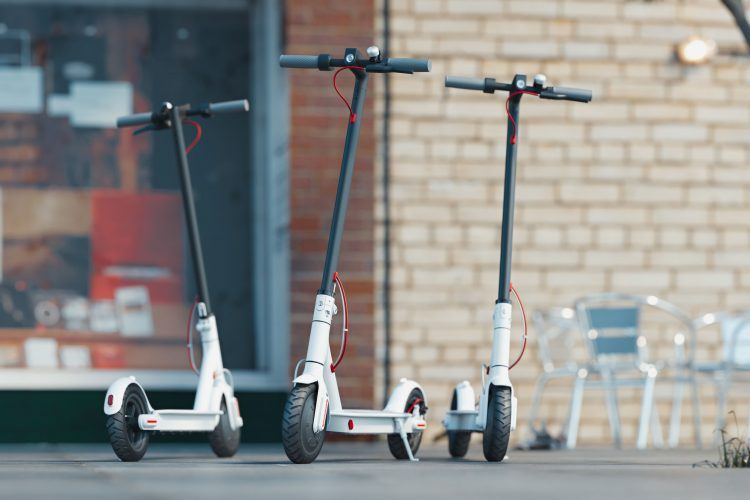
Photo credit: Kostov / 123RF
Driver incomes may be hit too, as deliveries may no longer be as efficient as before.
Meanwhile, bike-sharing – a business model that seemed to have gone kaput a little over a year ago – looks the most likely candidate to fill the “last mile” vacuum.
Final straw
While the announcement of the ban yesterday was somewhat out of the blue, it probably didn’t come as too much of a surprise, given the gradual turn of public opinion against e-scooters.
Imported PMDs with electrical faults have led to several house fires in Singapore, while reckless use of the vehicles has caused injury to their drivers as well as pedestrians. In one high-profile case in September, a cyclist died after a collision in Bedok with an e-scooter that was later found to be non-compliant with weight and width restrictions set by the Land Transport Authority (LTA).
While the LTA was in the midst of several initiatives aimed at encouraging safer PMD use – such as a grace period until December 2020 for individual owners to register their vehicles, mandatory vehicle inspections from April next year, and a S$100 incentive for users to dispose of non-compliant PMDs – it appears that the cyclist’s death was the final straw, pushing the authorities to take a much stricter line with today’s ban.
“Dissatisfied and frustrated” by the decision
While the government hasn’t banned e-scooters outright, it has prohibited their use on public footpaths, including sidewalks. Given that the vehicles were already barred from sharing the road with cars, motorbikes, and other heavy traffic, that doesn’t leave many places where they can be legally used. While e-scooters are still allowed on dedicated cycle lanes, these are scarce in Singapore, with the vast majority located in residential estates far from the city center.
This limitation not only renders e-scooters useless for private owners, but also for business models that rely on the vehicles, such as PMD-sharing startups offering networks of dockless e-scooters for hire.
In January, the LTA invited applications for shared PMD operator licenses which, if granted, would allow holders to run regulated e-scooter sharing services on public land. By April, the agency said it had pushed back its decision on issuing licenses until mid-2019; later, this was further delayed until Q3 2019.
See: E-scooter services are fighting a multifront battle for survival in Singapore
Yesterday’s announcement of the sidewalk ban appears to have effectively mothballed the licensing process.
Due to the extensive delays and an increasingly strict regulatory environment, many operators had already begun to explore alternate business models – such as Telepod with its swappable battery technology – or to redeploy resources to other markets.
GrabWheels suspended, users refunded
Food delivery takes a hit
Bikes are back
Stay ahead in Asia’s tech landscape
This is premium content. Subscribe to read the full story.
The country’s shock PMD ban will have a big impact on sharing services and food-delivery businesses, but shared bikes could be making a comeback.
We know this is not ideal. ⌛ Sign up in 20 seconds. Cancel anytime.
Our subscriber community includes professionals from these companies:





Stay updated on the go with our mobile app.
Get latest insights with smoother, more personalized experience through TIA mobile app.










📅 Upcoming Events
22 October 2026
Payoneer x CSPN Summit 2026