- Premium Content It takes our newsroom weeks - if not months - to investigate and produce stories for our premium content. You can’t find them anywhere else.
 Melissa Goh · · 8 min read
Can Singapore’s new digital banks break into a saturated market?
After a highly anticipated 20 month-long wait, GXS Bank, backed by a consortium consisting of Grab and Singtel, has officially launched its first product this week – a savings account for consumers and businesses.
The bank will focus on addressing the pain points of Singapore’s underserved segment of self-employed entrepreneurs, gig workers, and young employees new to the workforce, GXS’ Singapore CEO Charles Wong says.
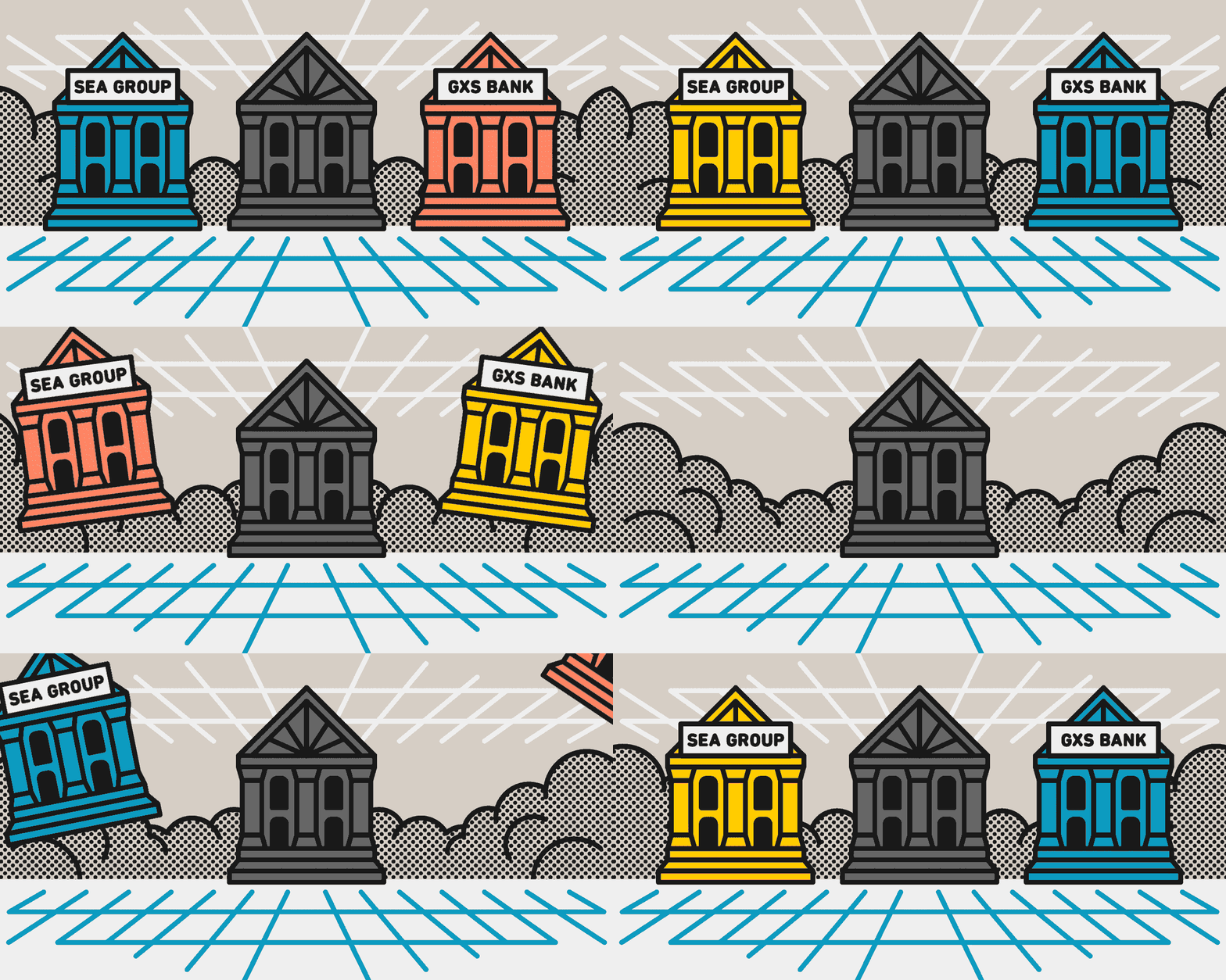
Image credit: Timmy Loen
A second “full digital bank” operated by Sea Group, which will serve both retail and wholesale customers, is set to launch in the city-state by the end of the year.
Unlike their counterparts in markets like Indonesia or the Philippines – which have millions of unbanked and underbanked individuals – Singapore’s digital banks face a more grueling task: improving the way people already bank in one of the world’s preeminent finance hubs.
For Dennis Khoo, former head of UOB’S TMRW digital bank, where “startups sometimes get it wrong” is that they aren’t starting off from a small point, or a single product. The starting point is “quite big,” he tells Tech in Asia.
Khoo, a veteran banker who had headed consumer business banking at UOB, left the firm in 2020 to lead a consortium comprising ByteDance that applied for a wholesale banking license in Singapore that year. Its bid was ultimately unsuccessful.
See also: UOB battles Sea, Gojek in Indonesia with TMRW digital bank
However, a more promising opportunity could lie in SME banking, a segment often neglected by incumbent banks because of its higher perceived risks compared to larger enterprise clients.
Still, with digital banking in Singapore still in its infancy, the fine details of what new players can offer remain up in the air.
Where ‘startups sometimes get it wrong’
What distinguishes a successful bank from a fledgling one?
The answer may well depend on who you ask. According to Khoo, obtaining a positive marginal contribution is a first step toward making an eventual profit.
Effectively, this means lowering customer acquisition costs and annual servicing costs as you grow. Plus, digibanks need to ensure that their fixed costs – which includes staff and technology costs – is consistently lower than their gross profits (i.e., positive marginal contribution multiplied by the target number of customers).
Successful digital banks, therefore, are those that have been able to onboard unbanked or underbanked customers at a relatively low cost. Tencent-backed WeBank, among a handful of profitable digital banks globally, is a good example.
The many pet peeves in SME banking
More customer data ≠ more customers
Stay ahead in Asia’s tech landscape
This is premium content. Subscribe to read the full story.
With Sea Group and the Grab-Singtel consortium nearing the launch of their full digital banks, the battle for the SME and consumer wallet will soon begin.
We know this is not ideal. ⌛ Sign up in 20 seconds. Cancel anytime.
Our subscriber community includes professionals from these companies:





Stay updated on the go with our mobile app.
Get latest insights with smoother, more personalized experience through TIA mobile app.








📅 Upcoming Events
22 October 2026
Payoneer x CSPN Summit 2026