Jum Balea · · 4 min read
a16z’s Jeff Jordan: Why startups should stop selling out before IPO
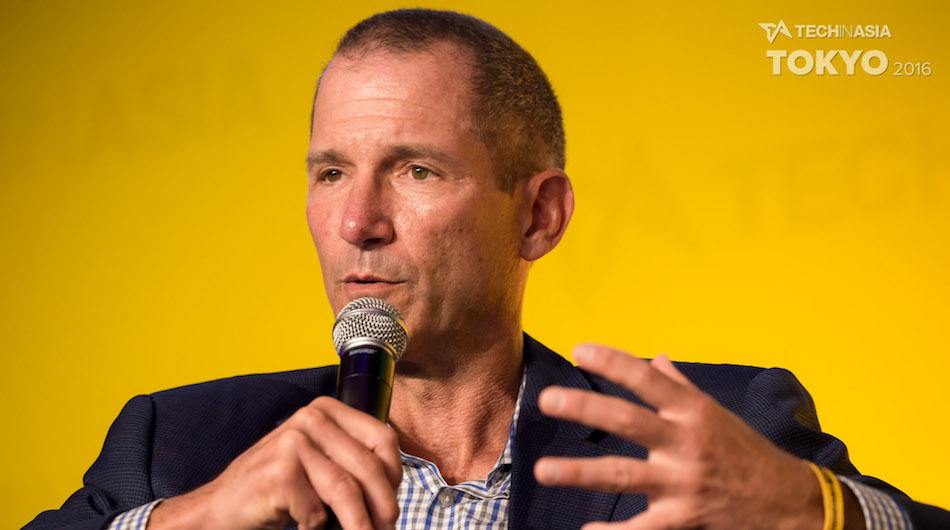
Jeff Jordan talks about executive decisions on IPO and M&As at the Tech in Asia Tokyo 2016. Photo credit: Tech in Asia / Michael Holmes.
It used to be that every startup’s dream was to go public one day. But the tide has turned in recent years, said Jeff Jordan, a partner at esteemed venture capital firm Andreessen Horowitz, at the Tech in Asia Tokyo 2016 conference.
“Now it’s been fashionable not to go public and companies are trying to stay private for much longer,” he told the audience. Jeff took his company, OpenTable, public in 2009, he led PayPal and eBay at some point, and he sits on the board of several tech firms so he has insights to share.
Jeff has observed the trend particularly in the US, where he said a lot of the companies remain private for a decade or so. That’s largely due to the emergence of non-traditional investors such as private equity funds, hedge funds, and strategic corporations willing to make late-stage investments, he said.
Still, if you’re a funded company, chances are you’re going to have to list or sell your business to provide liquidity to your investors. When you come to this crossroads, Jeff believes the decision ultimately depends on your goal.
“The reality is the best tech companies – the ones changing the world and building enduring brands – are public. You kind of have to go public if that’s what you want as an entrepreneur.”
Going public allows you to control your own destiny as opposed to getting acquired and handing the steering wheel over to the new owners.
Jeff tells founders: Control your destiny, go public.
He cited the case of PayPal and eBay. “PayPal sold to eBay in 2002 and it was a great model. They sold for a billion and a half dollars but now it’s worth US$40 billion after it spun out of eBay. The PayPal guys had the chance to build an iconic business and they sold early.”
It’s the same story for Instagram, which was bought by Facebook in 2012. Had the founders sold it later or listed it on the stock market, they might have reaped a bigger return.
“People were amazed it sold for a billion dollars. It’s probably worth US$50 billion now and kudos to Facebook for buying.”
In the US, Jeff said mergers and acquisitions have been few and far between in the last half decade. Late-stage VC funding has drove valuations so high up that ideal acquirers – who are typically traditional public companies – can’t afford them.
“But some of the late-stage valuations have been re-calibrated and we’re seeing much more interest among the strategic incumbents acquiring innovation to help them figure out how to grow.”
Keeping on your toes
Steep valuation a hurdle





Stay updated on the go with our mobile app.
Get latest insights with smoother, more personalized experience through TIA mobile app.