Winston Zhang · · 13 min read
Unstoppable Expansion: Thriving in changing climates

Startups can have the right recipe to a successful expansion endeavor but still fail if they aren’t set up to survive an economic downturn. And that’s something a ton of businesses have only begun to realize these past couple of years.
But what can businesses do to prepare for unexpected challenges? And how can founders recognize when they need to call it quits before things turn for the worse?
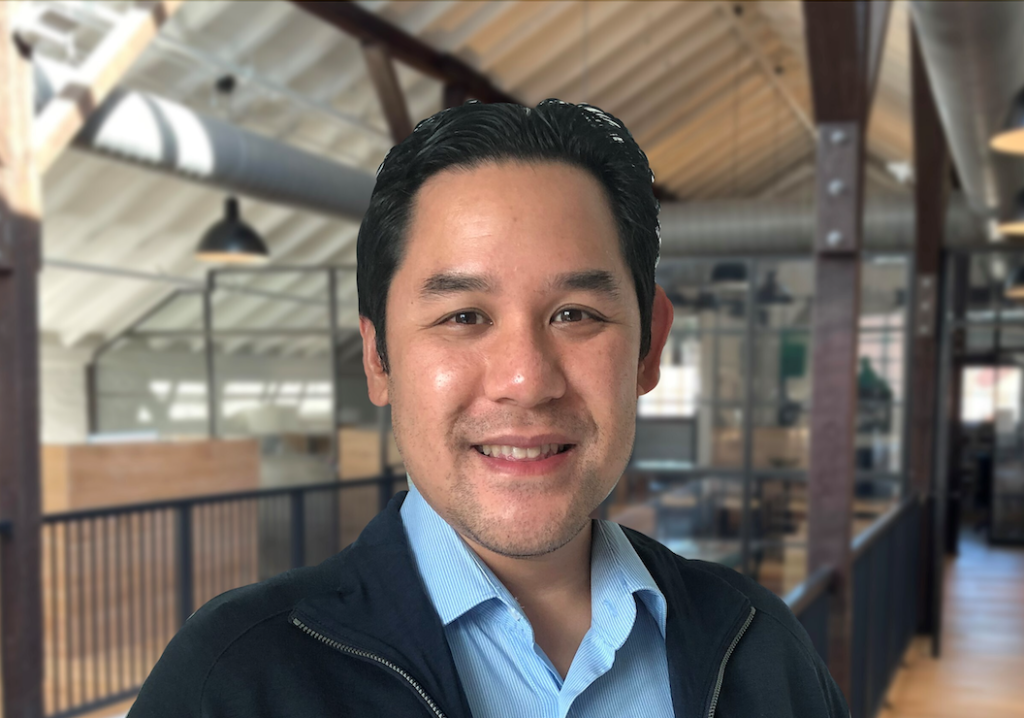
Kevin Sutantyo, partner at Sovereign’s Capital / Image credit: Tech in Asia
In the final episode of Unstoppable Expansion, G-P Asia-Pacific general manager Charles Ferguson and Tech in Asia Studios managing editor Winston Zhang speak to Kevin Sutantyo, partner at Sovereign’s Capital. They discuss what Sutantyo has observed from how his portfolio companies tide through tough times and his advice for startups to survive any economic climate.
Timecodes:
00:00 – Everything can fall apart if you’re not set up to survive an economic downturn
01:05 – Introducing Kevin Sutantyo, partner at Sovereign’s Capital
01:21 – Welcome to Unstoppable Expansion
01:53 – Kevin’s take on previous discussions on the show
05:21 – Asian businesses have the benefit of looking West
05:56 – Be prepared for everything to change in a snap
06:26 – Case in point: Indonesia in 2024
08:10 – Strategies need to match the business landscape
08:55 – 2024: The year to be patient
10:39 – What companies need to keep in mind during times of economic instability
11:35 – What should founders do when they’re blindsided by unforeseen circumstances?
15:29 – Thanks for listening!
Hosts:
- Charles Ferguson, general manager for G-P’s Asia-Pacific operations
- Winston Zhang, managing editor of Tech in Asia Studios
Featured Interviewee:
- Kevin Sutantyo, partner at Sovereign’s Capital
Unstoppable Expansion is a podcast by Tech in Asia, produced in partnership with G-P. Visit G-P’s website to learn how the company can help your business gain an edge in the talent economy and scale your operations sustainably.
You can listen to the full series on Spotify here.
Transcript
Charles Ferguson:
Hey Winston, you look like you’ve got something on your mind, what’s up?
Winston Zhang:
Well, Charles, we’ve been talking a lot about what it takes to run and grow a scalable business.
Charles Ferguson:
That’s right, three episodes up on Spotify, Apple Podcasts, and wherever you get your podcasts.
Winston Zhang:
Yeah, and it feels like a lot of what makes a successful expansion attempt is the talent.
Charles Ferguson:
You’re not wrong. All the market data and strategy in the world will fall apart if you don’t have the right people on board to execute your vision.
Winston Zhang:
Right, but is that it?
Charles Ferguson:
Well, definitely not. Because, similarly to what I said earlier, you can have all the right recipes to a successful expansion endeavor, but all that could fall apart if you’re not set up to survive an economic downturn. And that’s something a ton of businesses have only begun to realize these past couple of years.
Kevin Sutantyo (Recorded Interview):
The market landscape and conditions are really showing that you need to survive and have your business thrive and not expect another round of funding until probably closer to the end of 2024.
Winston Zhang:
Who’s this now?
Charles Ferguson:
That would be a good friend of mine, Kevin Sutantyo, who’s a partner at Sovereign’s Capital, a VC firm that invests in early-stage companies. But before we talk more about his perspectives on scaling and expanding in tough times, how about you bring the show in?
Winston Zhang:
Of course. Welcome to Unstoppable Expansion, a podcast by Tech in Asia and G-P, where we’re going to discuss some of the strategies every business needs to know to be able to thrive in any economic climate. I’m Winston Zhang, managing editor of Tech in Asia Studios.
Charles Ferguson:
And I’m Charles Ferguson, APAC general manager of G-P.
Winston Zhang:
So how did your conversation with Kevin go? I can’t imagine he just said that when the headwinds hit, it’s just tough luck and good game until the economy gets better.
Charles Ferguson:
Of course not, but he did reiterate a lot of the points that our previous guests talked about on the show.
Kevin Sutantyo (Recorded Interview):
Going into a new market, it’s really starting a whole new business because you don’t necessarily know what the conditions are like on the ground, how the culture is like. And so you have to be prepared for that. You have to be funded well enough for that.
And we like to say, only consider it after two things. Number one, you feel like you have not necessarily just a dominance, but you have a really, really excellent growth. And you’re doing really well in your home market. Because you need to be able to do really well in your home market before you start thinking about going outside.
And secondly, we like to say, wait for a pull rather than just a push. And if you are servicing – let’s just say a B2B startup – if you’re servicing companies that do have multiple branches in different countries, are you servicing them well in your home country first and then they are saying, “Hey, actually in this separate market, we could really use your solutions.” And then you’re being led there instead of just trying to go in there cold.
Winston Zhang:
That sounds pretty familiar, it’s a lot like what Aung of 2C2P said in our first episode, where we discussed laying the foundations for a scalable business, and what EngageRocket’s Dorothy Yiu discussed in episode two, where we talked about overcoming barriers in expansion efforts.
Charles Ferguson:
That’s right. Kevin also agreed with a lot of what Aspire’s Allen Jaeyoon Lee had to say about the importance of talent.
Kevin Sutantyo (Recorded Interview):
For companies that are looking to expand globally, I think that the reputation of culture really, really does attract the right talent. And so when you’re looking to enter new markets to increase your reach, to increase your market, to increase your scale, you do need the right talented people to execute that.
It’s very difficult to try to do just pure market growth, just from one city all the way across the world in a different timezone. And so local on-the-ground knowledge by talented people – it goes back to something that culture would help attract, retain, and help you scale.
Winston Zhang:
Nice to get validation from someone who’s seen the startup story a few times, especially from a VC perspective.
Charles Ferguson:
Yeah, Kevin even goes so far as to say that culture can be a competitive advantage, particularly during tumultuous times.
Kevin Sutantyo (Recorded Interview):
We believe that culture is a competitive advantage when you have a great culture. I think it’s very simple when you think about it, right? That you take care of your team, and your team takes care of your customers.
So I definitely look for great character and people who do believe that people are not just robots, right? They’re not looking to get something out of them, especially in a software company. People are your assets.
And so definitely, when you’re looking at survival through difficult times, through times where growth may seem flat, I believe that companies with strong cultures will eventually win out.
Winston Zhang:
OK, so all the wisdom we’ve picked up from previous guests remains true, but you said that there’s more to it than just the right foundations, the ability to overcome challenges in a foreign market, and recruiting and retaining the right talent.
Charles Ferguson:
Yes, I did, and that’s because you also need to be plugged into the market. For businesses in Southeast Asia, we actually have the benefit of looking West to project how the economy here might slow or grow in the next few months.
Kevin Sutantyo (Recorded Interview):
And you have to start from the source of funds, perhaps even looking at the US Fed, they could still be raising their rates. That means the cost of capital is still high. The IPO and M&A markets are still a little bit slow. So this starts to trickle all down.
Winston Zhang:
That makes sense. So when things are slowing down, don’t go gangbusters, spending a buttload on an aggressive expansion.
Charles Ferguson:
Right, but it also means that you have to be prepared for everything to change in a snap.
Kevin Sutantyo (Recorded Interview):
But I do believe that better times are coming. That’s to say, however, when you’re looking at growth opportunities, I would say my theme for 2024 would be plant your seeds, cultivate your relationships, be ready to harvest at any given opportunity, but have patience. And don’t be disappointed with just slower organic growth.
Charles Ferguson:
For example, during my conversation with Kevin, he actually brought up an example that Indonesian founders or business leaders with a presence in Indonesia might find extremely relevant to their endeavors.
Kevin Sutantyo (Recorded Interview):
Indonesia in particular, next year, we have our presidential elections. So that’s happening on February 14 of 2024. So that’s your trifecta of Valentine’s Day, our Catholic friends have Ash Wednesday, and the presidential elections.
Charles Ferguson (Recorded Interview):
Wild.
Kevin Sutantyo (Recorded Interview):
One other thing too is that if no party out of the three candidates gets a majority, then we have a runoff that goes until around the end of June.
Charles Ferguson (Recorded Interview):
Wow.
Kevin Sutantyo (Recorded Interview):
And so the repercussions of that is that the largest market in Southeast Asia may have certain decisions from the corporate side be postponed until there’s just more clarity.
I’m very confident that this is going to be a peaceful election, a good transition. It looks like all parties are business-friendly. But a lot of times this – people just don’t want to have this extra uncertainty. And so I’ve seen, from our companies on the ground, that they’re cultivating these good relationships, they’re continuing just to talk with them (politicians), build that deep relationship that’s needed in Southeast Asia B2B and waiting. They’re waiting for, OK, you know, when will be the green light?
Winston Zhang:
Right, so you’re saying that companies should be ready to capitalize on any opportunity and prepare for all possibilities while being a little more bullish on their projections if there’s uncertainty in the market.
Charles Ferguson:
Either that or your strategy to meet those projected goals has to be adjusted realistically to how the market is performing. And Kevin gave an example of this as well.
Kevin Sutantyo (Recorded Interview):
Talking to my friends and other markets in Vietnam and the Philippines that I feel are really good growth opportunities, they’re all doing well, too. I think that we’re all growing at like 5% GDP.
Charles Ferguson (Recorded Interview):
That’s great.
Kevin Sutantyo (Recorded Interview):
And so that’s good. But if your company has 20% year-on-year growth expectations, I would say that what you would need to achieve that is more of a plan to take market share away from your competition, rather than just to ride this wave up. So it’s doing well despite what’s going on given this global landscape, but I think we’re still susceptible – we’re still susceptible to exports and global demand. So I would say that 2024 is a year to be patient.
Winston Zhang:
The year to be patient. That feels like a tagline.
Charles Ferguson:
It does indeed. And this is especially so for startups who are seeking investments because VCs like Kevin don’t just dole money out willy-nilly, even if the economy is starting to improve.
Kevin Sutantyo (Recorded Interview):
A lot of my friends and colleagues in the industry are being patient at this time. We’re not sure if the bottom has hit for Southeast Asia. Everyone most certainly hopes so, but we’re starting to put… as always, this region is optimistic. We’re feeling it, it’s just that now we’re looking at our valuations matching our expectations.
So, we do believe that there’s plenty of good opportunities. We’re seeing a lot of good companies come back, that we’ve talked to months ago, with traction and with the tempered valuation expectation, and I believe that a lot of my colleagues are still able to deploy and able to deploy at valuations that does make sense for returns on their portfolios.
Charles Ferguson:
That’s exciting.
Kevin Sutantyo (Recorded Interview):
People are patient and, given our investment, deployment cycles, generally about four years, we do have time, and we don’t have to just fire out that money out the gates in the first year or so.
Winston Zhang:
So what can companies do in times like today, where we’re not exactly in the troughs of a Black Swan event, but we’re still far from being at the peak of economic stability?
Charles Ferguson:
Well, Kevin actually has some thoughts on that.
Kevin Sutantyo (Recorded Interview):
I think that now is a great time to, you know, as your companies are growing organically, it’s a good opportunity to not just reflect but to focus inwards a little bit, right? Obviously, look at your culture, look at your team, look at your ops. Is there a way that you can be more efficient in gross margins, in your operational excellence, in your execution?
And so when the market does upturn, you’re prepared for it, and things are really good. I would say that when you put money towards growth, that you’re not just burning, but you have great profitability. So this is a great time to focus inwards and to look at your efficiencies.
This is an opportunity as well for companies to upsell and cross sell and increase purchasing for their existing customers during this time where perhaps new customers may be hesitant to come on board.
Winston Zhang:
That’s good advice.
Charles Ferguson:
It really is.
Winston Zhang:
But now I’m wondering about companies that were attempting an expansion and then just got blindsided by some unforeseen circumstance. Or maybe just one of the billion things goes wrong and they have to pull out of a market that they’d just begun setting foot in.
Charles Ferguson:
Well, sometimes, even if an expansion attempt doesn’t go as planned, you just have to take it as a learning opportunity.
Kevin Sutantyo (Recorded Interview):
Oftentimes, it’s worth a shot just because all of your data tells you that you should have tried to go out in the market. But sometimes, there’s a lot of things like unit economics that just don’t make sense.
Your price points that you’re doing in your home market, or even in a market you’ve expanded to just doesn’t work in this other market, or the culture is different, that your solution that you’ve tailored for your home market, it just doesn’t quite work, either because of just the manpower that’s available to them, or it’s something that the market that you’re trying to penetrate just doesn’t necessarily need your solution, and oftentimes, it just means that they may not need your solution today.
But you know, at a later stage, it’s more than possible for companies to go back into a market with the learnings that they have. And I’ve even seen companies that have had failed attempts to enter a market come in via an acquisition later, where they’re able to just find a similar company on the ground that has done it, that just gets what the market needs, and then it becomes part of a greater story. So I applaud all the founders who look to expand, and if it doesn’t work out, it doesn’t mean that they can’t come back.
Winston Zhang:
Man, being an entrepreneur sounds like so much work, I have to say.
Charles Ferguson:
It does take a lot to run a successful business, especially during tough times, and it’s even harder to run a business that can thrive in any economic situation. But one thing that struck me from my conversation with Kevin was this analogy he shared with me.
Kevin Sutantyo (Recorded Interview):
I’m going to take the analogy that I heard from one of my founders. So Moses from Zendesk said it best. He said that it’s like a Formula 1 race where you have a hard turn or a rounded corner that you have to decelerate through to make sure that you make the turn properly. But then once you have the line, then you have to accelerate through it.
And so I believe that relates to exactly where we’re going through now, that there will be a time that you as a company need to accelerate, and you just have to make sure that you are in the right position to do so – meaning do you have enough fuel runway, capital, to take advantage of this? Are you able to then cut your runway a little bit, but then accelerate your growth when the market shows that it can handle it? Do you have the right team structure right now, right? Or do you perhaps have a team that is not optimized for this growth, and not optimized even for today?
So, I believe that the company should be ready because these are just cycles. And the US, other markets, they’ve been through many of these cycles. This is Southeast Asia’s first tech cycle. And I’d like to tell everyone, I believe that we’re going to come back up. It’s just that can you, as a company, be prepared to take advantage of it? And so it’s not just surviving through, which is what every company does need to do during this time, but are you positioning yourself – do you have enough fuel to be able to accelerate through that curve?
Winston Zhang:
Right. So it’s definitely not all doom and gloom.
Charles Ferguson:
Oh, far from it. In fact, I think we’re on the cusp of a new era. Once we get past this admittedly massive hurdle that’s been the early 2020s, we’ll be looking at an entirely different business landscape, one like we’ve never seen before.
Winston Zhang:
You know, Charles, you’ve given me a lot to think about over these past four episodes.
Charles Ferguson:
Well, I’m glad we had the chance to chat. And I’m also incredibly grateful to you – you, the listener – for tuning in.
Winston Zhang:
Make sure you check out the previous three episodes if you haven’t already. Charles and I got into quite a few discussions around the topic of scalability and market expansions, and there’s just so much knowledge and wisdom in those episodes that you definitely need to pick up.
Charles Ferguson:
Definitely, don’t miss out.
Winston Zhang:
And if you like us enough or have any thoughts on this episode, make sure to let us know by giving us five stars and a nice review on your podcast platform of choice.
Charles Ferguson:
Of course, if you are a business leader and thinking of – or in the process of – scaling your business and you’d like to know how we at G-P can help you in your expansion endeavors, make sure to visit our website at www.g-p.com. For the last time, for Unstoppable Expansion, I’m Charles Ferguson –
Winston Zhang:
And I’m Winston Zhang.
Charles Ferguson:
– take care.
Stay updated on the go with our mobile app.
Get latest insights with smoother, more personalized experience through TIA mobile app.
Recommended reads
 Indonesian AI startup goes global
 Forrest Li on scaling Sea, building smarter bots, and founder grit
 An AI assistant that joins sales calls and scores team skills
 SGX’s CEO says it doesn’t need a unicorn to win
 SMEs want AI too, but not the kind Big Tech is selling
 Oatside’s alt-milk rise hits a profitable gear
 Alibaba’s financial health in 12 charts
 Asia’s telcos bundle AI into mobile plans. Will it pay off?
 M-Daq chases bigger clients as revenue falls, losses grow
 VC tracker: Accel raises US$3.5b, including US$550m for India





Editing by Jaclyn Tiu
(And yes, we’re serious about ethics and transparency. More information here.)