 Peter Rothenberg · · 3 min read
After losing his grandmother, this entrepreneur is using IoT to save lives
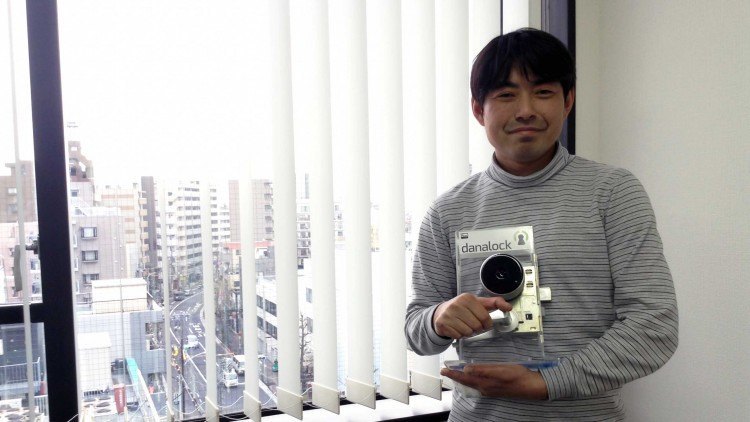
Founder and CEO Makoto Ogawa shows off one of Z-Works’ smart locks.
Adult diapers outsell baby diapers in Japan as the populace gets older. While this presents many problems for Japan’s social welfare programs, it also has unique business opportunities for new products and services – ones that can then be exported to greying countries in Europe.
Makoto Ogawa is founder and CEO of Z-Works, a startup focused on creating devices that can monitor loved ones and keep families close. After losing his parents and grandparents, Makoto thought that there was more that could be done to keep those you love healthy.
If only someone had been able to find her within the hour, things may have been different.
Ten years ago, Makoto’s grandmother was healthy, happy, and independent. One night, feeling the need to use the restroom, she got out of bed and walked towards the toilet. In the dark, she tripped and fell. Unable to get up, she spent the night lying on the cold floor.
“She was so weak after that,” Makoto remembers.
Not found until the next morning, the accident left Makoto’s grandmother bedridden. The family watched helplessly as her health declined. Weekly family visits turned to once every other week, and then to once a month as dementia slowly set in. Makoto never really saw his grandmother return to her true self and lost her to illness eight years ago.
“If only someone had been able to find her within the hour, things may have been different…” he recalls Makoto, trailing off.
For grandma
According to the OECD, 26.1 percent of Japan is over 65 years old and the population under 15 is just 12.7 percent. By 2060, 40 percent of the population is expected to be over 65.
Japan has had a policy to encourage families to care for the elderly with long-term health care insurance stipends since the 1990s, but with a shrinking work force, the number of people receiving insurance benefits will exceed the people paying (PDF) into the scheme sometime between 2030 and 2035.
With a combination of sensors and a mobile app, Makoto hopes to ease the burden on the system and caregivers. “I started Z-Works to help people like my grandmother,” he says while booting up the app. Makoto has all of the devices set up in his home so we could spy on, no, test the device with his wife. “She’s probably not home right now. There hasn’t been any movement and it’s dark inside,” noted Makoto.
Privacy is a concern in Japan, so Makoto has avoided cameras in Z-Works’ gadgets because they make people uncomfortable. He says the system is receiving positive feedback from users.
Z-Works currently has three sensors. One is a light bulb developed with Japanese electronics maker Sharp that is meant to be positioned above a bed. The sensor measures heart rate, breathing, and movement. Another sensor detects motion by looking at lighting, temperature, humidity, and movement. And a third sensor can be placed on a door to gauge, for example, whether the bathroom door is open or closed.
Smart home stumbles
Eventually Makoto wants to make the sensors and data open for other companies to use. Z-Works is also working on notifications being sent to caregivers in certain scenarios, such as a person not returning from the restroom after a specified amount of time.





Stay updated on the go with our mobile app.
Get latest insights with smoother, more personalized experience through TIA mobile app.










📅 Upcoming Events
22 October 2026
Payoneer x CSPN Summit 2026