
When people talk about startup ecosystems in Asia, Southeast Asia is typically at the forefront of people’s minds. However, there’s another place in the region that’s coming up as a hotbed for startup activity: Hong Kong.
Hong Kong is currently home to a total of 3,360 startups. It’s among the top 30 startup ecosystems around the world, and capital is flowing into the city: In the financial year ending March 2020, its number of venture capital deals increased to reach its highest on record, with 140 deals totaling US$1.39 billion.
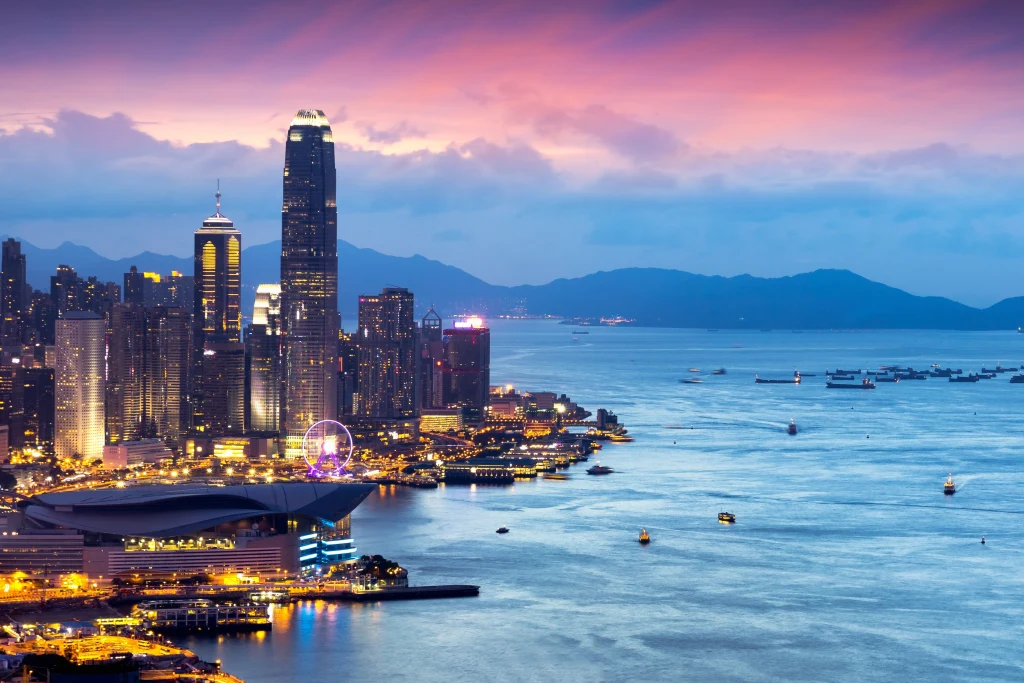
Photo credit: pat138241 / 123RF
Plus, Hong Kong has several factors going for it, such as its location in the Greater Bay Area and a rich network of resources for startups. On top of that, it has a culture that drives impactful innovations and a strong entrepreneurial energy – known as the HK10X spirit – that fosters great ideas.
It’s no surprise then that these two Southeast Asian founders have decided to make Hong Kong the home base for their companies.
Location is key
“We chose Hong Kong to start in because we saw China as one of the biggest markets for our technology,” says Hasan Gadjali, co-founder of thermal imaging sensor startup Meridian Innovation, which was launched in 2017.
Gadjali, who was born in Indonesia and educated in the United States, decided to make his foray into entrepreneurship after 20 years at Omnivision, a developer of digital imaging solutions. He and his co-founders were driven by the demand for sensor technology that had come about with the rise of artificial intelligence and smart systems, and they identified a gap in the market for low-cost thermal imaging solutions.
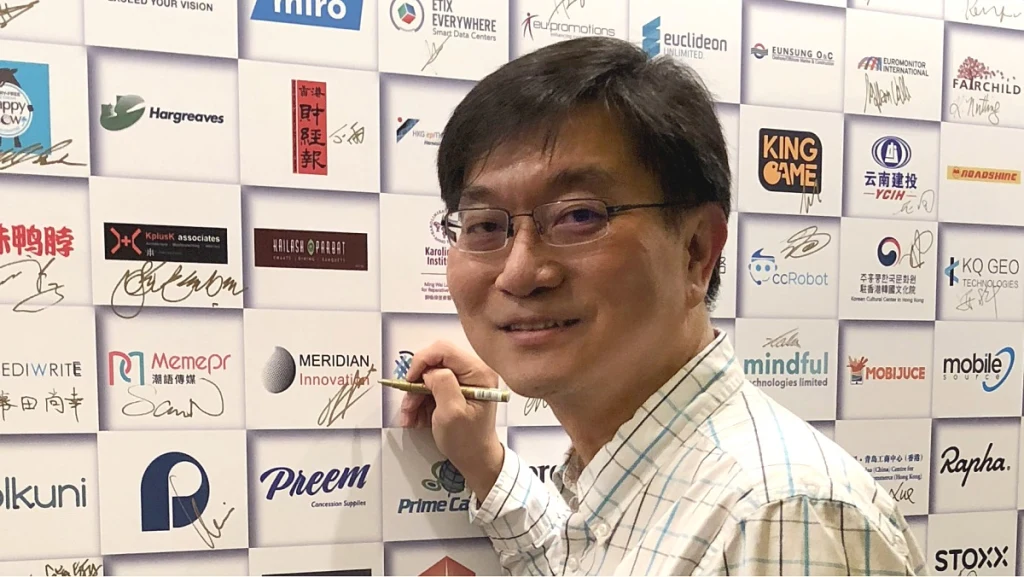
Hasan Gadjali, co-founder of Meridian Innovation / Photo credit: Meridian Innovation
Having decided on what they wanted to do, they then had to figure out where to set up the company. Gadjali and his team mulled over several potential home bases, such as the United States and Turkey.
Ultimately, they decided on Hong Kong. Aside from being a gateway into China, the city had a few other elements that made it appealing. .
“Semiconductor expertise is concentrated in China, but Hong Kong offered the IP protection we needed for our product,” explains Gadjali.
Additionally, the city’s location in the Greater Bay Area and its proximity to the manufacturing hub of Shenzhen, where 90% of the world’s electronics are made, added to its appeal.
While Meridian Innovation’s process engineering takes place in Hong Kong, the startup’s modules are built across the border in China.
“By being so close, the turnaround time is reduced significantly,” shares Gadjali. This allows Meridian Innovation to build its modules more efficiently, enabling it to deliver products to its customers at a faster rate than if it had chosen to set up elsewhere.
Rich with resources
However, its initial start in Hong Kong was rocky.
“We were trying to start a company in a country that we were not familiar with,” says Gadjali. “We couldn’t even open a bank account.”
Fortunately, he and his co-founders were able to tap into the city’s rich ecosystem of support to get Meridian Innovation off the ground.
They turned to Invest Hong Kong, the foreign direct investment arm of the city’s government, to seek help with setting up in the city. From there, they made the decision to join the incubation program at the Hong Kong Science and Technology Park (HKSTP), which was launched by the government in 2001 to foster the development of innovation and technology in the city.
All I needed to worry about was my equipment, my people, and actually building the product.
HKSTP offers startups a variety of resources, ranging from accelerator programs to research and development facilities. Working with HKSTP’s Sensor Lab enabled Meridian Innovation to develop its prototype and begin piloting its production process.
Having access to the Sensor Lab also enabled Gadjali to really focus on his company’s product and on making sure that he and his team were bringing innovative solutions to the market.
“We didn’t have to worry about spending money to build or maintain the facilities,” he says. “All I needed to worry about was my equipment, my people, and actually building the product.”
The company currently produces 3,000 to 4,000 units of its sensors per month in Hong Kong, and has plans to move production to HKSTP’s upcoming Microelectronics Centre, which would enable it to scale up its production.
The perfect place to be
Another company that has decided to call Hong Kong home is Ampd Energy. Founded in 2014, it produces battery systems that serve as a greener alternative to the diesel generators used in construction sites.
Given the nature of its product, making Hong Kong its home base was a logical choice.
“There are so many subsystems involved, and you can’t build all of them yourself,” explains Brandon Ng, co-founder of Ampd Energy. “We very quickly realized that a lot of the supply chain for what we wanted to build existed in the south of China. This complex breadth of a supply chain that’s all in one place doesn’t really exist in that many parts of the world.”
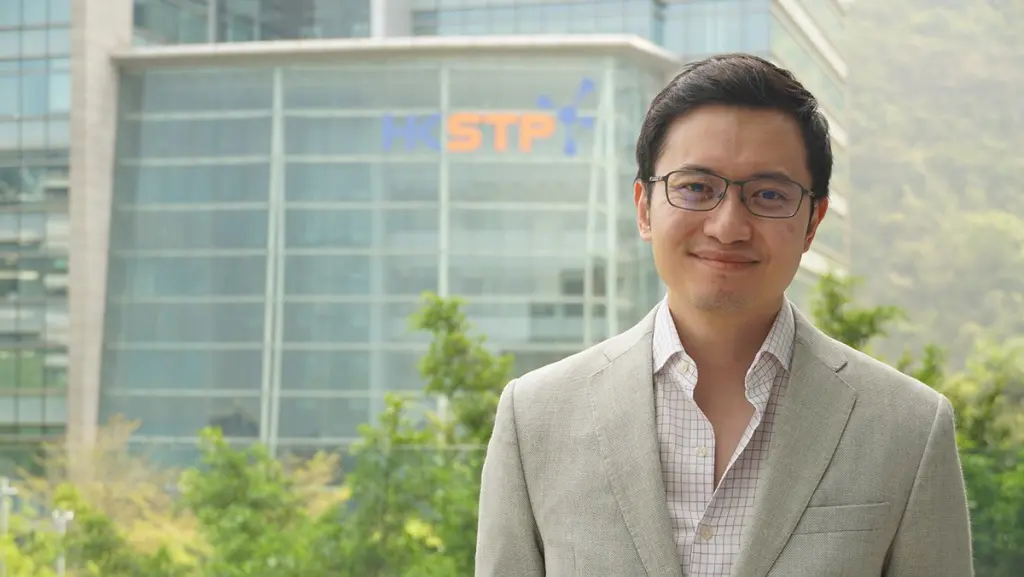
Brandon Ng, co-founder of Ampd Energy / Photo credit: Ampd Energy
While the company could have set itself up in Shenzhen, Ng and his co-founder felt that the opportunities for Ampd Energy’s product actually lie outside of China, which made Hong Kong the perfect middle ground.
“Hong Kong allows us to access the machinery of the Chinese industrial complex, but it’s also a gateway out of China to market our products regionally,” he says.
Additionally, Hong Kong was where Ampd Energy really found its niche. When Ng and his co-founder first started, they positioned the product as a backup energy supply for mission-critical systems in places like hospitals and data centers. However, they were unable to successfully scale the business.
After a startup pitch event in Hong Kong, they were approached by a director from Gammon Construction, one of the largest construction firms in the city, who asked if their solution could be used to power construction sites, which are heavily reliant on diesel generators.
It was a turning point for the company.
“With [diesel] generators, you have to deal with the noise, the pollution, the carbon intensity, the operational and maintenance requirements, and the safety risks. Our product addresses all of those operational issues,” says Ng. The company decided to double down on construction, and it currently powers nearly 50 construction projects in Hong Kong, with international expansion in the works.
Connections and credibility
Ampd Energy also benefited from the resources that are available for startups in Hong Kong. Like Meridian Innovation, it also participated in HKSTP’s incubation program. Doing so gave the company access to mentorship programs and networking opportunities, as well as the avenue to connect with other like-minded people to exchange and share ideas with.
For Ng, the biggest benefit Ampd Energy received from being part of the HKSTP ecosystem was the credibility that it gave the company.
“There is a vetting process to actually joining HKSTP; you can’t just get in,” he says. “As a startup, credibility is always a challenge, and having that affiliation definitely opened doors because [now] people would go, oh, this company is actually doing something innovative, something that’s actually technology-led.”
Additionally, being in a place as international as Hong Kong has opened up opportunities for Ng to network with global business leaders who have also made the city their home.
“There are a lot of international companies that have set up shop in Hong Kong, that have built their businesses using Hong Kong as a base, and the people leading those businesses are here in the city,” he explains. ”It’s also very easy to connect to other startup ecosystems in the region and connect with people there.”
Destination: Hong Kong
Both Ng and Gadjali agree that setting up in Hong Kong was the right decision for their businesses.
“Hong Kong had the ingredients that we needed: It had the talent pool, the capital, the proximity to the supply chains that we needed to build up, and the sort of international framework that we wanted to have for setting up a company,” says Ng.
“Hong Kong is kind of in the middle [between China and the US]. It’s an international city, it has freedom, the technological capability, and good talent,” Gadjali concurs.
Above all, the city is home to a particular kind of entrepreneurial energy – one that drives impactful innovation and is ready for any opportunity that comes its way.
“The great thing about Hong Kong – both in the past and which still applies today – is that people here are not afraid to be different,” Ng says.
And the city is well-positioned to support that.
“As a founder, it’s about resilience and perseverance and just battling through the tough moments, trying to find a way, and finding people to help you out,” says Ng. “Hong Kong has the resources for you to find people who have your back, who will make the process of building your business a little bit easier.”
Currency converted from Hong Kong dollars to US dollars: US$1 = HK$7.78
The Hong Kong Science and Technology Park aims to foster the development of Hong Kong into a regional hub for innovation and growth.
Learn more about HKSTP’s pioneering entrepreneurs and how their technology is transforming industries on its website.
This content was produced by Tech in Asia Studios, which connects brands with Asia’s tech community. Learn more about partnering with Tech in Asia Studios.
Stay updated on the go with our mobile app.
Get latest insights with smoother, more personalized experience through TIA mobile app.
Recommended reads
 Life’s a game, and AI agents are Animoca’s new play
 Indonesian AI startup goes global
 Forrest Li on scaling Sea, building smarter bots, and founder grit
 An AI assistant that joins sales calls and scores team skills
 Beyond the check: Why VCs need more than capital
 SGX’s CEO says it doesn’t need a unicorn to win
 SMEs want AI too, but not the kind Big Tech is selling
 Oatside’s alt-milk rise hits a profitable gear
 Alibaba’s financial health in 12 charts
 Asia’s telcos bundle AI into mobile plans. Will it pay off?




Editing by Nathaniel Fetalvero and September Grace Mahino
(And yes, we’re serious about ethics and transparency. More information here.)








