Every day, 100k+ smart people read our newsletter. You can sign up here.
Hi readers,
Fun fact: My career aspiration when I was younger was to work in the gaming industry. So to nobody’s surprise, my dream company was Garena since it is one of the top gaming giants in Singapore.
But alas, the younger me was so inexperienced that I was never shortlisted for the marketing roles I had applied for in the company. So holler to Garena! Feel free to slide into my inbox if I have finally accumulated the work experience you’re looking for. 😉
Anyway, Garena is more than just a gaming company today. Now called Sea Group, it has blazed its way into becoming a company that is worth US$147 billion and owns an ecommerce arm (Shopee) as well as a fintech one (SeaMoney). How did it grow so much in 11 years?
Today we look at:
- How Singapore played a huge part in Sea’s early days
- HungryGoWhere making a comeback
- Other newsy highlights such as Berlin Brands Group’s entry into China and Grab’s upcoming carbon offset feature
PREMIUM SUMMARY
How Singapore enabled Sea to grow into a US$147 billion company
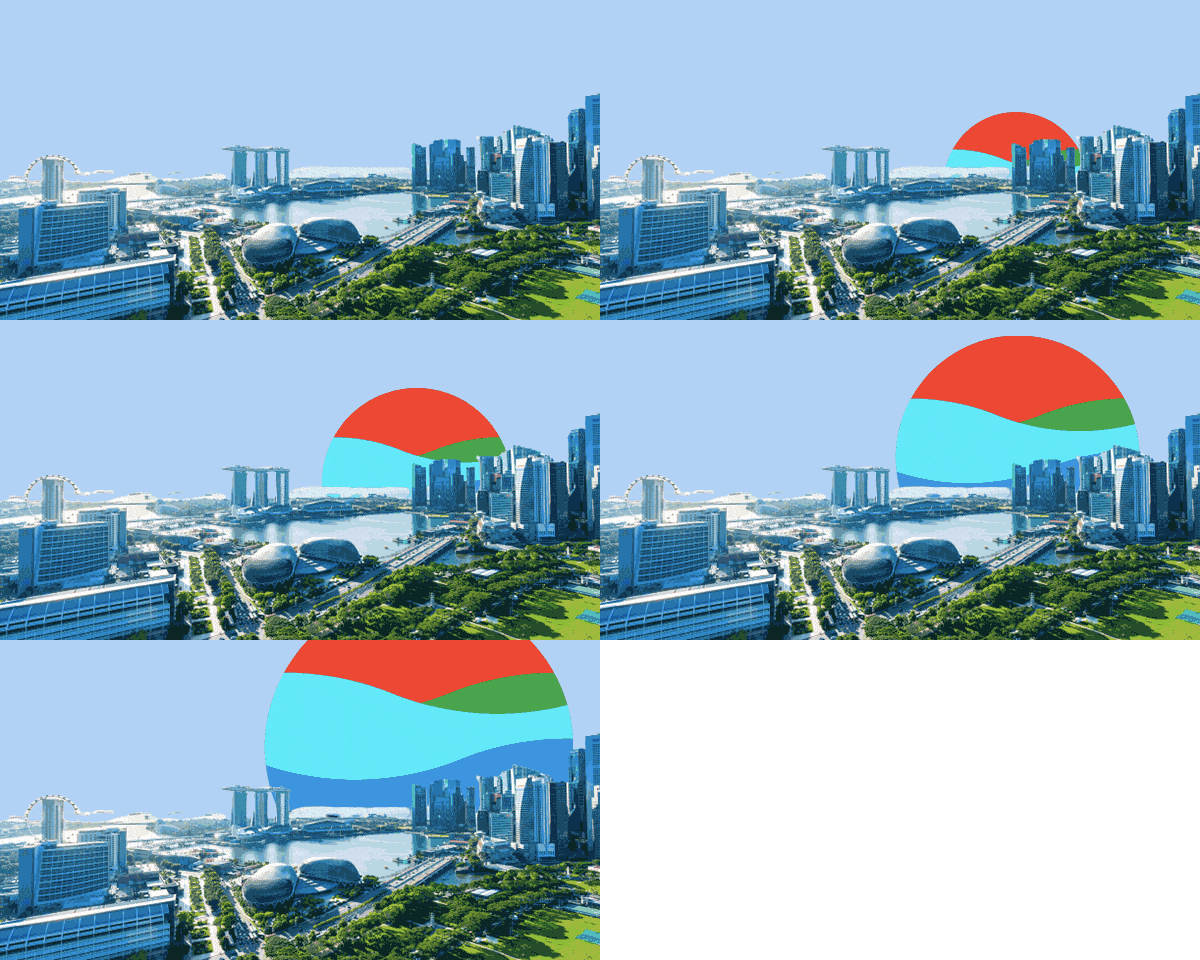
Elements of a successful startup: a great idea, the right people, and supportive government policies. These were exactly what New York-listed Sea Group had when it was founded in 2009, a time when funding in Southeast Asia was scarce and support for the tech ecosystem was lacking.
- The idea: Sea was known then as Garena and it primarily distributed games. Despite venture capital being scarce at the time, Garena grew to become profitable by 2012 after clinching a license to distribute the hit game League of Legends in Southeast Asia and Taiwan.
- The people: While Sea may not have directly benefited from startup schemes in its early days, it did benefit from Singapore’s scholarship programs, which recruited top students from neighboring ASEAN countries, China, and India and brought ambitious and talented people from overseas to the country – including two of Sea’s three co-founders as well as many of its early staff.
- The policies: Sea also benefited from Singapore’s pro-business and favorable tax environment. It was also the country’s Economic Development Board that introduced Tencent, one of Sea’s key investors, to the company in 2010.
Read more: Sea Group: Singapore’s ‘oops’ company?
PREMIUM SUMMARY
Dead or alive: HungryGoWhere edition
Want to take your startup to the next level?





Stay updated on the go with our mobile app.
Get latest insights with smoother, more personalized experience through TIA mobile app.