Jack Ellis · · 5 min read
Singapore Budget 2018: Reduced tax breaks for startups, but no ecommerce levy yet
 f11photo / 123RF Stock Photo" width="750" height="500" />
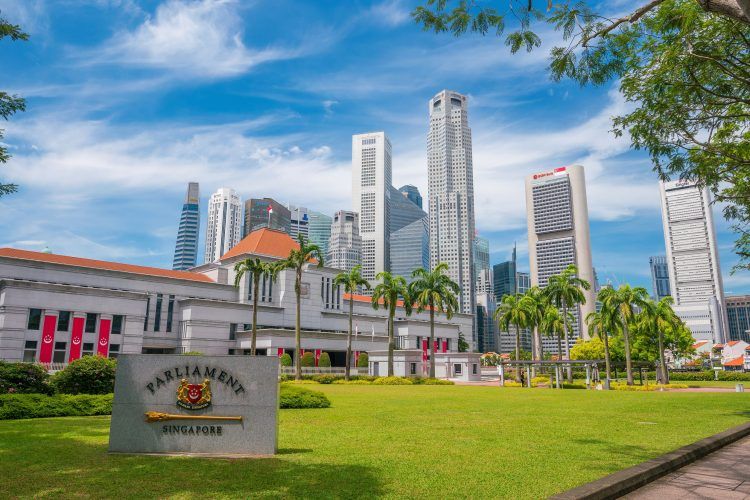
Parliament House, Singapore / Photo credit: f11photo / 123RF
The Singaporean government has cut corporate tax breaks for startups, meaning that early-stage businesses could face a higher tax bill. Users of certain online products, potentially including some apps and content streaming platforms, may have to pay higher prices as the country’s goods and services tax (GST) is extended to imported services – but not to ecommerce transactions, as had been widely expected.
Other measures in today’s government budget announcement that will be of interest to startups include changes to corporation tax and innovation-related spending.
- Previously, startups enjoyed a 100 percent corporate tax exemption on the first S$100,000 (US$76,235) of their chargeable income. This exemption will be reduced to 75 percent. Finance minister Heng Swee Keat said that startups would still enjoy an effective tax rate of 4.3 percent – significantly lower than the full corporate tax rate of 17 percent – and that they should avail themselves of the government’s various support initiatives for early-stage businesses.
- To encourage innovation and intellectual property (IP) creation, companies will be able to deduct twice the value (200 percent) of fees related to IP rights filing from their tax bill – up to S$100,000 (US$76,230) of fees per year. The tax deduction for qualifying research and development expenses will be raised from 150 percent to 250 percent starting 2019.
- The government also wants to help businesses capitalize on externally developed technologies. The tax deduction for license payments for the commercial use of third-party IP rights will be raised to 200 percent, capped at S$100,000 (US$76,230) of license payments per year. The government will also pilot an open innovation platform where businesses can crowdsource technology solutions from third parties.
- Singapore’s National Research Foundation and sovereign fund Temasek will jointly establish the NRF-Temasek IP Commercialization Vehicle, which will seek to build new businesses around IP developed in the city-state’s public research institutions.
- The GST that consumers are charged on their purchases will be raised for the first time in a decade, from 7 percent to 9 percent in a gradual process between 2021 to 2025.
- GST will be extended to imported services starting January 2020. This covers things like consulting, marketing, and software services – potentially including content streaming platforms like Netflix and Spotify – from overseas. Foreign businesses importing these kinds of services may need to register with the relevant authorities in Singapore.
- However, a widely anticipated extension of GST to imported goods purchased online – which are distinct from services – is yet to materialize. Heng indicated that an “ecommerce tax” is on the way eventually, but the government will review international discussions over the issue before deciding on specific measures to take.
Taxing the digital economy
With Singapore’s growing and ageing population, healthcare and infrastructure costs as well as investments aimed at re-engineering its economy are expected to mount in the coming years.
In the past decade, state expenditure has more than doubled; Credit Suisse estimates it could grow from 1.7 percent of Singapore’s economy today to 2.8 percent by 2025.
In the run up to this year’s budget, many commentators predicted a rise or expansion of GST – which accounts for 15.8 percent of Singapore’s national revenue – to secure greater revenues from the digital economy.
Singapore’s booming ecommerce market is worth $3.74b, and is predicted to hit $5.49b by 2022.
In particular, removing GST exemptions for lower value, cross-border ecommerce transactions is something the government has been exploring in recent months.
According to Statista, Singapore’s booming ecommerce market is worth US$3.74 billion, and is predicted to hit US$5.49 billion by 2022.
Currently, ecommerce transactions in Singapore are only subject to GST if the goods purchased from outside of the country exceed S$400 (US$305) in value. Any higher, and shoppers are liable to pay the tax at the current national rate of 7 percent.
Some digital services, such as paid-for music downloads, are also exempt at present – though this might be about to change if such activities fall under the expansion of GST to “imported services,” as announced by Heng today.
But his speech suggested there is no schedule to charge GST on imported goods purchases yet.
Extending GST to ecommerce transactions below the S$400 threshold could rake in more than US$274 million in additional tax revenue each year, Simon Poh, associate professor at the National University of Singapore’s Business School, told Today.
Other countries





Stay updated on the go with our mobile app.
Get latest insights with smoother, more personalized experience through TIA mobile app.