 Enricko Lukman · · 5 min read
Sedapur Looks to Become the Pioneer for Culinary E-Commerce in Indonesia

Sedapur has a name that consists of three different meanings: one is “sedap” which means delicious, “dapur” which means kitchen, and “sedapur” which means one kitchen. The site aims to help Indonesia boost its culinary market with e-commerce, selling made-to-order pies, cakes, sushi, Indonesian dishes, and more. Interestingly, Soegianto, the CEO of Sedapur, also looks to improve other aspects of Indonesia’s culinary world, such as the agricultural side of the process. He talked to us about the method behind what’s possibly the first fresh food e-commerce venture in Indonesia, and his big vision for the service.
Sedapur was started in December 2010. Now, 20 months later, Soegi shares some of its current milestones:
- Sedapur won the Nokia Entrepreneurship Fellowship 2011 and the Indonesia ICT Award 2011 in the e-business services category.
- It has a total of 23 merchants who are mostly housewives, with registered users almost reaching 1,000.
- 160 product in total, with the best-selling foods being pempek and “green banana ice.”
Indonesian culinary products have strong potential as the country has a diverse food selection. Soegi explained that unlike Japan [1], you can’t pinpoint one dish as a representation of the whole of Indonesia. When you see rendang for example, it belongs to Padangnese, gudeg belongs to Jogjanese, and gado-gado might belong to Jakartans. And, he explains, there weren’t any e-commerce sites to to guide Indonesians around their culinary world. Soegi adds:
We are a consulting team that really utilizes e-commerce with all its advantages to move the country’s economy.
Sedapur Sees the Bigger Picture in Helping Indonesia
Soegi noted that what makes Sedapur unique is its aspect of social responsibility. He believes that in contrast to other e-commerce ventures, Sedapur can trigger a good movement in the country’s broader economic system. He claims that other e-commerce sites in the country, which mostly sell imported gadgets and fashion items, will result in a positive ‘multiplier effect’ only in other countries, such as China, where those items tend to be made.
For food products though, 60 percent to 100 percent of its ingredients, depending on the food, come from local products. The multiplier effect then will affect the farmers, middlemen, main markets, and grocery sellers in Indonesia – right up to the housewives that made the food sold on the site.
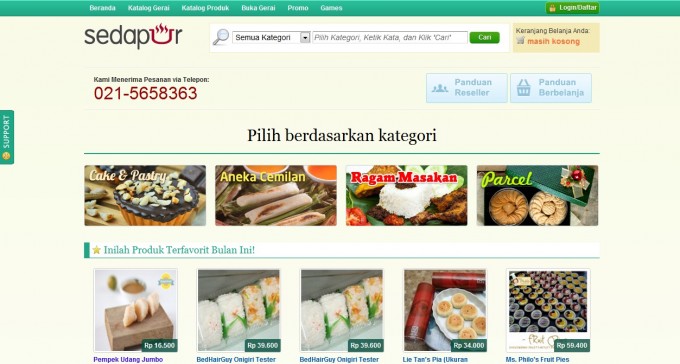
Looking at Sedapur’s ‘Kitchen’
Soegi admits that Indonesian infrastructure is still not suitable to the special needs of food delivery. He takes the example of deliveries via train, where no matter how large the word ‘fragile’ is put on the item, the train’s staff will still throw the thing around. But eventually he was able to get several delivery services to agree to cooperate, under very strict rules.





Stay updated on the go with our mobile app.
Get latest insights with smoother, more personalized experience through TIA mobile app.










📅 Upcoming Events
22 October 2026
Payoneer x CSPN Summit 2026