 C. Custer · · 7 min read
‘What my old, illiterate mother can teach the smartphone industry’

Yesterday, Sina Tech published a fascinating op-ed by Chinese blogger Huang Jingyang. His piece concerns the problems he was confronted with while trying to teach his elderly, illiterate mother to use a smartphone. While it’s interesting in its own right and may provide some lessons for China’s smartphone makers, I also think his story has a broader significance.
After all, China is not the only Asian nation with an ageing population. In fact, a Pew Research Center report suggests that Japan and South Korea even larger problems with ageing than China. Indonesia, too, is likely to have above-average elderly population growth over the next few decades.
And since many countries in Asia are still developing, many Asian societies have an age gap as broad as China’s when it comes to the elderly understanding technology. Huang’s struggle to bring his mother into the smartphone age is one that’s likely to be shared by many across the continent over the next decade or two. But as Huang himself points out, many of these problems could be resolved if phone companies took a more serious and comprehensive approach to designing a smartphone for the elderly.
Since Huang’s original essay is in Chinese, I have translated his article in full below. Please note that everything that follows is his opinion rather that my own.

I’ve long felt that teaching an illiterate person how to use a smartphone is an endless project. So although I had thought about teaching my mother to use a smartphone, I never really went and did it.
There is a reason for my mother’s illiteracy. She had six siblings, of which she was the oldest sister, so she started helping her mother look after her brothers and sisters when she was still pretty young. Later, she joined the people’s militia and became a soldier, so her extensive training in bayonet fighting, shooting, and throwing grenades kept her away from the classroom. Although my mother is illiterate, I’ve always really admired her for her military experience.
Early on after she came to Shanghai, one night after dinner [with me] we used QQ on my iPad to video chat with my brother. This was an extremely new experience for my mother, who had never touched a smartphone. It was after that video chat that I decided I wanted to teach her how to use a smartphone.
We started with using the iPad, since after all her first experience had been video chatting with an iPad. More importantly, the iPad screen is big, there’s a lot of space between the icons, and it’s relatively easy to operate without pressing the wrong thing.
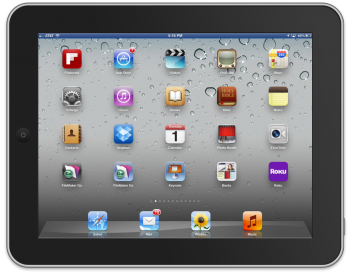
The iPad screen: large enough that there’s plenty of space between icons.
Most often, my mother uses WeChat to chat, but getting into WeChat and going through several menus to find my brother’s account can be inconvenient. For starters, she’s illiterate and has to navigate the menus based on placement and images, so when she first started she made a lot of mistakes. Moreover, after her years of farming, my mother’s hands are rough and her fingers can be a bit clumsy. Eventually, I put a few of her frequent contacts right on the desktop, so she can just tap on them directly to get in, which makes things much easier.





Stay updated on the go with our mobile app.
Get latest insights with smoother, more personalized experience through TIA mobile app.










📅 Upcoming Events
22 October 2026
Payoneer x CSPN Summit 2026